Navigating South Asia's Economic Trajectory: Strategic Shifts in Investment and Digital Transformation
An in-depth analysis of the strategic shifts in South Asia's economic development, focusing on the role of FDI, digital economy adoption, and infrastructure investment in shaping regional competitiveness.
Executive Summary
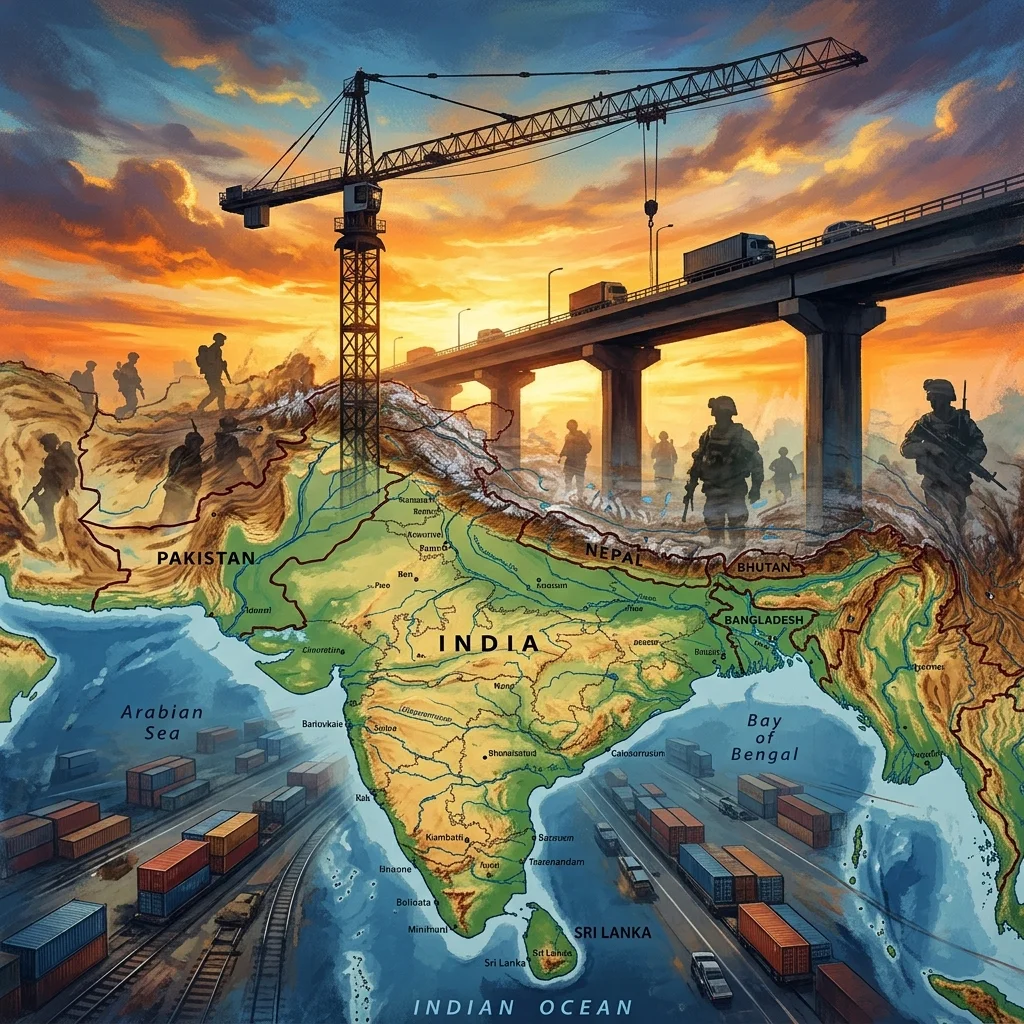
This analysis examines the multifaceted drivers shaping the economic trajectory of South Asia. The current phase is characterized by significant shifts in investment flows, a burgeoning digital economy, and the imperative for large-scale infrastructure modernization. The strategic focus must remain on leveraging technology—particularly Artificial Intelligence and digital infrastructure—to enhance manufacturing competitiveness and build resilient supply chains. Policy decisions regarding trade facilitation, energy transition, and regulatory frameworks will dictate the pace of industrial development and the success of regional cooperation mechanisms like BIMSTEC and SAARC.
Introduction
South Asia is at a critical juncture, presenting both profound opportunities for economic acceleration and significant structural challenges. The region's potential is intrinsically linked to its ability to navigate complex dynamics involving demographic dividends, technological disruption, and the need for integrated regional economic policy. This analysis shifts the focus from mere economic reporting to strategic assessment, examining the underlying forces that will determine the region's future standing in the global economy.
Main Analysis
The current economic landscape is defined by a push toward economic diversification away from traditional sectors. Manufacturing, particularly in textiles, electronics, and pharmaceuticals, remains a core pillar, but sustained growth hinges on the successful adoption of Industry 4.0 principles and the modernization of industrial infrastructure. The growth of the Digital Economy, encompassing FinTech, e-commerce, and cloud computing, is creating new avenues for enterprise development and consumer market penetration, particularly among younger demographics.
Foreign Direct Investment (FDI) remains a crucial catalyst, but its flow is increasingly contingent on the quality of the domestic policy environment, regulatory stability, and the perceived ease of navigating cross-border business operations. Attracting sustained FDI requires tangible improvements in infrastructure—ranging from energy and transportation networks to digital backbone connectivity—to reduce operational friction for multinational corporations.
Regional Impact
Economic Growth and Competitiveness: Enhanced manufacturing capabilities, supported by technology, have the potential to improve export competitiveness. However, uneven development across the member states of SAARC and BIMSTEC creates structural risks regarding regional trade integration. Successful industrial development requires coordinated efforts to harmonize standards and logistics across borders.
Supply Chain Resilience: The emphasis on robust supply chains is paramount. Geographic diversification and the development of reliable logistics corridors are vital to mitigate external shocks, a lesson underscored by recent global disruptions. Investment in digital infrastructure directly supports the creation of more agile and resilient supply chain ecosystems.
Technology Adoption: The integration of Artificial Intelligence and data analytics is poised to reshape sectors from finance to agriculture, offering significant productivity gains. The challenge lies in ensuring equitable access to this technology across SMEs and large enterprises to prevent exacerbating existing economic disparities.
Regional Cooperation: Regional cooperation frameworks are essential for realizing the benefits of scale, particularly in infrastructure projects and establishing common standards for digital trade. However, policy implementation gaps often hinder the depth of this integration.
Strategic Insights
Business Strategy: For South Asian enterprises, the imperative is to adopt a strategy focused on digital resilience and localized innovation. This involves moving beyond incremental improvements to fundamentally restructuring business models to capitalize on e-commerce and digital payment ecosystems. Corporate governance must evolve to support the integration of data-driven decision-making.
Investment Implications: Investment opportunities are increasingly concentrated in sectors requiring significant capital infusion for modernization, such as advanced manufacturing and green energy transition. Policy priorities should focus on de-risking investments through clearer regulations and targeted public-private partnerships that bridge the gap between private capital and large infrastructure needs.
Policy Priorities: Governments must prioritize long-term industrial policy that encourages deep structural reforms, including streamlining regulatory processes for technology adoption and fostering an innovation ecosystem that effectively transfers research commercialization into market solutions. This requires a sustained commitment to digital governance.
Emerging Industries: Sectors poised for significant growth include renewable energy infrastructure, specialized electronics manufacturing, and financial technology services, provided the underlying regulatory and infrastructure hurdles are addressed systematically.
Future Outlook
Over the next three to five years, the trajectory of South Asia will be dictated by the speed and effectiveness of technological adoption. Artificial Intelligence will move from an experimental tool to a core operational component across key industries. Infrastructure development, particularly in digital connectivity, will become a prerequisite for sustained economic participation in global value chains. The energy transition, driven by renewable sources, will simultaneously address energy security and create new industrial opportunities.
Regional cooperation will likely intensify, moving beyond political dialogue toward substantive, coordinated action on trade facilitation and digital infrastructure standards. The success of South Asia as an economic bloc will depend on its capacity to manage internal divergences while forging mutually beneficial external trade linkages.
Conclusion
The path forward for South Asia requires a disciplined, strategic approach that synchronizes domestic reforms with proactive engagement in regional and global economic shifts. The focus must remain on building an enabling environment for sustained, innovation-led economic growth, where technology and infrastructure serve as the primary levers for industrial development and equitable prosperity.