Beyond the Pause: Decoding the RBI''s Monetary Policy Stance and Its Unspoken
The Reserve Bank of India's decision to hold the repo rate at 5.25% is more
Beyond the Pause: Decoding the RBI's Monetary Policy Stance and Its Unspoken Economic Signals
The Reserve Bank of India’s Monetary Policy Committee concluded its latest review by retaining the policy repo rate at 5.25%. (Source 1: [Monetary Policy Statement, Reserve Bank of India]). This decision, marking an extended period of status quo, is widely reported as a "pause." A deeper analysis, however, reveals this inaction as a strategic pivot, reflecting a complex recalibration of priorities in an uncertain global macroeconomic environment. The policy stance communicates unspoken signals about the underlying state of the economy, the efficacy of past measures, and the shifting balance between growth, inflation, and financial stability objectives.
The Strategic Pause: Unpacking the RBI's Calculated Inaction
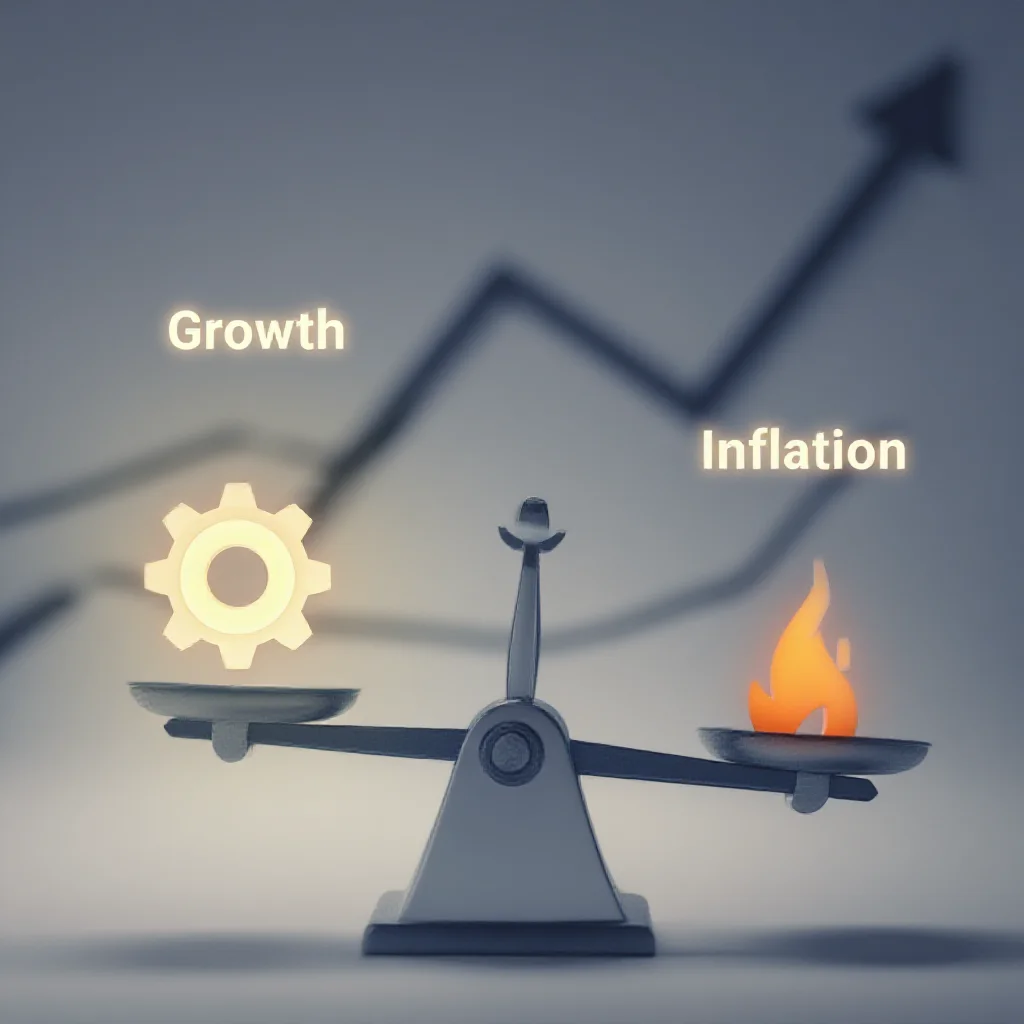
The decision to hold rates is not a passive absence of action but an active policy choice made amidst significant global monetary policy divergence. While major developed market central banks have maintained a restrictive stance, the RBI’s pause underscores a deliberate shift towards a multi-objective framework. The singular, aggressive inflation-targeting mandate of 2022-23 has evolved into a more nuanced balancing act.
A forensic reading of the policy statement’s language and forward guidance is critical. The retention of the "withdrawal of accommodation" stance, despite the prolonged hold, signals continued vigilance against inflationary pressures, even as the immediate impetus for rate hikes has diminished. This linguistic calibration indicates that the policy pivot is conditional, not absolute. The core axis of the decision hinges on the assessment that the risks to growth stability currently outweigh the marginal benefits of further tightening, given the observed moderation in headline inflation prints. The pause, therefore, functions as strategic space to allow previous cumulative rate hikes of 250 basis points to fully transmit through the economy.
Between the Lines: What the RBI's Decision Reveals About the Underlying Economy
The MPC’s inaction serves as a diagnostic tool for the economy’s underlying condition. It implicitly validates concerns regarding the fragility of the nascent growth recovery. References in previous MPC minutes to private capex showing "early signs of revival" but remaining narrow-based suggest the recovery is not yet broad enough to withstand additional monetary contraction. The pause acts as an insurance policy for this fragile demand environment.
Furthermore, the extended hold indirectly signals an acknowledgment of the limitations of monetary policy transmission in the current landscape. Despite a significant rise in the policy repo rate, the pass-through to lending rates, particularly for existing borrowers, has been heterogeneous and often lagged. The pause suggests a tactical decision to allow the system to fully absorb and normalize these transmitted rates before considering further action.
A more profound signal lies in the unspoken concern for financial stability. By halting the rate hike cycle, the RBI mitigates immediate pressure on leveraged corporate balance sheets and the asset-liability management profiles of non-banking financial companies. The decision reflects a deep-seated audit of the credit supply chain, prioritizing its stability to ensure that growth financing is not choked by financial stress.
The Ripple Effect: Long-Term Implications for Markets and Macro Stability
The policy stance has immediate and long-term ramifications beyond the equity market’s short-term reaction. In debt markets, a prolonged pause flattens the yield curve, as short-term rates stabilize and long-term yields adjust to growth and inflation expectations. For foreign portfolio investors, a stable, relatively high real rate environment could sustain the rupee’s carry trade appeal, contingent on global risk sentiment and dollar movements.
This pause also redefines the fiscal-monetary tango. It places greater onus on the central government to manage inflationary pressures through supply-side interventions and disciplined fiscal spending, particularly in food and fuel management. Monetary policy has effectively signaled the limits of demand-side management for current inflation drivers.
A critical long-term consideration is the potential normalization of a higher neutral real interest rate in India’s post-pandemic economy. Structural factors, including revised global risk premiums, elevated public debt, and a shift in savings-investment dynamics, suggest the equilibrium rate at which the economy operates at full potential without inflationary pressure may have risen. The current repo rate level, therefore, may represent a new neutral for a longer period than previously anticipated.
The Road Ahead: Scenarios and Triggers for the Next Policy Move
The future trajectory of policy will be data-dependent, monitored against specific triggers. Key parameters include the durability of the decline in core inflation, the progress of the monsoon and its impact on food prices, the trajectory of global commodity prices—particularly crude oil—and the strength of the US Federal Reserve’s policy cycle.
Two primary scenarios emerge. A resumption of tightening would be triggered by a sustained reversal in the disinflationary trend, most likely from a supply-side shock in food or energy that risks de-anchoring inflation expectations. Conversely, a shift towards an accommodative stance or rate cuts would require conclusive evidence of a sharp growth slowdown, coupled with a definitive alignment of headline and core inflation with the 4% target. The RBI’s current stance of watchful persistence is designed to retain maximum flexibility to respond to either scenario.
The extended pause in the repo rate is a sophisticated policy instrument in itself. It communicates a strategic prioritization of growth stability and financial system integrity, while maintaining a defensive posture against inflation. This decision reflects a mature transition in India’s monetary policy framework, one that is increasingly required to navigate the complex interdependencies of a volatile global economy and a maturing domestic financial landscape. The unspoken signals within the pause will define the contours of India’s economic trajectory in the coming quarters.