Beyond Greenery: How NHAI''s ''Arogya Van'' Strategy Unlocks Hidden Land Value
The National Highways Authority of India's (NHAI) plan to develop 'Arogya
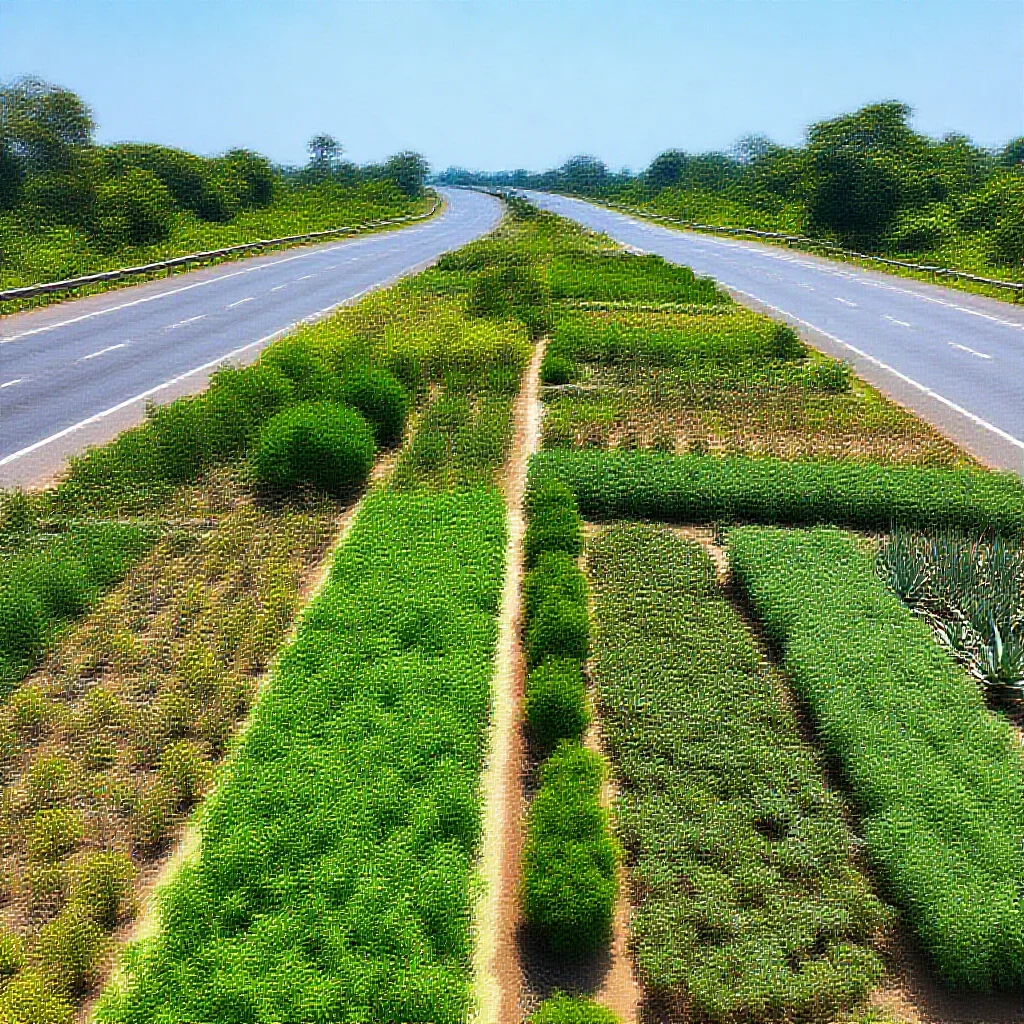
Beyond Greenery: How NHAI's 'Arogya Van' Strategy Unlocks Hidden Land Value and Reshapes Supply Chains
Opening Summary
The National Highways Authority of India (NHAI) has announced a plan to develop 'Arogya Van' medicinal plant gardens on vacant land parcels along national highways. (Source 1: [Primary Data]) These parcels are specifically identified as land unsuitable for highway expansion or commercial exploitation. The stated objectives are the effective utilization of land resources, cultivation of medicinal plants, and the promotion of environmental sustainability. (Source 1: [Primary Data]) A technical audit of this initiative reveals a sophisticated, multi-layered strategy that transcends basic greening, positioning a public infrastructure body as an ecosystem manager with significant implications for asset valuation, supply chain logistics, and rural development.
The Hidden Economic Logic: Transforming Liability into a Strategic Asset
The initiative's foundational logic lies in the reclassification of a passive asset. For NHAI, 'vacant land' unsuitable for its core commercial or expansion purposes represents a financial and administrative burden. These parcels incur holding costs, require maintenance to prevent encroachment, and generate no direct revenue. The 'Arogya Van' model converts these non-performing assets into active instruments of value creation.
This conversion operates on three levels. First, it addresses environmental liability by transforming land from a neutral or degraded state into a carbon-sequestering asset, directly contributing to NHAI's sustainability mandates. Second, it fulfills corporate social responsibility (CSR) objectives by creating green spaces and promoting biodiversity, generating intangible social capital. Third, and most significantly, it plants the seed for potential future bio-commerce. By cultivating high-value medicinal species, NHAI is creating a biological inventory on land previously considered worthless, opening a potential revenue stream from the sale of raw materials to the Ayurveda, nutraceutical, and phytopharmaceutical industries in the future.
Operationally, the model leverages the "adjacent possible" of existing highway infrastructure. Utilizing land already under NHAI's control eliminates acquisition costs. The inherent security, accessibility, and established maintenance corridors along highways substantially lower the operational overhead for cultivation, irrigation, and protection compared to establishing a standalone farm in a remote location.
A Slow Analysis: Disrupting the Medicinal Plant Supply Chain
The strategic placement of these gardens has the potential to introduce systemic efficiencies into India's traditional medicinal plant supply chain. The current network is characterized by vulnerabilities: a heavy reliance on forest foraging leads to sustainability concerns and inconsistent quality, while long, fragmented logistics from remote rural sourcing areas to processing centers increase costs and compromise phytochemical integrity.
The establishment of highway-adjacent cultivation nodes presents a logistical game-changer. Proximity to national transport arteries enables faster, cheaper, and more reliable distribution of harvested materials to processing units and major urban markets. This reduces spoilage, preserves active compounds, and improves supply chain responsiveness.
Furthermore, state-managed cultivation at scale allows for the implementation of standardized agricultural and harvesting protocols. This addresses a critical industry pain point: the authentication and standardization of raw materials. NHAI-managed 'Arogya Vans' could potentially ensure plant species authentication, implement organic cultivation practices, and maintain batch-to-batch consistency. For an industry increasingly focused on quality validation and export standards, such a reliable, traceable, and standardized source of raw materials would command a premium, thereby unlocking the latent economic value of the land.
The Untold Entry Point: Infrastructure as a Public Health Intervention
The initiative's nomenclature—'Arogya' meaning wellness—signals an ambition beyond environmentalism. It positions linear highway infrastructure as a potential vector for public health intervention. By introducing curated medicinal plant gardens along transport corridors, the project disseminates botanical resources and agro-ecological knowledge to adjacent roadside communities.
These gardens could function as decentralized, living pharmacies, providing first-line healthcare resources for common ailments. This has the potential to reduce the burden on formal medical systems in peri-urban and rural areas near highways. The long-term vision could evolve from simple gardens into integrated knowledge hubs. Partnerships with nearby agricultural universities or research institutes could transform these sites into centers for applied research on optimized cultivation techniques for medicinal species, while simultaneously creating skilled green jobs in nursery management, organic farming, and herb processing.
Market and Industry Impact Projections
A neutral analysis of future trends suggests several potential outcomes. In the land valuation domain, this model may establish a new benchmark for assessing non-commercial land held by public infrastructure agencies, valuing it for its ecological output and future bio-resource potential rather than its direct development potential.
For the Ayurveda and herbal products industry, the emergence of a large-scale, logistics-optimized, and potentially standardized source of raw materials could reduce supply volatility and input costs. This may encourage larger domestic and international players to increase investment in processing and product development, knowing a more reliable supply chain backbone is being developed.
Finally, the 'Arogya Van' strategy provides a replicable template. It demonstrates how public infrastructure bodies can transition from pure builders to asset-optimizing ecosystem managers. Similar models could be adopted by railway authorities, port trusts, and other public entities holding linear or fragmented land assets, leading to a broader integration of agro-ecological value creation into national infrastructure planning. The success of this pilot will depend on the technical execution of cultivation, the establishment of clear offtake mechanisms, and the rigorous measurement of its ecological and social impact metrics.