Beyond the Headlines: Decoding India''s Rs 55,000 Crore Cabinet Push for Strategic
The Union Cabinet''s recent approval of projects worth Rs 54,926 crore is
Beyond the Headlines: Decoding India's Rs 55,000 Crore Cabinet Push for Strategic Autonomy
Introduction: The Rs 55,000 Crore Puzzle – Disconnected Projects or a Coherent Strategy?
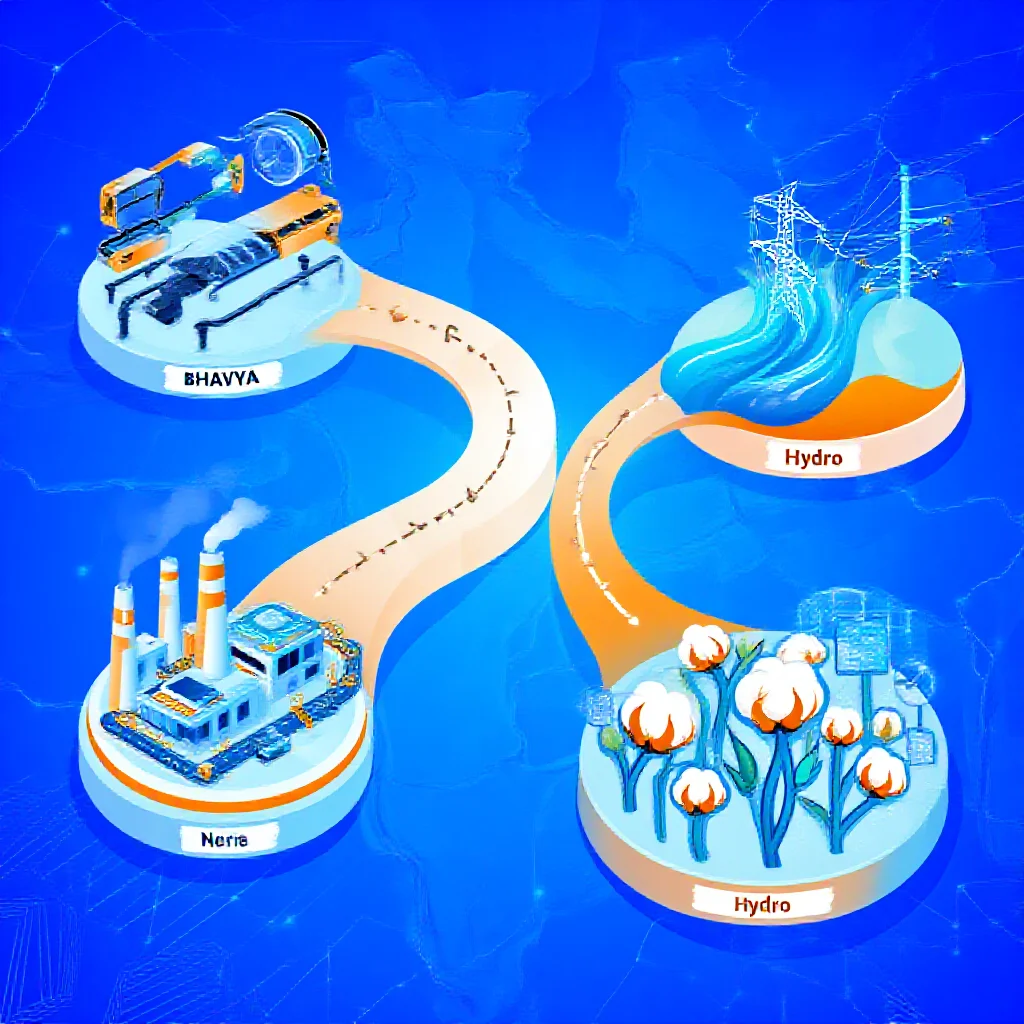
On a single day, the Union Cabinet approved a suite of projects with a combined financial outlay of Rs 54,926 crore (Source 1: [Primary Data]). The approvals spanned sectors with no immediate, apparent connection: the development of BHAVYA (Bharat High-tech Vehicle Advancement and Yojana) parks, a support scheme for cotton farmers, a highway project in Uttar Pradesh, and a renewed push for hydro power generation. Superficially, this resembles a routine compilation of administrative clearances. A structural analysis, however, reveals a coordinated, tri-sectoral strategy aimed at building domestic resilience. The underlying logic connects these approvals across a core axis: the systematic reduction of external dependencies in critical domains of mobility, energy, and primary raw materials, signaling a deliberate shift towards strategic autonomy in industrial policy.
Deep Audit: The Hidden Economic Logic of a Tri-Sector Push
The economic rationale becomes evident when each approval is analyzed not in isolation, but as interdependent components of a supply chain ecosystem.
The BHAVYA parks initiative targets the high-value segment of the automotive industry, specifically electric vehicles (EVs) and advanced automotive components. The strategic intent is to localize a supply chain currently reliant on imports for critical technologies like battery cells, power electronics, and advanced drivetrains. By creating integrated manufacturing hubs, the policy aims to aggregate demand, incentivize domestic production, and reduce vulnerability to global supply disruptions.
Concurrently, the cotton support scheme addresses the foundational layer of another critical value chain: textiles. India’s textile and apparel sector, a major employer and export earner, is dependent on the stability and quality of domestic cotton production. Price volatility and quality issues have historically impacted the competitiveness of the entire downstream industry. The support scheme is a bid to stabilize this raw material base, ensuring a predictable and secure input for the manufacturing sector.
The hydro power push complements this by addressing energy security. Unlike solar and wind, hydro provides stable, renewable base-load power. In an industrial policy focused on domestic manufacturing, reliable and clean energy is a non-negotiable input. Hydro’s role is to provide grid stability and reduce the long-term import dependency associated with fossil fuels.
The connection forms a self-reinforcing loop: stable raw material (cotton) feeds a core manufacturing sector (textiles), while stable, clean energy (hydro) powers advanced manufacturing (BHAVYA parks). This reduces systemic risk across interconnected supply chains.
The Uttar Pradesh Factor: Political Economy and the Highway's Strategic Corridor
The inclusion of a specific highway project in Uttar Pradesh at the Cabinet level underscores the infrastructural sinews required to bind this strategy. Large-scale industrial parks and efficient agricultural supply chains are contingent on logistics efficiency. The project’s approval is predicated on its function as an economic corridor, linking production zones to consumption centers and ports.
Infrastructure analysis from multilateral development banks consistently correlates reduced logistics costs with increased manufacturing competitiveness and agricultural market access (Source 2: [World Bank/ADB Infrastructure Reports]). The highway’s route, therefore, is not merely a transportation link but a calculated enabler for the new industrial and agricultural clusters envisioned under the broader policy framework. It physically integrates the tri-sector strategy, reducing the cost of moving goods from farms and factories to markets.
The Long-Term Play: Impact on Underlying Supply Chains and Global Positioning
The long-term impact of this coordinated push will be measured by its effect on India’s integration into global value chains. In the automotive sector, success would mean transitioning from a peripheral player in the global EV supply chain to an integrated hub for certain components and vehicles. For textiles, it would translate to greater value addition and resilience against global cotton price shocks.
A risk analysis must account for structural challenges. Fragmented support schemes can be undermined by implementation gaps, land acquisition delays for industrial parks, water-sharing disputes for hydro projects, and the persistent volatility in agricultural yields. The efficacy of the cotton scheme, for instance, will depend on its design and delivery mechanisms.
This policy suite contrasts with previous Production-Linked Incentive (PLI) schemes, which were often sector-specific. The current approvals represent a more foundational, cross-sectoral approach. It is a long-term industrial policy shift focused on creating a resilient domestic ecosystem, rather than a short-term economic stimulus. The verdict of a slow, structural analysis is that this marks a calculated move to build strategic autonomy from the ground up—securing raw materials, powering industry with indigenous renewable energy, and manufacturing high-tech goods within a logistics-efficient framework. The market prediction is a gradual but tangible reorientation of capital expenditure towards these strategic sectors, with success contingent on sustained policy commitment and execution fidelity over the next decade.