Beyond Infrastructure: How India''s BHAVYA Scheme Aims to Reshape Manufacturing
The Union Cabinet's approval of the ₹33,660 crore Bharat Industrial Development
Beyond Infrastructure: How India's BHAVYA Scheme Aims to Reshape Manufacturing Competitiveness
Decoding the BHAVYA Approval: Not Just Another Industrial Scheme
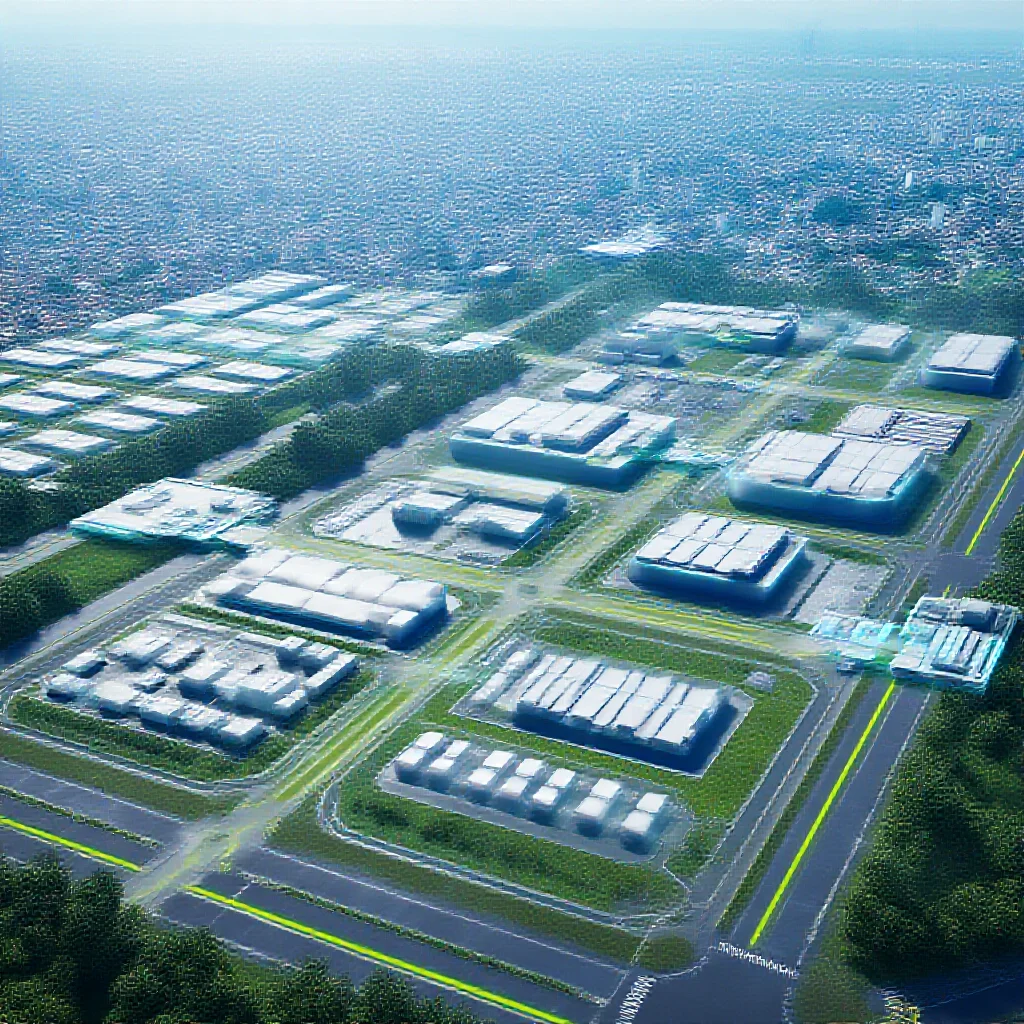
The Union Cabinet’s approval of the Bharat Industrial Development Bhavya (BHAVYA) scheme, with a financial outlay of ₹33,660 crore, represents a strategic evolution within India’s industrial policy framework (Source 1: [Primary Data]). This initiative moves beyond the foundational goals of the ‘Make in India’ campaign and the sector-specific subsidies of Production-Linked Incentive (PLI) schemes. The core proposition is a systemic transition from providing passive land parcels to actively developing business-ready ecosystems. The official objective is the creation of plug-and-play industrial parks, indicating a shift where the state assumes a greater share of pre-operational risk to accelerate private capital deployment.
The Hidden Economic Logic: Targeting the ‘Time Cost’ of Manufacturing
The economic rationale for BHAVYA is rooted in addressing a critical, often unquantified, barrier: the time cost of establishing manufacturing operations. In traditional models, delays in securing land, construction permits, and reliable utilities act as an invisible tax, eroding capital efficiency and delaying market entry. Industry analyses, including past surveys by the Confederation of Indian Industry (CII), have consistently cited infrastructure gaps and procedural delays as primary impediments. The plug-and-play model is designed to function as a supply chain accelerator, compressing the lead time for factory setup from several years to potentially months. This reduction in time-to-market directly impacts a firm’s global competitiveness by improving return on investment timelines and enabling faster responsiveness to market shifts.
Strategic Positioning: BHAVYA in the Global ‘Factory Floor’ Competition
The scheme’s architecture positions it as a direct competitor to established industrial park models in Southeast Asia, particularly Vietnam and Thailand, and as a strategic response to the ‘China Plus One’ supply chain diversification trend. For multinational corporations seeking resilience, the availability of certified, ready-to-use industrial land with integrated utilities reduces perceived country risk and operational complexity. The competitive success of BHAVYA parks will not depend solely on real estate but on the seamless integration of power, water, waste management, logistics connectivity, and in-park regulatory clearance mechanisms. This holistic approach aims to match or exceed the convenience offered by competing jurisdictions, making India a more viable alternative for discrete segments of global manufacturing capacity.
Uncharted Implications: Long-Term Impact on Supply Chains and Urbanization
The strategic deployment of BHAVYA parks could catalyze significant long-term shifts in India’s economic geography. By potentially developing parks in emerging industrial corridors beyond the established Delhi-Mumbai Industrial Corridor (DMIC), the scheme may alter regional economic balances and spur new urban clusters. A focus on developing sector-specific parks—for electronics, textiles, or pharmaceuticals—holds the potential to create hyper-specialized clusters, deepening local supplier networks and fostering innovation. However, a critical challenge will be to ensure these parks do not become isolated islands of excellence. Their long-term viability and broad-based economic impact will depend on the concurrent development of connective infrastructure—roads, railways, and ports—linking them effectively to hinterlands and global markets.
Conclusion: A Calculated Bet on Ecosystem Economics
The BHAVYA scheme is a calculated intervention aimed at altering the fundamental cost-benefit analysis for manufacturers considering India. Its success metric will extend beyond the physical development of parks to measurable improvements in export competitiveness, foreign direct investment (FDI) in manufacturing, and job creation in targeted sectors. Market observers will monitor the scheme’s implementation for its ability to deliver on the promised integration of utilities and approvals, as well as its selection of locations based on strategic supply chain logic. If executed effectively, the scheme represents a move from subsidizing capital or output to subsidizing and de-risking the critical input of time, thereby reshaping India’s position in global manufacturing narratives.