Navigating the Polycentric Shift: Global Economic Trends Reshaping International
This article synthesizes key findings from a 2024 study by Sangkyu Park (Seoul
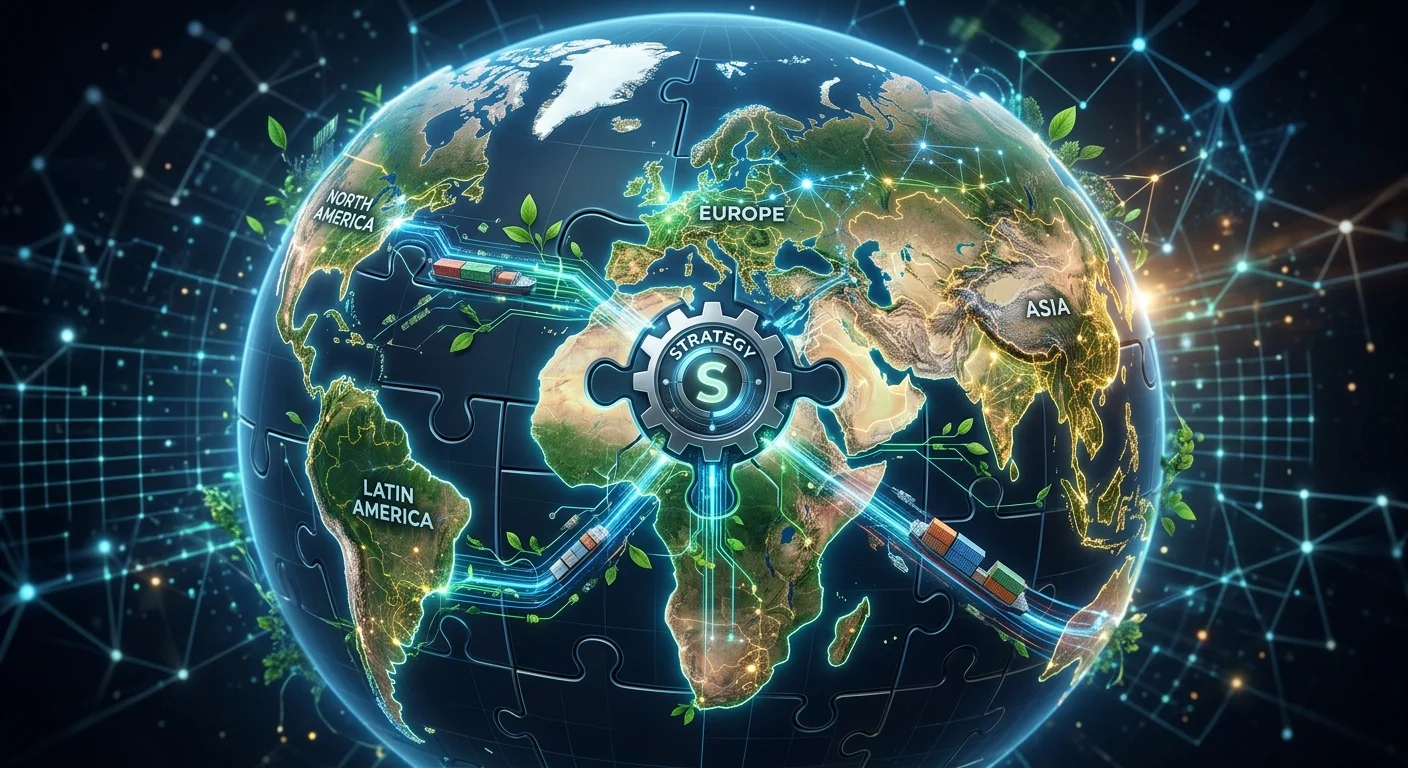
Global Economic Trends Reshaping International Business Strategy in 2024
1. Introduction: The End of Hyper-Globalization and the Rise of the Polycentric Imperative
For decades, the playbook for international business was simple: seek the lowest cost of production, standardize products for global markets, and optimize supply chains for efficiency above all else. That era is over. In 2024, multinational corporations face a radically different landscape — one defined not by frictionless trade but by digital disruption, geopolitical fragmentation, and an unprecedented demand for sustainability accountability.
A 2024 study by Sangkyu Park of Seoul National University, published in the Academy of Accounting and Financial Studies Journal, synthesizes the forces that are fundamentally altering international business strategy. The core argument is clear: the hyper-globalization model that prioritized cost arbitrage is giving way to a polycentric globalization paradigm. Firms can no longer operate with a single-minded focus on efficiency; they must balance global scale with local resilience, cultural adaptation, and ESG compliance.
This is not a retreat from globalization but a transformation. The polycentric imperative demands that companies treat each region not as a passive node in a global value chain but as a distinct center of gravity with its own regulatory environment, consumer expectations, and risk profile. The winners in 2024 will be those that understand this shift and redesign their strategies accordingly.
[IMAGE: A split-image comparing a 1990s globe with arrows pointing to low-cost manufacturing hubs vs. a 2024 globe with multiple nodes of production, digital clouds, and green certification logos.]
2. Digitalization and the New Competitive Battleground
Digitalization is no longer an optional upgrade — it is a strategic imperative reshaping industries from retail to logistics. Park’s study identifies digitalization as a primary driver of the polycentric shift, enabling companies to achieve both global reach and hyper-local personalization simultaneously.
Consider how e-commerce platforms use AI algorithms to tailor product recommendations to local preferences while maintaining a unified global infrastructure. In manufacturing, digital twins — virtual replicas of physical supply chains — allow firms to simulate disruptions and test resilience strategies before committing capital. These tools create a new competitive battleground where the firm that best integrates data from multiple markets gains a decisive advantage.
Yet digitalization also introduces tension. The push for standardized digital platforms conflicts with the need for local customization. A consumer in Jakarta may have different payment preferences, data privacy expectations, and even device capabilities than a consumer in Berlin. Successful international businesses in 2024 are those that use digital tools not to impose uniformity but to manage diversity at scale.
Key to this is the use of AI in supply chain forecasting. Park highlights that firms employing predictive analytics for demand sensing and inventory optimization can reduce stockouts by 30-50% while cutting excess inventory. This capability becomes even more critical when supply chains are disrupted by geopolitical events or natural disasters — which, in 2024, are happening with alarming frequency.
[IMAGE: An abstract visualization of a digital network overlaying a world map, with nodes representing AI-driven decision points in supply chains.]
3. Trade Wars, Geopolitical Tensions, and Supply Chain Redesign
The COVID-19 pandemic exposed the fragility of just-in-time global supply chains. But the aftershocks did not end there. In 2024, trade dynamics are shifting due to US-China tensions, sanctions on Russia, protectionist policies in Europe and India, and the ongoing restructuring of global trade blocs.
Geopolitical risk is now a permanent feature of the business environment. Territorial disputes in the South China Sea, the weaponization of export controls on semiconductors, and the fragmentation of financial systems (such as the rise of alternative payment rails) force multinational corporations to treat supply chain resilience as a strategic priority, not a cost center.
Park’s study emphasizes that firms must adopt a multi-sourcing and nearshoring strategy. Relying on a single country or region for critical components is no longer viable. Instead, companies are building redundancies: dual sourcing for key inputs, regional distribution hubs, and flexible manufacturing capacity that can shift production between locations on short notice.
This does not mean abandoning emerging markets — quite the opposite. Many firms are deepening their presence in Southeast Asia, Mexico, and Eastern Europe as alternatives to China. But they are doing so with a more sophisticated risk framework. The hidden economic logic is that resilience costs money in the short term but protects against catastrophic losses in the long term. In 2024, the cost of not having supply chain resilience has become prohibitively high.
[IMAGE: A flowchart showing traditional linear supply chains with arrows pointing from one country to another, then a second flowchart with multiple branching arrows, re-routing paths, and "resilience hubs" labeled at key intersections.]
4. Market Fragmentation and the New Logic of Localization
One of the most profound trends of 2024 is market fragmentation. The post-Cold War vision of a single, integrated global market has given way to a world of regional blocs, divergent standards, and rising economic nationalism.
This fragmentation manifests in several ways. First, regulatory divergence: the EU’s Digital Services Act, China’s data localization laws, and India’s data protection framework create a patchwork of compliance requirements that demand localized legal and operational teams. Second, consumer preferences are diverging. In the wake of the pandemic, consumers in different regions have developed distinct attitudes toward health, sustainability, and digital privacy. A one-size-fits-all marketing campaign is increasingly ineffective.
Park argues that international business strategy must now be polycentric by design. This means establishing regional headquarters or innovation hubs that have the autonomy to adapt global strategies to local conditions. It also means investing in local talent and partnerships to navigate cultural nuances and regulatory complexities.
Emerging markets are at the heart of this shift. While developed economies face sluggish growth, countries like India, Indonesia, Vietnam, and Brazil are experiencing rapid digital adoption and rising middle classes. However, these markets are not simply "emerging" in a linear sense — they are becoming distinct centers of innovation and consumption in their own right. Companies that treat emerging markets as mere extensions of developed-world strategies will miss the opportunity.
5. ESG as a Strategic Imperative, Not a Compliance Exercise
Environmental, social, and governance (ESG) criteria are increasingly shaping international business strategy, moving from a peripheral concern to a core driver of investment and operations. Park’s study links ESG directly to the polycentric shift, noting that different regions impose different ESG expectations.
In Europe, strict carbon border adjustment mechanisms and supply chain due diligence laws force companies to track emissions and labor practices across their entire value chain. In Southeast Asia, by contrast, ESG considerations may focus more on community engagement and water management. The challenge for multinational corporations is to satisfy multiple ESG frameworks simultaneously without creating inefficiencies.
The business case for ESG is becoming undeniable. Investors are increasingly using ESG ratings to allocate capital, and consumers are voting with their wallets. A 2023 McKinsey study (cited in Park’s analysis) found that companies with strong ESG performance enjoy a 10-15% lower cost of capital. More importantly, ESG compliance is becoming a prerequisite for market access — especially in sectors like fashion, electronics, and agriculture.
However, Park warns against "greenwashing." In a fragmented world, consumers and regulators have more tools to verify corporate claims. Transparency is no longer optional; it is a competitive necessity. Companies that embed ESG into their core strategy — not just their marketing — will build lasting trust and resilience.
[IMAGE: A visual showing three interconnected pillars: "Environmental" with a leaf icon, "Social" with people icons, and "Governance" with a balance scale — each connected to regional flags (EU, ASEAN, US) showing different compliance standards.]
6. Conclusion: Thriving in the Polycentric World
The global economic trends shaping 2024 are not temporary disruptions; they represent a structural shift in the architecture of international commerce. The era of hyper-globalization is over, but globalization itself is not dead — it is evolving into a more complex, polycentric system.
For multinational corporations, the path forward requires a fundamental rethinking of strategy. Efficiency remains important, but it must be balanced with resilience. Scale still matters, but it must be paired with local relevance. Digitalization is a powerful enabler, but only if deployed with an understanding of regional diversity. And ESG is not a burden but a source of competitive advantage.
Park’s 2024 study offers a clear prescription: firms must develop dynamic capabilities to sense and respond to shifts in the global environment. This means investing in scenario planning, building flexible supply chains, cultivating local talent, and embedding sustainability into every decision.
The winners of the next decade will not be the companies that try to impose a single global template on a fragmented world. They will be the ones that embrace the polycentric imperative — navigating complexity with agility, insight, and a commitment to long-term value creation.
[IMAGE: A conceptual 3D infographic-style image showing a global map fragmented into interconnected puzzle pieces, each representing a different region. From the seams of the puzzle, glowing digital lines emerge alongside green leaves and cargo containers. A central gear icon labeled "Strategy" connects all pieces — photorealistic but abstract.]