Beyond Algorithms: The Data Infrastructure Crisis Holding Back AI in Indian
The promise of AI in Indian agriculture is stalling not due to a lack of
Beyond Algorithms: The Data Infrastructure Crisis Holding Back AI in Indian Agriculture
Summary: The implementation of artificial intelligence in Indian agriculture is encountering systemic barriers. The primary impediment is not algorithmic sophistication but a foundational deficit in data infrastructure and governance. This analysis examines the structural and economic factors creating a "last-mile data gap" and argues that without resolving these underlying issues, AI solutions risk ineffectiveness or exacerbating existing inequities.
The AI Promise Meets Ground Reality: A Diagnosis of the Data Gap
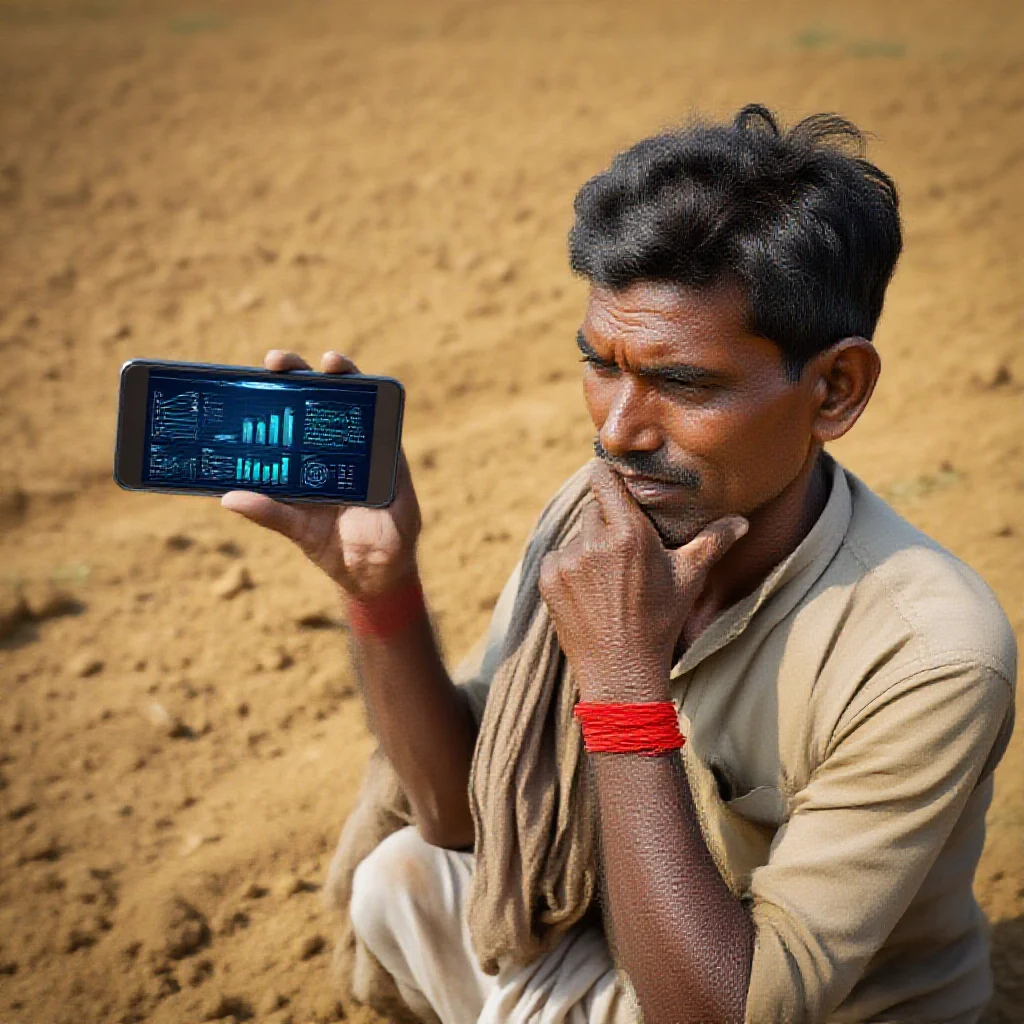
The narrative of AI-driven precision agriculture promises optimized yields, predictive pest management, and data-informed supply chains. However, the implementation of these technologies across India's 150 million hectares of cultivated land, characterized by extreme agro-climatic diversity and smallholder fragmentation, reveals a fundamental disconnect. This is termed the "Last-Mile Data Gap": the chasm between the high-volume, high-quality, standardized data required by machine learning models and the current state of agricultural data collection.
Pilot projects in controlled environments demonstrate technical feasibility. Yet, scaling these solutions requires data that is largely non-existent in a consistent, machine-readable format. The reality consists of handwritten logs, verbal estimates passed through intermediaries, and isolated sensor deployments with no unified standards. The initial challenge is not model training but data acquisition at the source.
Decoding the Data Quality Crisis: More Than Just Dirty Data
The data quality issue is multi-layered. It encompasses inconsistent collection methodologies, linguistic and regional variability in crop and pest nomenclature, and a severe scarcity of historical, digitized records. Sensor-based data collection, a presumed solution, faces reliability challenges in harsh field conditions and involves maintenance costs often incompatible with smallholder economics.
The core of the crisis is economic. For the average Indian farmer, the deliberate, systematic generation of high-fidelity agricultural data represents a cost center with no immediate, tangible return on investment. The labor and capital required to instrument a farm for data collection do not directly translate to guaranteed market premiums or yield assurances. This creates a classic market failure: the entity bearing the cost of data production (the farmer) is not the primary beneficiary of its aggregated value, which accrues to technology platforms and service providers. Consequently, there is no inherent economic driver for the creation of a high-quality raw data supply.
The Missing Layer: Infrastructure and Governance as the Foundational Challenge
The focus on developing AI applications is premature without concurrent investment in the underlying data infrastructure. This infrastructure includes reliable rural connectivity for IoT devices, interoperable data formats (e.g., for soil health, weather, crop phenology), and accessible data storage and processing platforms. The current ecosystem resembles constructing a sophisticated analytics dashboard for a factory that lacks electricity and standardized raw material inputs.
Equally critical is the absence of a regulatory framework for agricultural data governance. Key unresolved questions stifle investment and trust: Who owns farm-generated data—the farmer, the technology service provider, or the platform aggregator? What are the protocols for data sharing, portability, and monetization? What benchmarks define "quality" for different data types? Without legal and technical standards to ensure privacy, security, and equitable value distribution, farmers are justifiably hesitant to participate, and developers cannot build scalable, interoperable solutions on shifting sands.
The Unseen Risk: How Poor Data Governance Could Widen the Digital Divide
The long-term risk of unaddressed data infrastructure and governance is the entrenchment of a new digital divide. Agri-tech platforms and large agribusinesses that successfully aggregate vast datasets could gain disproportionate market power, influencing input recommendations, purchase prices, and credit access in ways that may not align with individual farmer welfare. This creates a potential asymmetry where data-rich entities optimize for systemic efficiency, potentially at the expense of data-poor producers.
Furthermore, AI models trained on incomplete, skewed, or regionally biased datasets risk baking "algorithmic bias" into core agricultural advisory systems. Crops or farming practices predominant in data-rich regions may receive disproportionate optimization, while those in under-digitized areas could be systematically marginalized. The outcome would be technological progress that inadvertently reinforces existing regional and socio-economic disparities.
Building a Viable Data Value Chain: A Prerequisite for Scalable AI
The future of effective Agri-Tech in India hinges on constructing a viable data value chain. This requires a tripartite approach. First, public and private investment must shift towards foundational data infrastructure, treating it as a utility akin to rural roads or irrigation. Second, regulatory frameworks must be established to define data as an asset, clarify ownership rights, and set quality and interoperability standards. Third, business models must evolve to create direct, transparent economic incentives for farmers to generate and share data, such as through data dividends or guaranteed service improvements.
The trajectory of AI in Indian agriculture will be determined less by breakthroughs in silicon and more by progress in governance, economics, and systems engineering. The central thesis is that algorithmic potential is bounded by data reality. Therefore, the most critical investment for the sector's technological future is not in more powerful models, but in building trustworthy, inclusive, and economically sustainable data ecosystems from the ground up.