South Asia's Business Leaders Forge Ahead in 2026: Resilience Amid Global Uncertainty
An analysis of the J.P. Morgan 2026 Business Leaders Outlook and its implications for South Asian economies, businesses, and investors.
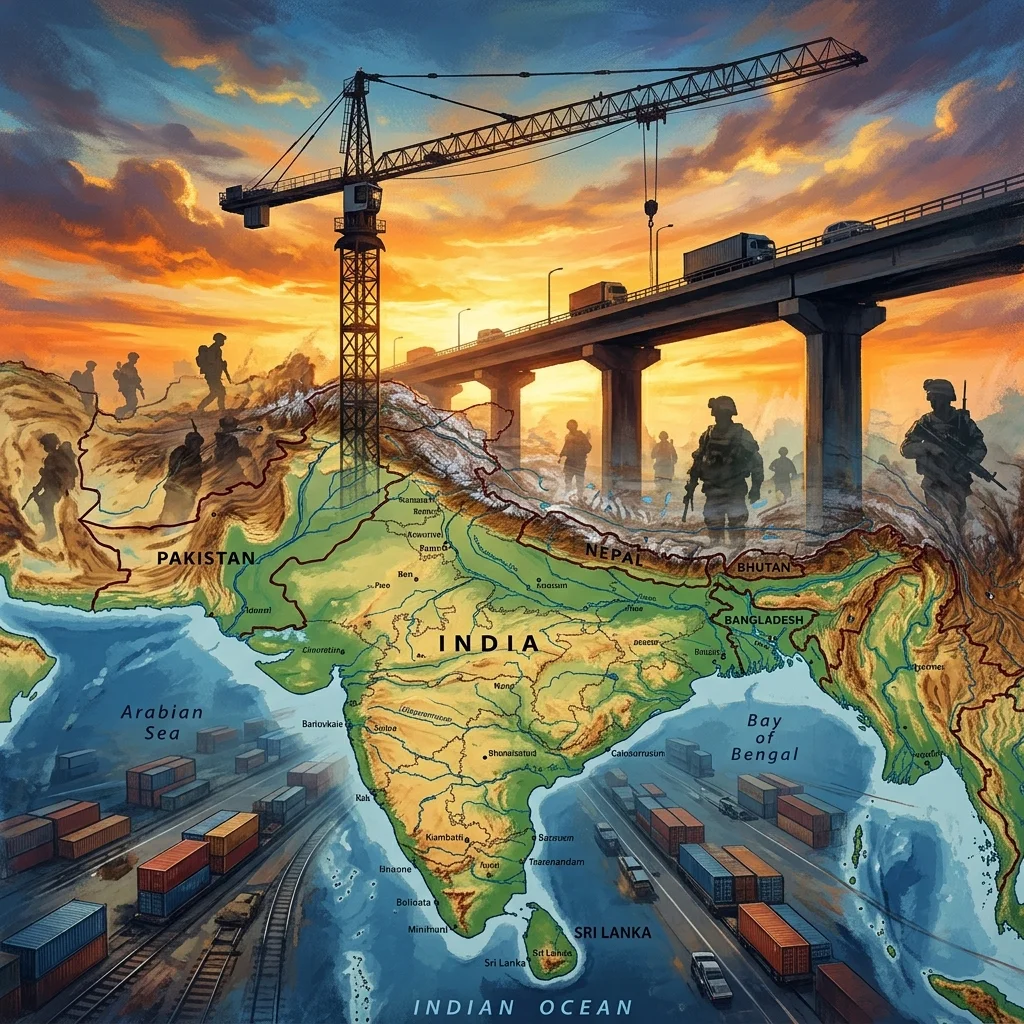
Executive Summary
The J.P. Morgan 2026 Business Leaders Outlook shows that U.S. business leaders have entered the year with cautious optimism, with only 39% expressing confidence in the national economy but 71% remaining optimistic about their own company's performance. These findings carry meaningful signals for South Asia, where businesses face similar global headwinds yet also possess significant opportunities for regional integration and technology-led growth. The survey's emphasis on AI adoption, tariff impacts, and the resilience of mid-sized firms provides a strategic framework for South Asian enterprises and policymakers seeking to navigate 2026 and beyond.
Introduction
Global economic sentiment remains subdued, but business leaders are increasingly focusing on what they can control. The 2026 Business Leaders Outlook, published by J.P. Morgan, captures this mindset shift from uncertainty to proactive planning. While the survey focuses on U.S. mid-sized companies, its themes resonate strongly in South Asia—a region undergoing rapid digital transformation, supply chain realignment, and industrial modernization. This article analyzes the report's key findings and interprets them through a South Asian lens, offering strategic insights for regional businesses, investors, and policymakers.
Main Analysis
Cautious Macro Sentiment, Strong Company Confidence
The survey reveals a stark contrast between how leaders view their own businesses versus the broader economy. Only 39% are optimistic about the national economy, up from a midyear low of 32%, while global optimism remains low at 28%. Yet 71% are optimistic about their company's performance, with 73% expecting revenue growth and 64% expecting higher profits. A similar dynamic is emerging in South Asia, where business confidence in countries like India, Bangladesh, and Vietnam remains resilient despite global inflationary pressures and geopolitical tensions. Local economic sentiment (44% optimistic) is notably higher than global, indicating that regional demand offers a buffer against global shocks.
AI as a Strategic Force
Artificial intelligence is becoming a key driver of workforce planning and productivity. The survey finds that 27% of leaders anticipate some headcount impact from AI, while the most common applications include process automation (62%), predictive analytics (44%), and market intelligence (42%). For South Asia—home to a large pool of IT talent and rapidly digitizing industries—these adoption patterns validate the need for businesses to integrate AI into their operations. Countries like India, Bangladesh, and Sri Lanka have growing AI ecosystems, and the survey suggests that companies investing in AI-enabled tools will enhance their competitive positioning. Governments in the region should prioritize AI skilling and data infrastructure to support this transition.
Trade and Tariff Pressures
Tariffs have emerged as a significant challenge, with 61% of U.S. leaders reporting a negative impact on costs. South Asian economies, which rely heavily on exports to the United States and Europe, must closely monitor trade policy shifts. The survey's findings suggest that supply chains are being re-evaluated. This creates both risks and opportunities for South Asia: while tariff hikes could dampen demand for regional goods, the ongoing reconfiguration of global supply chains offers a chance for South Asian manufacturers to attract relocating production and diversify their export bases. Regional trade agreements, such as BIMSTEC and SAFTA, could be leveraged to deepen intra-regional trade and reduce dependence on any single market.
The Innovation Economy Premium
Startups and high-growth companies—classified by J.P. Morgan as the Innovation Economy—report higher optimism for industry (66%) and company (82%) performance, but also higher recession expectations (33%). This aligns with South Asia's vibrant startup landscape, where venture capital inflows have raised expectations but also heightened sensitivity to global liquidity conditions. South Asian startups should focus on building resilient business models, securing diverse funding sources, and prioritizing unit economics. Policymakers can support innovation by easing regulatory burdens and improving access to capital.
Regional Impact
- Economic Growth: South Asia is expected to remain one of the fastest-growing regions, but global uncertainties may weigh on exports and investment. The survey's localization of optimism suggests domestic demand can anchor growth.
- Regional Competitiveness: To compete globally, South Asian firms must accelerate automation and AI adoption, as highlighted by the survey's productivity focus.
- Trade Integration: Tariff impacts in the U.S. could lead to supply chain shifts, benefiting South Asian manufacturers if they can meet standards and scale. Better trade facilitation is essential.
- Foreign Investment: Investors are likely to favor companies that exhibit resilient strategies and clear digital roadmaps. South Asian firms that align with these criteria may attract increased FDI.
- Technology Adoption: AI is no longer optional. Regional businesses must adopt predictive analytics and automation to match global productivity benchmarks.
- Supply Chain Resilience: The survey underscores the need to diversify both sourcing and export markets. South Asia can emerge as a reliable alternative hub.
- Employment: While AI may automate certain roles, the survey shows leaders still plan to expand headcounts. South Asia's young workforce must be reskilled for higher-value tasks.
- Financial Inclusion: Digital transformation in business creates opportunities for fintech to expand access to finance across the region.
- Regional Cooperation: The findings reinforce the importance of stronger ties through BIMSTEC, SAFTA, and bilateral trade deals to build collective resilience.
Strategic Insights
- Business Opportunities: Companies that integrate AI for process automation and market intelligence will gain an edge in cost, speed, and customer insight.
- Corporate Strategy: Prioritize resilience: diversify supply chains, build cash reserves, and invest in digital infrastructure.
- Investment Implications: Investors should look for firms with strong adoption of AI and adaptive strategies to weather tariff shocks.
- Policy Priorities: Governments should create AI skilling programs, streamline trade procedures, and establish tariff mitigation frameworks.
- Emerging Industries: Fintech, logistics tech, and AI-driven services are poised for significant growth in South Asia.
- International Partnerships: South Asian firms should form alliances with global technology providers to access cutting-edge tools and markets.
- Long-Term Competitiveness: Enhancing productivity through technology and innovation is the surest path to sustained growth.
Future Outlook (2026–2030)
The next five years will be transformative for South Asia as businesses and governments adapt to a rapidly evolving global landscape. Several trends are likely:
- AI and Digital Economy: AI adoption will accelerate across banking, manufacturing, and services. South Asia can position itself as a global hub for AI-enabled services and digital solutions.
- Infrastructure: Investments in digital highways, logistics parks, and power grids will support industrial modernization and regional connectivity.
- Manufacturing: As tariff pressures reshape global supply chains, South Asia—particularly India, Bangladesh, and Vietnam—will compete for relocated production in electronics, textiles, and pharmaceuticals.
- Trade Integration: Deeper collaboration through BIMSTEC and other frameworks will enhance intra-regional trade, reducing vulnerability to external shocks.
- Investment: A combination of favorable demographics, digital adoption, and policy reforms will attract sustained foreign direct investment.
- Energy Transition: Companies will increasingly invest in renewable energy solutions to lower costs and meet sustainability requirements from global partners.
- Financial Markets: Capital markets will deepen as more startups list operations and institutional investors enter the region.
- Global Competitiveness: If South Asia successfully leverages its demographic dividend with technology and innovation, it can become an even more influential player in the global economy.
Conclusion
The J.P. Morgan Business Leaders Outlook for 2026 captures a global shift from uncertainty to proactive planning. While macroeconomic sentiment remains cautious, business leaders are looking inward—strengthening operations, embracing AI, and managing trade risks. For South Asia, the message is clear: resilience and competitiveness will come from strategic foresight, technological adoption, and regional cooperation. By heeding these insights, South Asian enterprises and governments can not only navigate the challenges of 2026 but also forge a path toward sustained, inclusive growth.
Key Takeaways
- Global business sentiment is cautious, but company-level confidence remains strong—South Asian firms should double down on operational strategy.
- AI adoption is rapidly becoming a determinant of productivity and workforce planning; regional companies must integrate AI now.
- Tariffs are reshaping trade dynamics, offering South Asia both risks and the chance to become an alternative supply chain destination.
- Regional businesses should prioritize resilience through diversification and digital transformation.
- Innovation-driven startups are optimistic but should prepare for potential recessionary conditions.
SEO Keywords
South Asia Economy, South Asia Business, Regional Trade, Foreign Direct Investment, Digital Economy, Artificial Intelligence, Infrastructure, Manufacturing, Supply Chain, Economic Development, Innovation, Business Strategy, Regional Cooperation, Industrial Development, Technology, Capital Markets, Energy Transition, Investment, Economic Growth, Emerging Markets
Sources
- J.P. Morgan. "2026 Business Leaders Outlook: Expectations & Trends." January 07, 2026. Link