Beyond the $100 Billion: Adani''s AI Data Center Bet and India''s Geopolitical
Adani Group''s announcement of a $100 billion, decade-long investment in
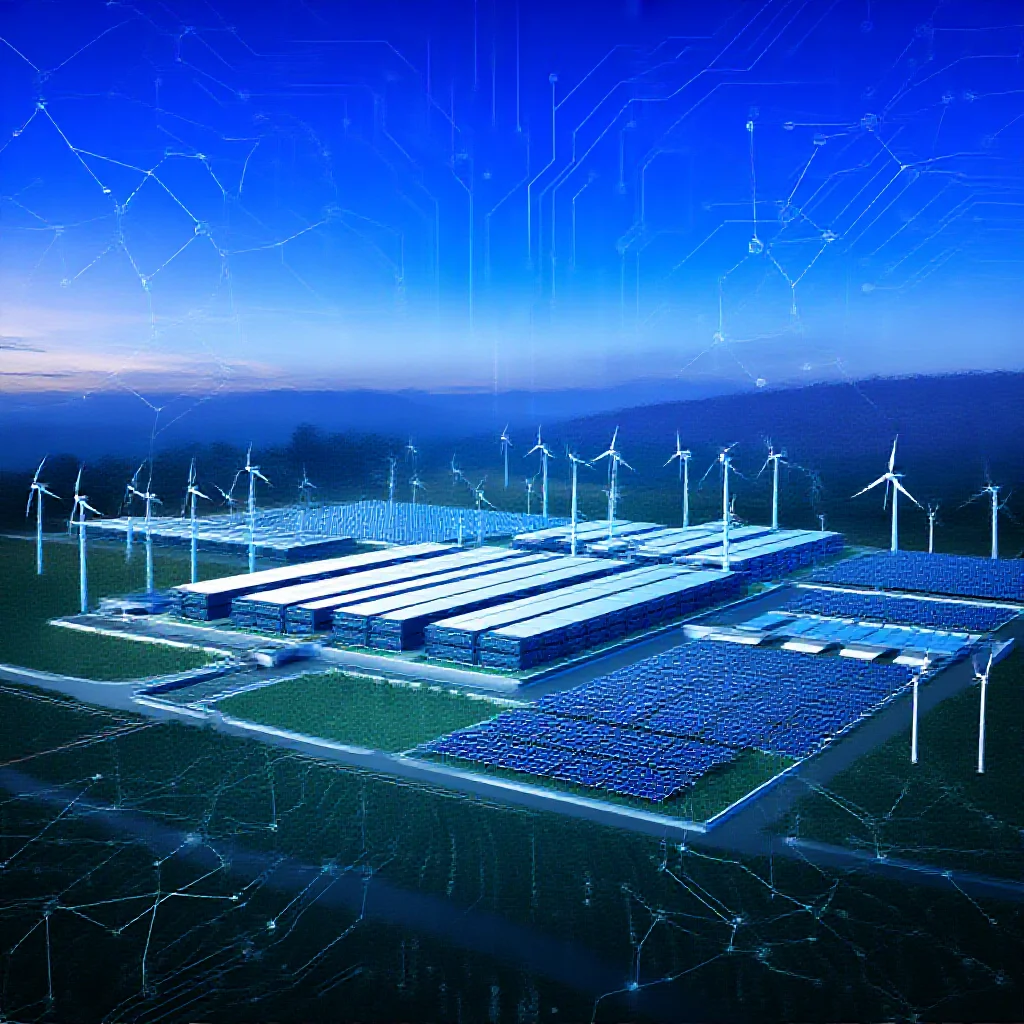
Beyond the $100 Billion: Adani's AI Data Center Bet and India's Geopolitical Infrastructure Play
The $100 Billion Signal: Decoding Adani's Vertical Integration Ambition
The Adani Group has announced a plan to invest US$100 billion over the next decade in artificial intelligence data center infrastructure across India. (Source 1: [Primary Data]) This capital expenditure figure, unprecedented in India's technology sector, signals a strategic pivot beyond the group's traditional domains of ports, logistics, and energy. The scale of the commitment invites immediate comparison: it exceeds the typical annual combined capital expenditure of global hyperscalers like Amazon Web Services, Microsoft Azure, and Google Cloud on data centers worldwide.
The underlying economic logic is not merely expansion into digital real estate. The plan leverages the group's established core competencies to construct a vertically integrated infrastructure stack. Control over ports and logistics provides a potential advantage in importing critical hardware and managing supply chains. The more significant integration lies in energy. By coupling data center development with its substantial renewable energy portfolio, Adani aims to create a cost-advantaged and sustainable utility for AI compute. This positions the group not as a simple colocation provider, but as a foundational, full-stack infrastructure player for global and domestic AI workloads, bundling power, land, connectivity, and compute.
The Geopolitical Calculus: Data Sovereignty as a National Project
The announcement's timing aligns with broader macroeconomic and regulatory shifts. India's enactment of the Digital Personal Data Protection Act (2023) has intensified focus on data localization and sovereignty. Concurrently, global "China+1" supply chain diversification strategies are directing investment flows toward alternative markets, including India.
This investment serves as critical infrastructure for national strategic autonomy. Dependence on U.S. and Chinese hyperscalers for foundational AI compute capacity presents long-term geopolitical and economic vulnerabilities. A domestically controlled, at-scale data center ecosystem, powered by indigenous renewable energy, reduces this reliance. It creates a controlled environment for processing sensitive government and corporate data, and provides the physical substrate for national AI research and development missions. The infrastructure also enhances India's position as a nexus for global undersea cable networks, turning data geography into a geopolitical asset in the Indo-Pacific region.
The Energy-Data Nexus: Can Green Power Fuel the AI Boom?
The plan's feasibility is intrinsically tied to the energy-data nexus. Advanced AI model training and inference are profoundly power-intensive. The proposed scale of data center deployment will require gigawatt-scale, reliable electricity supply. Adani's parallel ambitions in renewable energy generation, particularly solar and wind, are therefore not coincidental but essential.
This creates a recursive dynamic. The data center investment could act as a catalyst, driving accelerated capital deployment into India's green energy grid and storage solutions to meet predictable, baseload demand. The competitive proposition for international clients seeking to reduce the carbon footprint of their AI operations is clear: bundled, guaranteed renewable power. However, the localized demand spikes from concentrated data center clusters could strain regional transmission infrastructure, necessitating coordinated investment with public grid operators. The long-term impact hinges on the synchronized execution of both energy and digital infrastructure roadmaps.
Supply Chain Ripples and Unanswered Questions
The announcement surfaces critical questions regarding execution beyond financing and power. The global market for advanced computing components, particularly high-end GPUs and specialized AI chips, remains constrained by supply chain bottlenecks and export controls. The plan's success is contingent on securing long-term, high-volume access to these components, a challenge that intersects with India's nascent semiconductor manufacturing policy. Sourcing advanced cooling systems and other mission-critical infrastructure also presents a procurement hurdle.
A parallel constraint is human capital. Building and operating next-generation AI data centers requires a specialized workforce in areas like thermal engineering, high-density power management, and AI infrastructure optimization. India's deep pool of software talent does not automatically translate to readiness in these niche hardware engineering fields, potentially creating a talent chasm.
Risk analysis must consider execution at scale, the sensitivity to global capital cycles and interest rates, and the group's exposure to regulatory shifts in both the energy and technology sectors. The $100 billion figure represents a decade-long commitment, implying vulnerability to technological disruption, commodity price volatility, and changes in the competitive landscape for AI cloud services.
The Global Chessboard: Market Implications and Neutral Projections
The entry of a capital-intensive, vertically integrated player like the Adani Group recalibrates the competitive dynamics of the global data center and AI cloud market. It introduces a model predicated on infrastructure integration rather than pure software service layers. In the medium term, this may pressure margins for traditional colocation providers in India and offer an alternative partnership model for hyperscalers seeking sustainable power and sovereign data handling.
Market projections based on this development are necessarily cautious. If executed as outlined, the investment will significantly increase India's total data center capacity, potentially making it a net exporter of AI compute services in the Asia-Pacific region by the end of the decade. It will stimulate adjacent sectors, including renewable energy, construction, and precision cooling manufacturing. The plan's ultimate validation will not be the announcement capital figure, but the sequential, demonstrable deployment of operational, AI-ready data centers with attached power purchase agreements for renewable energy. The move reframes the AI infrastructure race from a purely technological contest to one encompassing energy logistics, geographic strategy, and long-term capital allocation.