Beyond the Hype: Why 2026''s ''Intelligent Data Platform'' Will Demand a ''Vectorized
The prediction that 2026 will be the year of the intelligent data platform
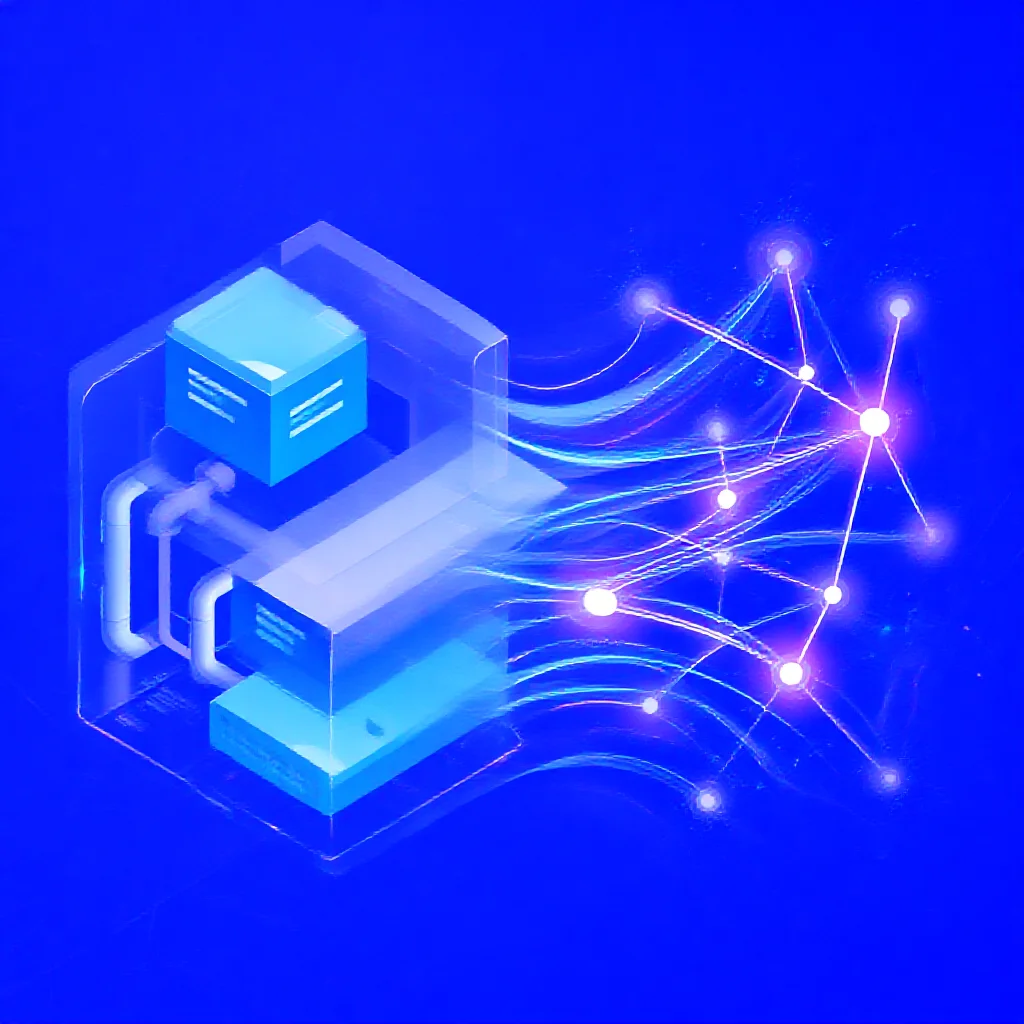
Beyond the Hype: Why 2026's 'Intelligent Data Platform' Will Demand a 'Vectorized Enterprise'
Introduction: The 2026 Horizon - More Than Just a Smarter Platform
The technology analysis cycle has produced a specific forecast: 2026 will emerge as the definitive year of the intelligent data platform (Source: [Primary Data]). This prediction exists within a clear evolutionary context, following the eras of centralized data warehouses, consolidated data lakes, and federated data mesh architectures. However, positioning this as merely the next sequential upgrade misrepresents its fundamental nature. The transition to an intelligent platform is not an incremental feature addition but an architectural outcome. The core thesis is that intelligence—manifested as reduced decision latency, autonomous optimization, and predictive insight—is a property that emerges from a specific foundational state. That state is the "vectorized enterprise." This shift represents a slow, foundational change in IT strategy, demanding a technical audit that moves beyond surface-level feature lists to examine the underlying economic and operational logic of data infrastructure.
Deconstructing 'Intelligence': The Economic Logic Behind the 2026 Prediction
In an enterprise context, "intelligence" must be defined by measurable operational and economic outcomes. An intelligent data platform is one that systematically reduces the time between a business event and an optimized action, autonomously adjusts data flows and resources based on predicted demand, and generates insights by discovering non-obvious patterns across historically segregated domains. The prediction for 2026 gains credence from the exhaustion of returns on previous architectural paradigms. The economic driver is no longer consolidation for its own sake, but the demand for real-time, context-aware business operations that can respond to market dynamics at the speed of software.
The hidden cost of current "dumb" data architectures creates the imperative. Traditional systems, reliant on rigid schemas and batch-oriented ETL (Extract, Transform, Load) pipelines, introduce significant friction. Data remains trapped in semantic silos, requiring extensive manual integration and preparation for each new analytical or operational use case. This friction translates to wasted computational resources, delayed time-to-insight, and an inability to leverage the full contextual richness of unstructured data—which comprises the majority of modern enterprise information. The intelligent platform, therefore, is not a discretionary technology trend but an economic necessity for competitive viability.
The Core Enabler: What 'Vectorizing the Enterprise' Really Means
The term "vectorization" is often narrowly associated with vector databases for generative AI applications. This view is incomplete. To vectorize the enterprise is to adopt a new paradigm for encoding the meaning, context, and relationships inherent in all data types—text, images, video, sensor telemetry, and transactional records. It involves transforming raw data into mathematical representations (embeddings) that capture semantic and relational features, positioning them in a shared high-dimensional space where proximity indicates similarity.
This necessitates a fundamental architectural shift. The legacy model of scheduled ETL pipelines moving data between systems is supplanted by a continuous "embedding generation and management" layer. This becomes a new core data supply chain. Operational impact is profound: vectorization dissolves silos at a semantic level. A customer support ticket, a product log file, a sales transaction, and a marketing email, once separated by incompatible formats and schemas, can be unified based on their contextual meaning when represented as vectors. This enables a form of data federation that schema-based integration, which struggles with heterogeneity and scale, could never achieve.
Deep Audit: The Unseen Challenges and Long-Term Implications
The vectorized enterprise introduces a new category of supply chain friction. Managing the embedding lifecycle—creation, versioning, quality assurance, and monitoring for semantic drift—becomes a core IT competency. Embedding models themselves are assets that require governance; their performance degrades as language and business contexts evolve, a phenomenon documented in machine learning research on embedding drift. Industry analysis from firms like Gartner identifies AI governance, including model and data pipeline integrity, as a top-tier risk for organizations pursuing advanced analytics.
The long-term implications redefine competitive moats. The strategic asset shifts from the raw data repository to the proprietary vector models and the continuously tuned pipelines that create context-aware representations of an enterprise's unique operational universe. The organization that masters the semantic unification of its data gains a decisive advantage in decision-making latency and insight quality. This vector network becomes the central nervous system, enabling applications from hyper-personalized interaction to predictive supply chain resilience and autonomous operational tuning. The intelligent platform is the interface to this nervous system; the vectorized data fabric is the system itself.
Conclusion: The Path to 2026
The prediction for 2026 serves as a strategic marker. The development and maturation of the technologies and practices required for enterprise-wide vectorization—performant embedding models, efficient vector databases, and robust lifecycle management tools—align with this timeframe. Market adoption will follow a predictable pattern: early experimentation focused on discrete use cases (e.g., semantic search, RAG for chatbots) will gradually expose the limitations of point solutions, forcing a architectural reckoning. The transition will be led by organizations where data latency directly correlates with competitive risk or revenue opportunity, such as financial services, advanced manufacturing, and personalized digital services. The intelligent data platform of 2026 will not be a product purchased from a vendor, but an outcome realized by enterprises that successfully execute on the deeper, more demanding project of vectorizing their operational essence.