Beyond the Outage: How RBI''s Digital Crackdown on HDFC Bank Signals a New
The Reserve Bank of India''s unprecedented action to halt HDFC Bank''s Digital
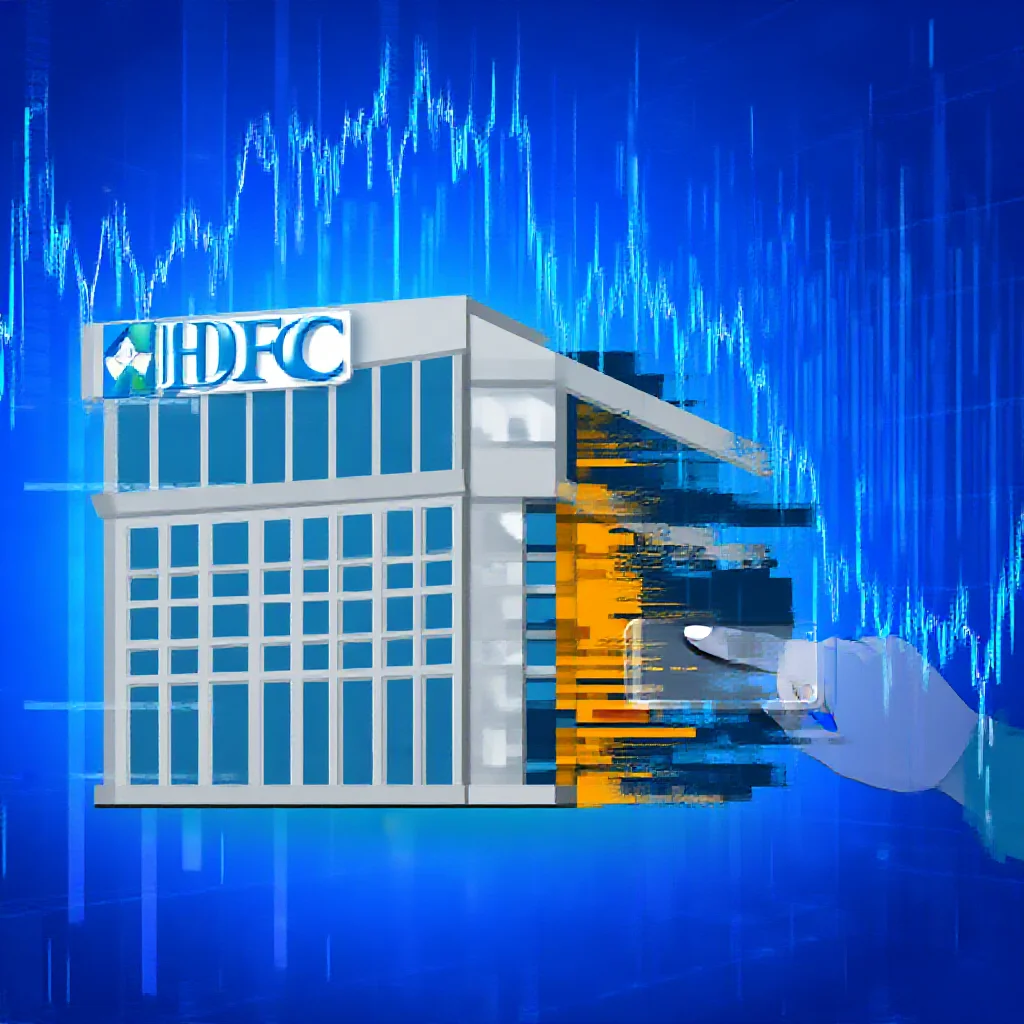
Beyond the Outage: How RBI's Digital Crackdown on HDFC Bank Signals a New Era of Tech Governance in Finance
Summary: The Reserve Bank of India's directive for HDFC Bank to halt its Digital 2.0 program and new credit card sourcing represents a regulatory inflection point. This analysis examines the action not as a mere penalty but as a precedent that redefines technological resilience as a core component of systemic financial stability, directly linking operational failures to market valuation and future growth sanctions.
---
The Rs 1 Lakh Crore Wake-Up Call: Connecting Dots Between Outages and Valuation
The erosion of approximately Rs 1 lakh crore in HDFC Bank's market capitalization (Source 1: [Primary Data]) following the Reserve Bank of India's (RBI) action establishes a direct correlation between technological stability and shareholder wealth. This market reaction is a quantitative recalibration of risk. Traditional bank valuation metrics, focused on net interest margins and asset quality, are being forcibly augmented by a new variable: the tech resilience premium.
The repeated incidents of outages in the bank's internet banking, mobile banking, and payment utilities over the past two years (Source 2: [Primary Data]) transitioned from operational headaches to a material financial event. The market's response indicates that operational reliability is no longer a back-office concern but a non-negotiable component of a bank's intrinsic worth and future earnings capacity. Investor anxiety now explicitly factors in the risk of growth channels being severed by regulatory mandate due to technological failure.
![Infographic showing HDFC Bank's market cap trend line sharply dropping, with icons representing outage incidents along the timeline.]
Decoding RBI's Unprecedented Move: From Corrective Action to Strategic Precedent
The RBI's directive is notable for its surgical precision. It did not impose a blanket operational freeze but targeted two specific growth engines: all launches under the strategic "Digital 2.0" program and the sourcing of new credit card customers (Source 3: [Primary Data]). This indicates a regulatory evolution from overseeing purely financial risk to mandating technological and operational integrity as a prerequisite for business expansion.
This action moves beyond corrective punishment for past failures. It functions as a strategic precedent, creating a regulatory playbook for India's rapidly digitizing financial sector. The message is unambiguous: the authority to launch new digital initiatives or acquire customers digitally is contingent upon demonstrating fault-tolerant, resilient underlying systems. The halt is, in effect, a mandated "tech audit" and remediation period, setting a clear cause-and-effect framework where systemic technological failures result in growth limitations.
![A symbolic image of a regulatory document with sections on 'Digital Launches' and 'Customer Acquisition' highlighted in red, with a stamp reading 'TECH AUDIT REQUIRED'.]
The Hidden Tech Debt: Innovation Speed vs. Systemic Stability
The RBI's intervention forces an examination of the potential "tech debt" accrued by major financial institutions in the race for digital market share. "Digital 2.0" ambitions, which often involve advanced analytics, API-driven ecosystems, and real-time services, may be built upon legacy core banking systems not designed for such loads or complexity. This creates a critical infrastructure paradox.
The regulatory action imposes a forced "time-out" for strategic reassessment. It raises the question of whether the trade-off between the speed of digital innovation and the robustness of foundational architecture has been miscalculated. For HDFC Bank and the sector, the priority must shift from merely adding digital features to ensuring the core infrastructure can support them reliably at scale. The RBI's move reframes this from an internal IT issue to a matter of regulatory compliance and systemic stability.
![A conceptual illustration of a sleek, fast-moving digital rocket (labeled 'Innovation') tethered to a heavy, complex old engine block (labeled 'Legacy Core Banking System').]
The Ripple Effect: Implications for Competitors, Fintechs, and the Broader Ecosystem
The precedent set by the RBI's action on HDFC Bank creates immediate second-order effects across the financial ecosystem. Competitor banks are now on notice. Institutions with high digital transaction volumes and a history of minor outages will likely undergo internal stress-testing and pre-emptive infrastructure reviews to avoid similar sanctions. The regulatory scrutiny will extend to the depth and modernization of core systems, not just customer-facing applications.
For fintech companies, the environment becomes more complex. While the demand for robust tech solutions may increase, bank-fintech partnerships and integrations will face heightened scrutiny. The liability for outages in interconnected systems becomes a shared risk, potentially slowing integration timelines as due diligence intensifies. Furthermore, a sector-wide slowdown in aggressive digital product launches is probable as banks prioritize compliance and foundational tech stability over market-first deployment.
![A network graph showing nodes for major banks and fintechs, with connecting lines thickening to indicate increased scrutiny on partnerships.]
Conclusion: The New Calculus of Digital Finance
The RBI's action against HDFC Bank marks a definitive shift in the regulatory governance of finance in a digital age. Technological resilience has been elevated to the same strategic plane as capital adequacy and asset quality. The Rs 1 lakh crore market correction is a tangible signal that the market is aligning with this new risk paradigm.
Future trends suggest a period of consolidation and investment in core banking infrastructure across the sector. Regulatory approvals for new digital business lines may become contingent on demonstrated operational resilience reports. The era of growth-at-all-costs digital expansion is being tempered by a mandate for stability-at-the-core. The ultimate outcome is likely a more robust, if deliberately paced, digital financial ecosystem in India, where systemic stability is engineered into the architecture of innovation. The trade-off between speed and stability has been permanently recalibrated by regulatory fiat.