Beyond the Breakout: What 9 Indian Stocks Crossing the 200-DMA Reveals About
The recent breakout of nine major Indian stocks—including Adani Ports, HDFC
Beyond the Breakout: What 9 Indian Stocks Crossing the 200-DMA Reveals About Market Sentiment and Sectoral Shifts
Introduction: The Signal in the Noise - Nine Breakouts, One Story
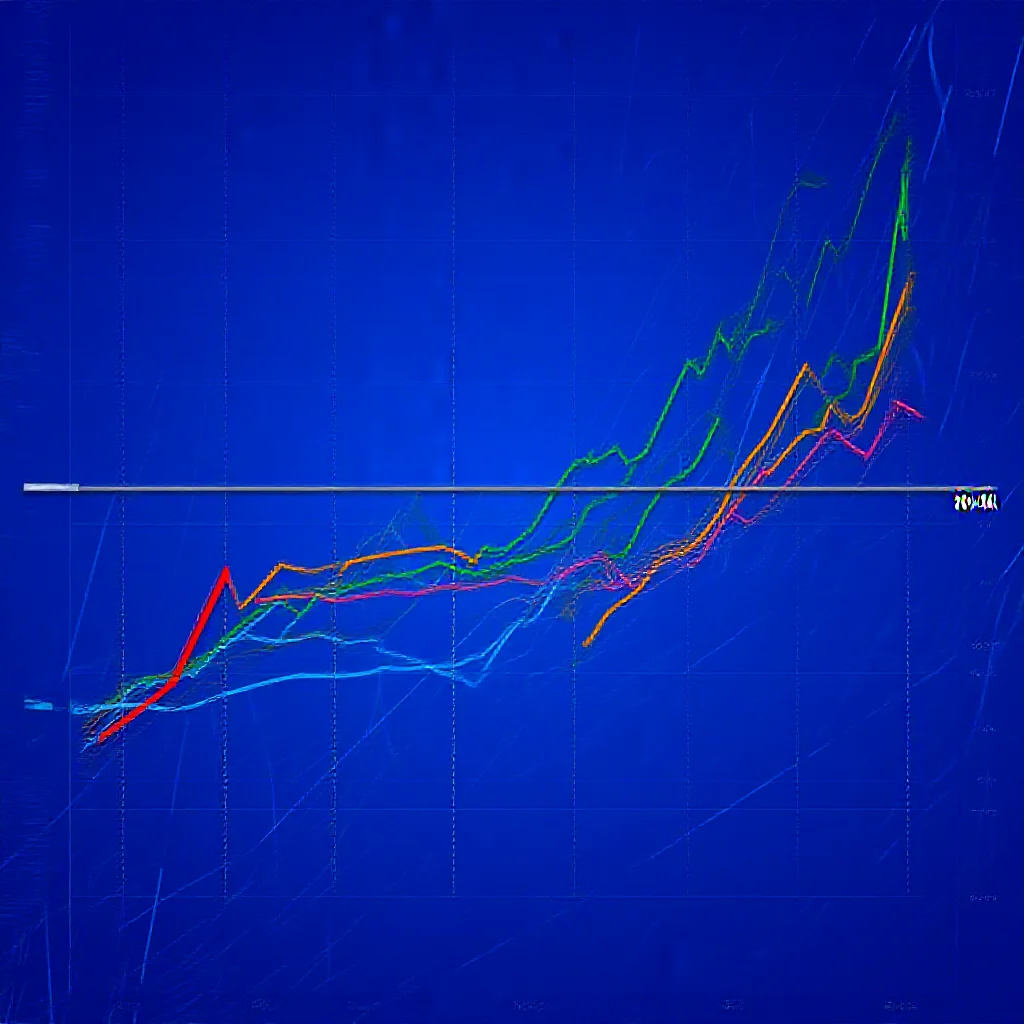
A cluster of nine prominent Indian stocks recently crossed above their 200-day moving average (DMA), a key long-term technical threshold. The stocks identified in this movement are Adani Ports, State Bank of India (SBI), HDFC Bank, Bharat Electronics, GAIL (India), JSW Steel, Mahindra & Mahindra (M&M), Bajaj Auto, and Aditya Birla Fashion and Retail (Source 1: [Primary Data]). In technical analysis, a sustained move above the 200-DMA is widely interpreted as a shift from a bearish to a bullish long-term trend for a security. The simultaneous breakout of nine major constituents across diverse sectors transcends a mere chart pattern. It presents a core analytical question: whether this is a random statistical cluster or a coordinated signal reflecting deeper institutional positioning and macroeconomic shifts.
Deconstructing the List: The Hidden Common Threads
Categorization of the nine entities reveals distinct, yet interconnected, economic themes rather than random selection.
* Infrastructure, Capital Goods, and PSU Revival: Adani Ports (logistics infrastructure), Bharat Electronics (defense capital goods), GAIL (energy infrastructure), and JSW Steel (industrial steel) form a bloc directly linked to public and private capital expenditure. Their collective strength suggests institutional positioning in anticipation of continued project execution.
* Financial Services Resurgence: The inclusion of SBI and HDFC Bank, bellwethers for public and private sector banking respectively, points to confidence in credit growth, asset quality stability, and broader financial system health.
* Domestic Consumption Recovery: Bajaj Auto (automobiles), M&M (automobiles & farm equipment), and Aditya Birla Fashion (retail) represent core domestic consumption themes. Their breakout aligns with narratives of urban and rural demand resilience.
A notable observation is the absence of pure-play information technology or pharmaceutical exporters from this breakout list. This selectivity implies a potential sectoral rotation favoring "India-centric" narratives tied to domestic economic growth, government capex, and formalization, over sectors more sensitive to global macroeconomic headwinds.
Beyond Technicals: The Macro and Sentiment Drivers
The technical breakout coincides with identifiable macroeconomic and liquidity conditions that validate the move beyond chart-based analysis.
* Macroeconomic Stability: A backdrop of stable monetary policy from the Reserve Bank of India, sustained high Goods and Services Tax collections, and moderating inflation creates a favorable environment for the fundamental performance of the identified sectors, particularly banking and consumption.
* Domestic Institutional Support: Persistent inflows into domestic mutual funds through systematic investment plans (SIPs) provide a steady bid for large-cap, fundamentally sound stocks. This sustained domestic liquidity is a critical force enabling such broad-based technical breakouts by offering consistent buying support.
* Shifting Foreign Institutional Investor (FII) Dynamics: The breakout may also reflect a reduction in sustained selling pressure from FIIs or a cautious re-allocation of foreign capital towards large-cap stocks perceived as relatively safe proxies for India's long-term growth story, following a period of volatility.
The convergence of these factors—improving fundamentals for specific sectors, relentless domestic buying, and a stabilization of foreign flows—provides the substrate for the observed technical phenomenon.
The Deep Dive: Sector-Specific Implications and Risks
The breakout, while a positive signal, carries distinct implications and inherent risks for each thematic cluster.
* Infrastructure & PSUs: The strength in Adani Ports, BEL, GAIL, and JSW Steel is a direct correlate to expectations of continued government and private capital expenditure. The risk factor is execution lag or a fiscal consolidation that slows the pace of new project awards. Their performance will serve as a real-time verification gauge for the capex cycle.
* Financial Services: The breakout of major banks suggests the market is discounting peak non-performing asset cycles and anticipating robust loan growth. The primary risk remains any unexpected deterioration in asset quality, particularly in unsecured retail segments, or margin compression from heightened deposit competition.
* Domestic Consumption: Recovery in auto and retail stocks is contingent upon sustained disposable income growth and stable input costs. This segment remains vulnerable to inflationary pressures impacting consumer sentiment and any unevenness in the monsoon affecting rural demand.
The coordinated movement suggests a market view that these risks are currently outweighed by the growth potential within these domestic cycles.
Conclusion: A Bellwether for Sustained Rotation or a Tactical Pause?
The simultaneous breach of the 200-DMA by nine stocks across infrastructure, banking, and consumption is a significant technical event reinforced by macroeconomic and liquidity trends. It indicates a pronounced institutional preference for sectors leveraged to India's domestic economic trajectory. The analysis suggests this is more than a tactical rally; it is a reflection of capital migrating towards sectors aligned with domestic capex, financial system stability, and consumption formalization.
The forward-looking implication is a potential continuation of this sectoral rotation. Markets will monitor whether this breakout group maintains its momentum above the 200-DMA, which would confirm strength. Conversely, a failure to hold these levels would indicate the move was driven more by short-term liquidity than deep-seated conviction. The performance of this cluster will serve as a key barometer for the breadth and sustainability of the next phase of market activity, with a clear bias towards domestically oriented economic themes.