The Hidden Supply Chain Logic of South Asia''s Infrastructure Boom: Beyond
South Asia's infrastructure investment boom is often analyzed through geopolitical
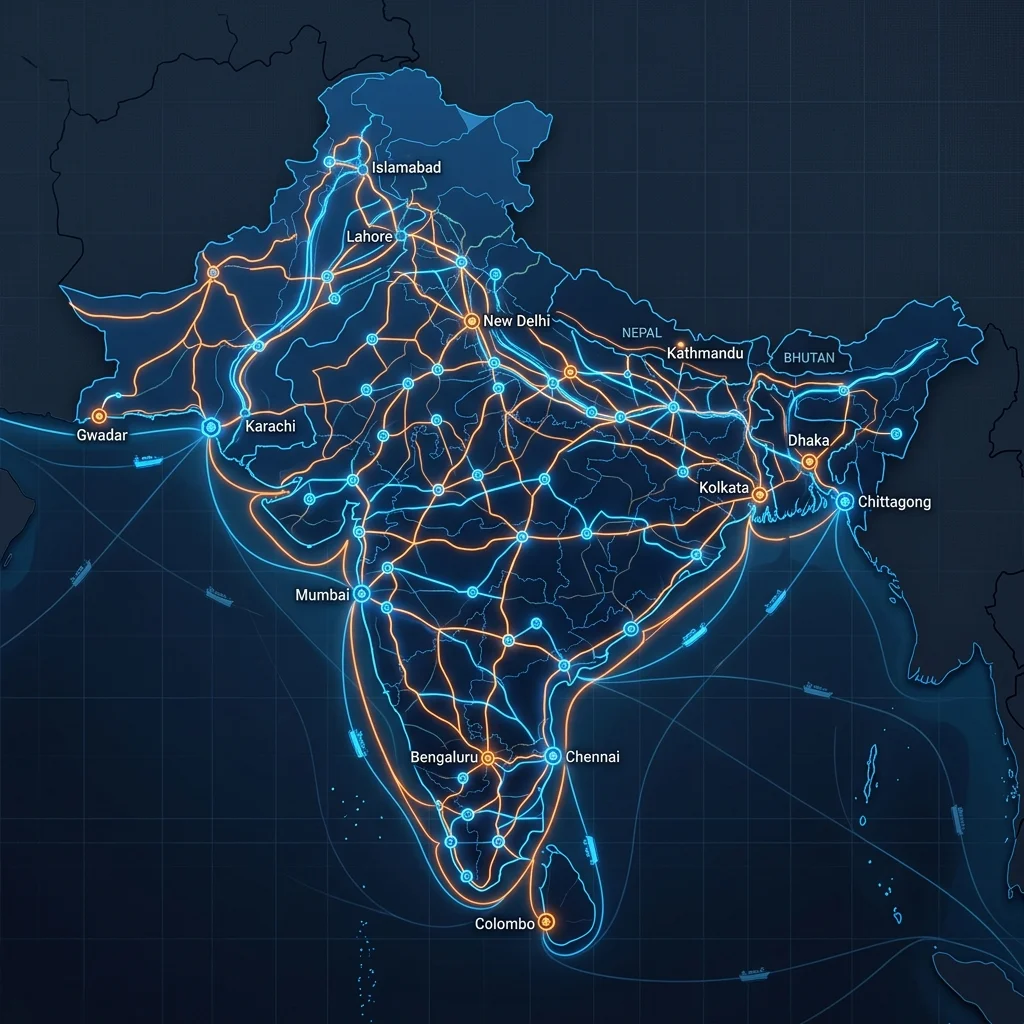
The Hidden Supply Chain Logic of South Asia's Infrastructure Boom: Beyond Megaprojects
Introduction: Why the Usual Geopolitical Framing Misses the Core Story
South Asia is in the midst of an unprecedented infrastructure spending spree. From India’s National Infrastructure Pipeline, targeting $1.4 trillion over five years, to Pakistan’s China-Pakistan Economic Corridor, Bangladesh’s Padma Bridge, and Nepal’s cross-border hydropower projects, the region is laying concrete and steel at a pace never seen before. Analysts typically frame this boom through a geopolitical lens: the rivalry between China and India for regional influence, the strategic port grabs, and the connectivity race for Central Asian markets. While these narratives dominate headlines, they obscure a deeper, more structural transformation.
The real story is not about flags on maps or debt-trap diplomacy. It is about how these massive projects are quietly reshaping the region’s internal supply chains, factor markets, and industrialization trajectories. Highways are not just moving people; they are creating new labour corridors that connect rural villages to factory floors. Ports are not just handling containers; they are rerouting global trade flows away from traditional hubs. Energy corridors are not just powering cities; they are enabling new manufacturing clusters in previously inaccessible hinterlands.
This article uncovers these hidden dynamics—the supply chain logic that investors, planners, and policymakers often miss. By examining how infrastructure projects are altering labour mobility, land use, procurement strategies, and trade route patterns, we reveal a slow-burning economic transformation that is redefining South Asia’s industrial geography.
[IMAGE: Infographic showing investment dollar amounts by country and sector (road, rail, port, energy) with a timeline.]
The New Factor Markets: Labour, Land, and Capital Flows
Labour Corridors: From Migrant Flows to Stable Pools
One of the most underappreciated effects of highway and railway expansion is the dramatic reduction in internal migration costs. In India, the completion of the Golden Quadrilateral and the Bharatmala Pariyojana network has cut travel time between major cities by 30–50%. For millions of seasonal workers from Bihar, Uttar Pradesh, and Odisha, this means lower bus fares, shorter absences from home, and a greater willingness to move for longer-term industrial jobs. The emergence of industrial corridors—such as the Delhi-Mumbai Industrial Corridor (DMIC) and the Chennai-Bengaluru Industrial Corridor—has created concentrated demand for semi-skilled labour, turning what used to be chaotic migrant inflows into stable, semi-permanent labour pools.
The result is a structural shift in South Asia’s labour markets. Manufacturing hubs no longer rely on a rotating cast of workers who return to their villages every harvest season. Instead, improved connectivity allows families to relocate along corridor zones, anchoring a more productive workforce. This is particularly evident in Gujarat’s automotive belt and Tamil Nadu’s electronics clusters, where labour turnover rates have dropped by 15–20% in the past five years.
[IMAGE: Map of major corridor projects (e.g., DMIC, CPEC, BCIM) with overlaid labour migration arrows.]
Land Acquisition and Industrial Corridors: Concentrating Investment
Parallel to labour mobility, infrastructure projects are reshaping land markets. The acquisition of large tracts along planned corridors—often through government land pools or public-private partnerships—has created contiguous zones of industrial land. India’s DMIC alone spans 1,500 km and includes 24 investment regions and industrial areas. These are not just roads; they are land-use catalysts that concentrate capital and infrastructure services (power, water, logistics) in a narrow band, bypassing the fragmented, bureaucracy-heavy land markets of traditional urban centers.
This model has ripple effects: land prices along corridor zones have appreciated 200–400% in some areas, attracting real estate and logistics investment. But it also raises concerns about displacement and agrarian distress, as farmland is converted to industrial use. The tension between these forces is a defining feature of South Asia’s infrastructure-led industrialization.
Capital Flows: Multilateral Loans and Sovereign Wealth
Financing this infrastructure boom requires capital on an unprecedented scale. Multilateral development banks—the Asian Development Bank, the World Bank, and the Asian Infrastructure Investment Bank—have become the primary conduits, but a newer trend is the rise of sovereign wealth funds from the Gulf and East Asia. The Abu Dhabi Investment Authority and Singapore’s GIC have made significant equity investments in Indian road and port projects, while Malaysia’s Khazanah and Qatar’s sovereign fund have backed Pakistani energy infrastructure.
This shift in capital flows is creating a new financial architecture for the region. Instead of relying solely on government budgets or bilateral loans, infrastructure projects are increasingly structured as public-private partnerships (PPPs) with off-balance-sheet financing. The result is a faster pace of construction, but also a build-up of contingent liabilities that could stress fiscal accounts if growth falters.
Procurement and Localization: The Unseen Industrial Policy
Local Content Requirements: Fostering Domestic Manufacturing
Behind every large infrastructure contract is a procurement strategy that shapes entire industries. Governments across South Asia have increasingly embedded “local content” requirements into their construction tenders. India’s “Make in India” policy mandates that a certain percentage of steel, cement, and construction equipment be sourced domestically. Pakistan’s CPEC projects have similar provisions, requiring that local firms supply at least 30% of materials for road and power projects. Bangladesh’s massive infrastructure push, including the Padma Bridge, has been a powerful driver for its domestic steel and cement sectors.
The unseen industrial policy is that these requirements force local suppliers to upgrade quality, capacity, and delivery standards. In Bangladesh, the Padma Bridge project—which required 160,000 metric tons of high-grade steel—pushed local mills to invest in new rolling mills and quality control systems. Previously, Bangladeshi steel was considered substandard for large structures; after the bridge, several mills became certified suppliers for international contractors, opening export markets.
[IMAGE: Photo of a large infrastructure construction site with workers and machinery, overlaid with a simple supply chain diagram showing local suppliers.]
The Multiplier Effect: Spillover into Adjacent Sectors
The impact does not stop at construction materials. Once a local supplier base emerges for steel, cement, and heavy machinery, it creates spillover demand for logistics, maintenance, and repair services. Trucking fleets expand, warehousing facilities are built, and a secondary ecosystem of small and medium enterprises (SMEs) materializes. In India, the demand for construction equipment from infrastructure projects has directly boosted the domestic crane, excavator, and asphalt plant manufacturing industry, which has in turn reduced import dependence from 70% to 40% in a decade.
Furthermore, these procurement-driven industrial clusters often evolve into broader manufacturing hubs. The steel mills that supplied the Delhi-Mumbai Industrial Corridor now also serve automotive and white goods manufacturers that locate nearby to take advantage of lower raw material transport costs. This geographic clustering is a classic agglomeration effect, but it is being deliberately engineered through infrastructure procurement, creating a bottom-up industrialization path that is more resilient than top-down government planning.
Reshaping Trade Routes: From Ports to Land Bridges
New Deep-Sea Ports: Rerouting Regional Hubs
South Asia’s coastline is being transformed by a wave of deep-sea port developments. Colombo’s expansion, Gwadar’s deep-water terminal, Chittagong’s modernization, and India’s new ports at Vizhinjam and Dhamra are all competing to capture transshipment traffic. Historically, most of the region’s container cargo has been routed through Singapore and Dubai, adding days and costs. The new ports, combined with improved road-rail links to inland destinations, are now offering direct services that bypass these traditional hubs.
For example, the Colombo Port’s East Container Terminal, partly built with Japanese and Indian investment, now handles vessels that previously called at Singapore. This has reduced transit times for Indian exports to Europe by 2–3 days. Similarly, the development of the Chittagong-Cox’s Bazar railway in Bangladesh, connected to the deep-sea port at Matarbari, is allowing containers to move directly from ship to factory floor in Dhaka within 24 hours, versus the previous 3–4 day cycle through transshipment in Colombo or Singapore.
[IMAGE: Comparative map showing old vs. new trade routes with transit times and cost reductions annotated.]
Inland Dry Ports and Multimodal Logistics Parks
The inland dimension is equally transformative. As highway and rail networks improve, dry ports—inland customs clearance and container handling facilities—are emerging in places like Delhi’s ICD Tughlakabad, Bengaluru’s Whitefield, and Lahore’s Raiwind. These multimodal logistics parks consolidate rail, road, and sometimes river transport, allowing goods to move in sealed containers from factory to ship without being unpacked at the coast. This reduces cargo handling costs by up to 30% and cuts theft and damage losses.
For commodity supply chains—coal, food grains, fertilizers, and steel—the impact is profound. Coal imports for India’s power plants, previously bottlenecked at ports and then moved by truck, are increasingly traveling directly by rail from dedicated port-rail links. The Eastern Dedicated Freight Corridor, for instance, has cut coal transport time from India’s east coast to the northern power plants from 7 days to 3 days, significantly lowering inventory carrying costs for utilities.
Impact on Industrialization Patterns
Cheaper and faster logistics are enabling new industrialization patterns. Bangladesh’s ready-made garment industry, which relies on imported fabrics and yarns, has seen logistics costs drop from 8% of revenue a decade ago to 5% today. That margin is being reinvested in higher-value production. Similarly, Nepal’s tea and cardamom exporters are using improved road links to India’s ports to bypass the costly air freight routes, opening new markets in Europe and the Middle East. The net effect is a gradual shift from low-value, raw-material exports toward processed and manufactured goods—a classic structural transformation that infrastructure is enabling.
Long-Term Risks and Opportunities: The Slow Burn
Debt Sustainability and Stranded Assets
The infrastructure boom comes with significant financial risks. South Asia’s average government debt-to-GDP ratio has risen from 60% in 2010 to over 85% in 2024, with a substantial portion attributed to infrastructure borrowing. If economic growth does not keep pace with debt service obligations, several projects could become stranded assets—roads that carry less traffic than forecasted, power plants that run below capacity, and ports that fail to attract sufficient cargo volume. Pakistan’s CPEC energy projects are already facing this challenge: installed capacity far exceeds local demand, leading to cost overruns and tariff disputes.
However, the downside risk is not uniform. Projects that are integrated into genuine supply chain logic—those that connect production zones to markets—are more resilient than prestige projects built for geopolitical signaling. Investors and planners need to distinguish between infrastructure that solves a real economic bottleneck and infrastructure that is built simply to cement political relationships.
[IMAGE: Chart showing debt-to-GDP ratios for South Asian countries (India, Pakistan, Bangladesh, Sri Lanka, Nepal) with infrastructure spending overlays.]
Environmental and Social Costs
The environmental and social costs of rapid infrastructure development are mounting. Highway corridors fragment forests and wildlife habitats—India’s Ken-Betwa river linking project, for instance, threatens the Panna Tiger Reserve. Port dredging destroys mangroves and coastal fisheries. Land acquisition displaces millions of people, often with inadequate compensation. The social license for new projects is eroding, as seen in protests against Sri Lanka’s Hambantota port and India’s Mumbai-Ahmedabad bullet train.
These externalities create long-term liabilities that conventional cost-benefit analyses ignore. For investors, the risk is not just reputational but operational: delayed projects, legal challenges, and community protests can drive up costs and threaten timelines. In the coming decade, companies and governments that adopt stricter environmental and social safeguards, and genuinely engage with affected communities, will be better positioned to execute projects without disruption.
Opportunities: Positioning for the Next Phase
For all the risks, the opportunities for early movers are substantial. Logistics companies that build warehousing along emerging corridor zones—rather than in congested, land-scarce urban centers—stand to capture the long-term shift in cargo flows. Manufacturers that locate their plants near dry ports or multimodal hubs can slash input costs. Financial institutions that develop innovative instruments—green bonds for sustainable infrastructure, or credit guarantees for SME suppliers tied to procurement chains—can tap into a growing market.
Moreover, the rise of digital logistics—tracking containers in real-time, using AI to optimize truck routes, and digitizing customs clearance—can amplify the benefits of physical infrastructure. Companies that combine hard assets (roads, ports, warehouses) with soft infrastructure (data platforms, payment systems) will create ecosystems that are hard to replicate.
Conclusion: Beyond the Concrete
South Asia’s infrastructure boom is not simply about roads, bridges, and ports. It is a long-term, structural reordering of the region’s economic geography. Labour is moving along new corridors, industries are clustering around procurement demands, and trade routes are being redirected away from traditional hubs. These changes are slow, often invisible to headline-watching analysts, but they are laying the foundations for a different kind of industrialization—one that is more decentralized, more resilient, and more grounded in local supply chains.
Understanding this hidden supply chain logic is essential for anyone who wants to navigate the region’s economic future. The megaprojects that grab the headlines may be impressive, but their deepest impact lies in the mundane details: the steel mill that upgrades its quality control, the trucking route that shifts from one highway to another, the farmer who moves to a corridor city for a factory job. That is where the real transformation is happening—and that is where investors, policymakers, and planners should focus their attention.