Beyond the $7 Trillion Vision: Sam Altman''s AI Infrastructure Warning and
OpenAI CEO Sam Altman's recent warnings about the "eye-watering" capital
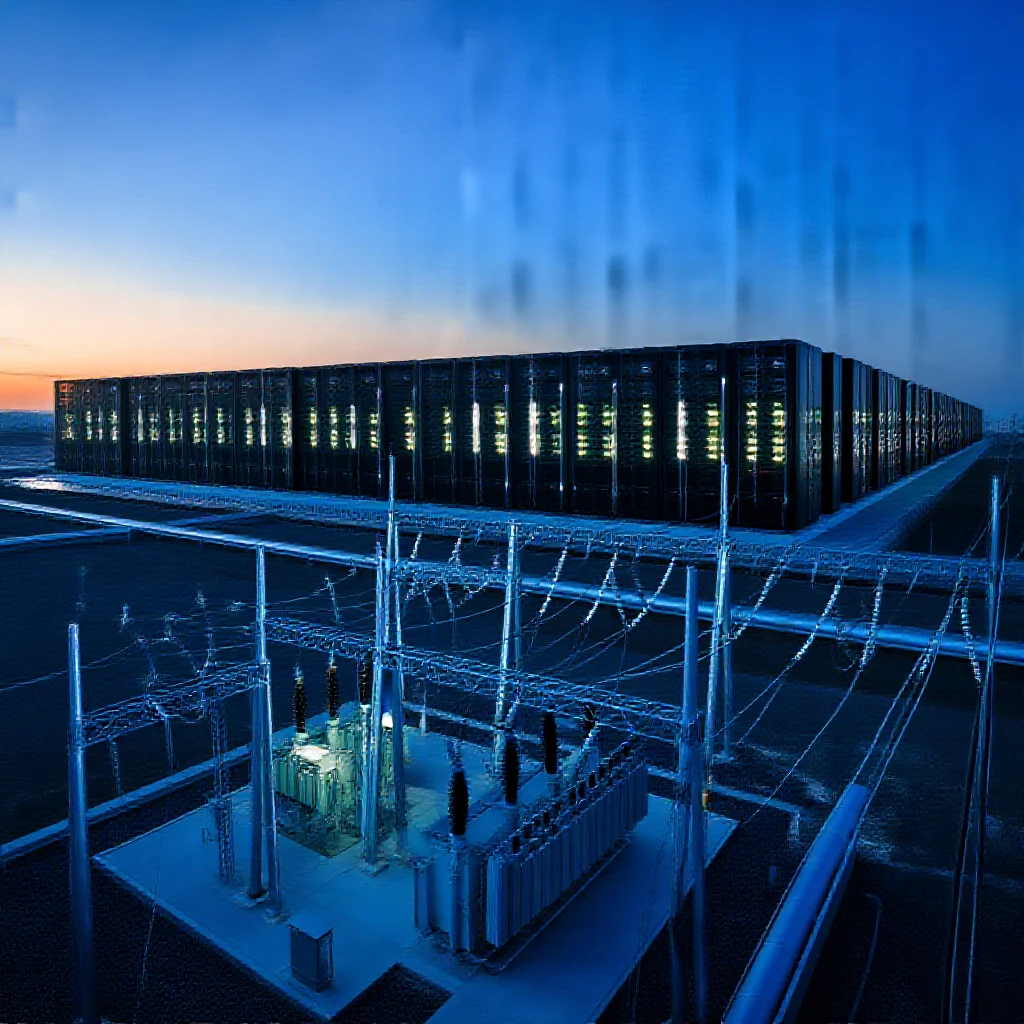
Beyond the $7 Trillion Vision: Sam Altman's AI Infrastructure Warning and the Hidden Supply Chain Crisis
Summary: OpenAI CEO Sam Altman's recent warnings about the "eye-watering" capital needs of AI—potentially reaching trillions of dollars—reveal more than a simple funding gap. This analysis argues that his call for breakthroughs in energy (fusion, solar, storage) and chip fabrication exposes a fundamental miscalculation in the tech industry's growth model. The real story is not just about raising capital, but about an impending collision between exponential AI demand and the linear, capital-intensive, and geopolitically fraught realities of physical infrastructure supply chains. We explore the long-term implications for global economics, energy policy, and semiconductor sovereignty.
---
The "Eye-Watering" Reality: Decoding Altman's Trillion-Dollar Warning
OpenAI CEO Sam Altman has framed the next phase of artificial intelligence not as a software challenge, but as a macroeconomic one. His recent statements serve as a strategic correction to prevailing industry optimism, shifting the discourse from algorithmic innovation to hard infrastructure limits. "I think we still don’t appreciate the capital needs of this industry," Altman stated, characterizing the required sum as "eye-watering" (Source 1: [Primary Data]). His observation that "No one has ever seen a project that requires $7 trillion of capital investment before" positions AI scaling as an event without precedent in venture capital or corporate finance (Source 1: [Primary Data]).
This rhetoric signals a foundational thesis: the primary bottleneck for AI's future is no longer the sophistication of models, but the physics and economics of their underlying substrates—energy, silicon, and steel. The exponential curve of computational demand, driven by larger models and more pervasive applications, is projected to collide with the relatively linear, slow-growth trajectories of global semiconductor fabrication and energy infrastructure capacity. Altman’s warning is less a forecast of cost and more an identification of a systemic mismatch between digital ambition and industrial reality.
The Dual Foundation Crisis: Energy and Semiconductors
The core of Altman’s argument identifies two interdependent crises: energy generation and semiconductor manufacturing.
The Energy Imperative: Altman’s call for a "breakthrough in energy," specifically citing the need for "more nuclear fusion, cheaper solar power, and storage," addresses a critical base load problem (Source 1: [Primary Data]). Modern data centers require continuous, reliable power at a scale that intermittent renewable sources, without monumental advances in storage technology, cannot guarantee alone. The energy density and constant output of fusion represent a hypothesized solution to this constraint. The statement underscores that "cheaper solar" is insufficient; the industry requires a fundamental shift in the energy portfolio to support the 24/7 operational demands of global AI infrastructure. The energy consumption of advanced data centers is becoming a dominant variable in their feasibility and location.
The Chip Fabrication Chokepoint: Concurrently, the demand for specialized AI semiconductors far outpaces the world's ability to manufacture them. Altman noted, "We need way more data centers, way more chips... than people are talking about" (Source 1: [Primary Data]). The constraint is not merely volume but the extreme capital intensity and geopolitical concentration of advanced fabrication. Constructing a single leading-edge fabrication plant (fab) requires over $20 billion and a multi-year timeline, reliant on equipment from a near-monopolistic supplier, ASML. This creates a recursive dependency: building more fabs to produce more AI chips simultaneously increases total energy demand, as these facilities are among the world's most power-intensive industrial plants. The supply chain is linear, slow, and brittle, while the demand signal from AI is exponential and urgent.
The Hidden Economic Logic: From Venture Capital to Sovereign Capital
Altman’s framing of the capital requirement implicitly acknowledges that the scale of investment transcends traditional technology financing mechanisms. The call for trillions of dollars in investment moves the domain from venture capital and corporate balance sheets into the realm of sovereign wealth, national industrial policy, and novel public-private constructs.
Existing policy initiatives, such as the U.S. CHIPS and Science Act and the European Chips Act, can be interpreted as early, though likely insufficient, governmental recognitions of the strategic imperative Altman outlines. These acts aim to onshore and secure segments of the semiconductor supply chain, responding to geopolitical risk as much as economic demand.
The long-term implication is structural: the pursuit of AI supremacy is catalyzing a re-nationalization and re-globalization of critical infrastructure. Decades of supply chain optimization for cost are being reversed in favor of resilience and sovereignty for critical inputs like advanced logic chips and clean energy capacity. Financial flows for AI infrastructure are increasingly likely to originate from or be guaranteed by state-backed entities, blending technological ambition with national strategic interest. The market is evolving from a competition between firms to a competition between integrated economic blocs, each seeking to secure its own foundation of silicon and watts.
Neutral Market and Industry Predictions
Based on this analysis, several predictions follow. First, the valuation and strategy of major AI companies will increasingly be assessed against their ability to secure long-term, cost-effective energy and silicon supply agreements, not just their software prowess. Second, significant mergers and acquisitions or partnerships between technology firms and energy/industrial conglomerates are probable. Third, regions with stable governance, favorable energy policies (including for next-generation nuclear), and existing semiconductor clusters will attract a disproportionate share of new AI infrastructure investment. Finally, the timeline for achieving artificial general intelligence (AGI), if technically possible, may become less constrained by research and more by the decade-long cycles of building the physical plants and power grids required to train and run it. The age of AI is proving to be, fundamentally, an industrial age.