Beyond Wind & Solar: How Macquarie''s $10B Green Bet Reveals the New Infrastructure
Macquarie Asset Management's Green Investments group, with over 20 years
Beyond Wind & Solar: How Macquarie's $10B Green Bet Reveals the New Infrastructure of Decarbonization
Summary: Macquarie Asset Management's Green Investments group, with over 20 years of experience and £10+ billion under management, is more than a renewable energy investor. Its sprawling portfolio of over 300 projects, from offshore wind to green hydrogen and even nascent green materials like steel and cement, reveals a strategic master plan. This article analyzes how their 'scale is how you win' philosophy is being applied to build the entire physical and industrial foundation required for a net-zero economy.
---
The Scale Thesis: Why Size is the Non-Negotiable in Green Infrastructure
The assertion that "scale is how you win" in green infrastructure is not merely a statement of financial heft. For Macquarie Asset Management's Green Investments group, which manages over £10 billion in equity (Source 1: [Primary Data]), scale is a multi-dimensional operational and strategic imperative. The group's portfolio, comprising over 300 projects with a total generation capacity exceeding 25GW (Source 1: [Primary Data]), functions as a de-risking mechanism. Proven, cash-generating technologies like onshore wind and solar—of which the group holds over 50 and 200 projects, respectively (Source 1: [Primary Data])—provide stable returns that can subsidize and de-risk ventures into emerging, capital-intensive frontiers.
This scale, built over two decades of experience (Source 1: [Primary Data]), provides a critical dataset unavailable to newer entrants. It encompasses multiple regulatory cycles, technology cost curves, and operational learning across geographies. The result is a portfolio engineered not for speculative gain but for systemic resilience. Diversification across over 300 assets mitigates technology-specific failures, while the sheer volume of projects grants the group disproportionate influence across supply chains and development pipelines, allowing it to secure favorable terms and accelerate deployment timelines.
From Megawatts to Molecules: The Strategic Pivot in Macquarie's Portfolio
A chronological analysis of the portfolio reveals a deliberate, three-phase expansion strategy, moving from energy generation to energy carriers and, ultimately, to the basic materials of modern civilization.
Phase 1: The Renewable Power Foundation. This established core is the cash engine. Investments in 13 offshore wind, over 50 onshore wind, and over 200 solar projects (Source 1: [Primary Data]) represent the commoditized, high-volume segment of decarbonization. This phase is largely complete, providing the financial and operational bedrock.
Phase 2: Energy Carriers & Storage. This represents a logical adjacency, addressing the intermittency of renewable power and decarbonizing sectors beyond electricity. Investments in five green hydrogen projects, two sustainable fuel projects, one sustainable aviation fuel project, and over 30 energy storage projects (Source 1: [Primary Data]) target transport, heating, and industrial processes. These are molecules—hydrogen, ammonia, methanol—that store and transport renewable energy.
Phase 3: The Frontier of Green Industrial Materials. This phase is the most strategically revealing. The group holds single-project positions in green steel, green cement, and green aluminium production (Source 1: [Primary Data]). This is not simple diversification. It is a calculated move to secure positions in the foundational materials of a rebuilt global economy. These "hard-to-abate" sectors face the steepest technical and cost challenges today but are where future regulatory mandates, carbon pricing, and supply constraints will create the most significant value. By establishing early, strategic footholds, the group is positioning itself at the future scarcity points of a net-zero world.
The Hidden Blueprint: Building the Physical Backbone of Net-Zero
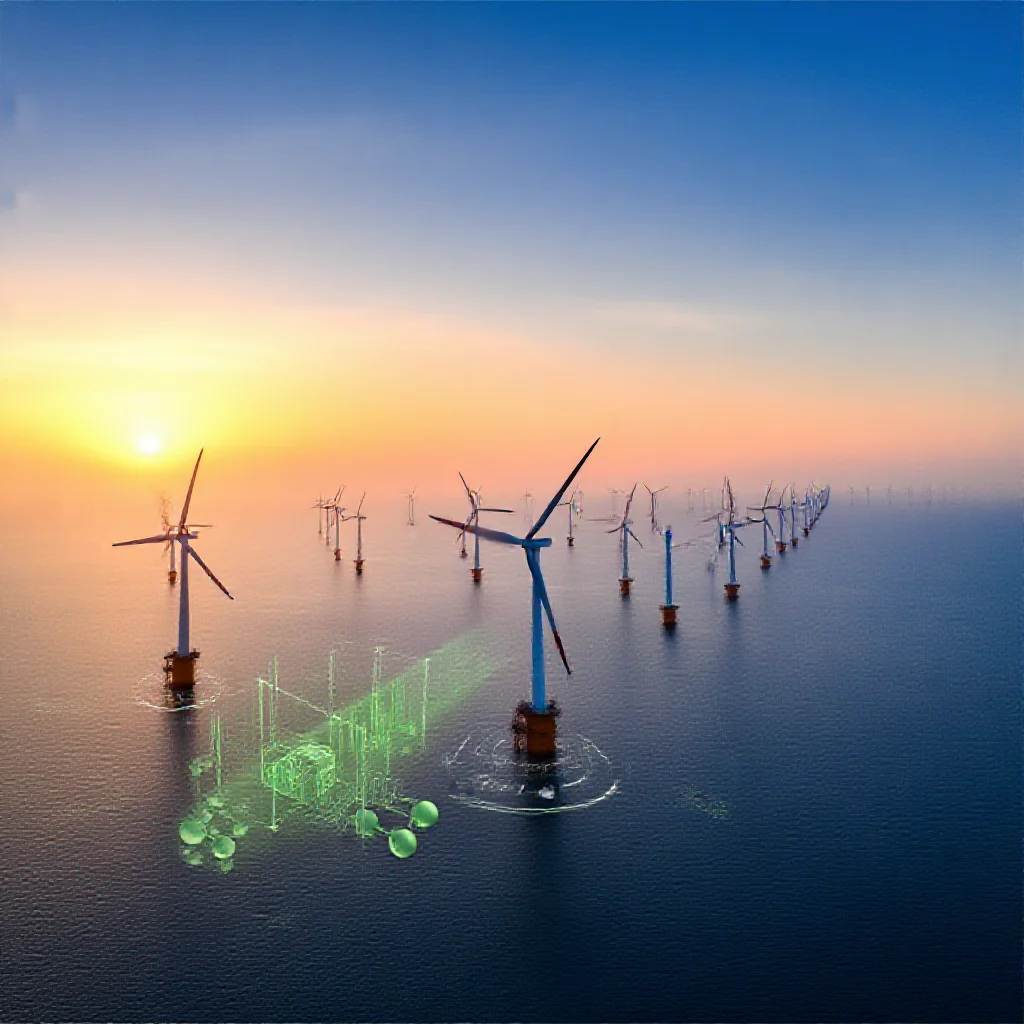
The portfolio is not a random collection of ESG-themed assets. It is a blueprint for the physical backbone of a decarbonized economy, with intentional interconnectivity. For example, power from an offshore wind asset (Phase 1) can be used to produce green hydrogen (Phase 2), which in turn can fuel a direct reduction furnace for green steel production (Phase 3). This vertical integration strategy aims to capture value across the entire decarbonization value chain, from electron to finished material.
The focus on hard-to-abate sectors like cement and aviation is a direct response to the uneven landscape of decarbonization difficulty. While electricity generation is on a path to greening, these sectors lack cost-effective solutions. Macquarie's investments here are anticipatory bets on future carbon pricing mechanisms, green premium markets, and technological breakthroughs. Furthermore, the single-project investments in critical minerals and materials—from copper and lithium to rare earths (Source 1: [Primary Data])—indicate a understanding that the energy transition is also a materials transition. Securing exposure to these inputs is a long-term supply chain play, hedging against future geopolitical and extraction bottlenecks.
Neutral Market Prediction: The Industrialization of Decarbonization
The trajectory illustrated by Macquarie's Green Investments portfolio points to a broader market evolution: the industrialization of decarbonization. The initial, project-finance driven phase of renewable energy is maturing. The next phase will be characterized by the integration of these power assets into large-scale, industrial processes to produce green molecules and materials. This requires a different type of capital—patient, technically sophisticated, and comfortable with complex industrial partnerships and offtake agreements.
The market will likely see a stratification of investors. Generalist infrastructure funds may concentrate on the now-proven renewable power and storage sectors. Meanwhile, specialized entities with deep industrial expertise and the scale to absorb first-of-a-kind risk, akin to Macquarie's model, will dominate the frontier of green hydrogen and materials. Success in this new phase will be determined less by securing land for solar farms and more by forging partnerships with industrial conglomerates, navigating nascent regulatory frameworks for green products, and mastering the complex engineering of integrated systems. The portfolio analyzed here serves as an early map of this uncharted, industrial-scale territory.