Beyond Hyperscale: The Power-Driven Geography of the Next $600 Billion Data
The data center industry is on a trajectory to grow from $344 billion to
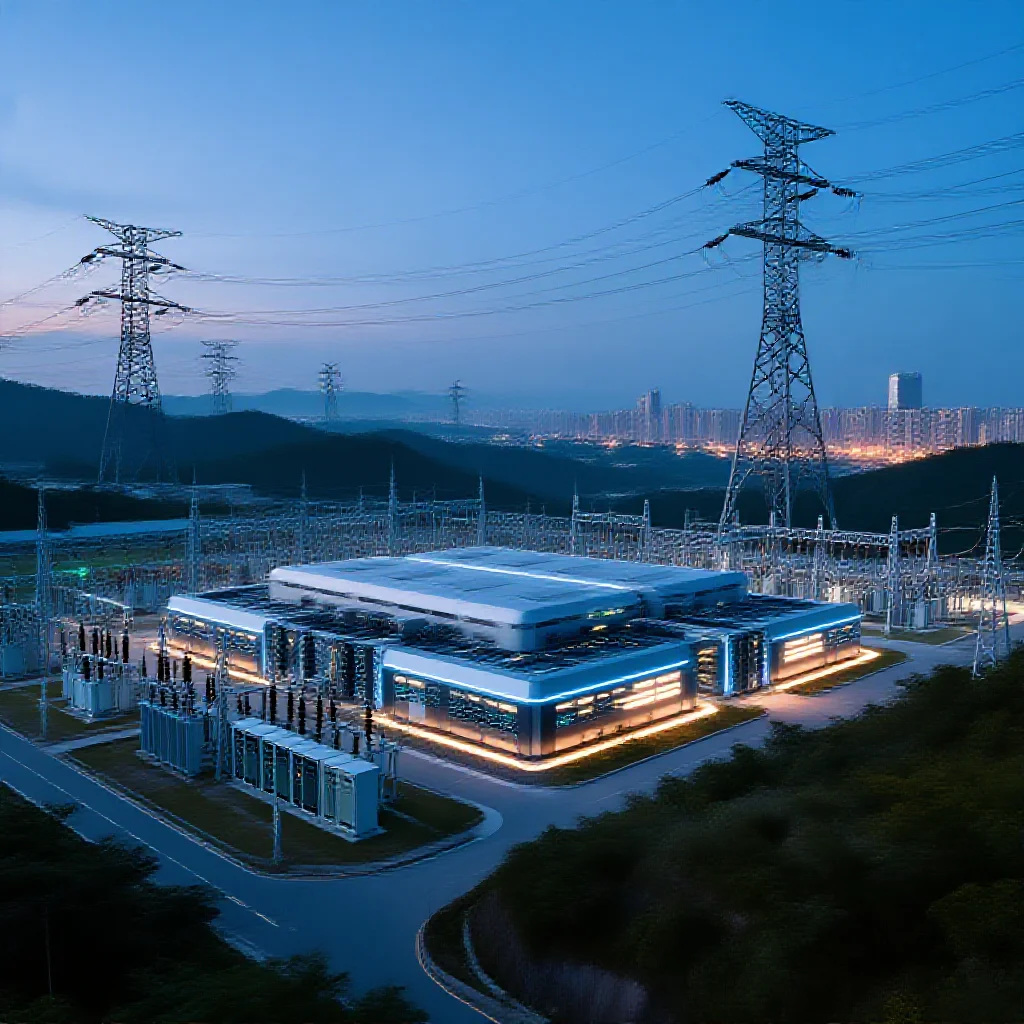
Beyond Hyperscale: The Power-Driven Geography of the Next $600 Billion Data Center Boom
Introduction: The $600 Billion Question – Growth Amidst Gridlock
The global data center market is projected to expand from $344 billion in 2024 to $602 billion by 2029, a trajectory underpinned by an estimated $50 billion in capital investment this year alone (Source 1: [Primary Data]). This growth narrative, however, is colliding with a fundamental physical constraint: power availability. The industry's evolution is no longer a simple function of scaling digital infrastructure to meet demand. It is now defined by a complex new calculus where energy access, geographical positioning, and operational specialization are the primary determinants of viability and value. Analysis from firms including Patrizia and DLA Piper corroborates that investment flows are increasingly dictated by this gridlock, shifting the foundational strategy from a race for land and fiber to a strategic pursuit of power and optimal location.
The AI Imperative: Redefining the Physical Stack
The rise of artificial intelligence is not merely increasing data center demand; it is fundamentally altering the physical and economic parameters of the industry. AI workloads are driving power density requirements to unprecedented levels. Traditional enterprise server racks, which typically consumed 5-10 kW, are being supplanted by AI compute racks demanding 50-100 kW or more. This order-of-magnitude increase redefines the underlying supply chain, placing extreme strain on electrical components, advanced cooling systems—particularly liquid cooling—and the structural materials required for high-density builds. The narrative has moved beyond generic cloud growth. AI is the primary engine disrupting the status quo, forcing a wholesale re-engineering of data center design, from the substation to the server chassis.
The Great Power Migration: Investment's New Geography
While the United States maintains its position as the dominant market, accounting for approximately 50% of global capacity, the strategic flow of capital is undergoing a significant geographical reorientation (Source 2: [Primary Data]). The Asia-Pacific region is the fastest-growing market, with EMEA also seeing increased demand. This shift is not solely driven by regional digital demand. It is a direct response to the power bottleneck in established hubs. Investment is accelerating in new locations like India, Southeast Asia, and secondary European markets precisely because these regions often offer better access to available power grids, affordable land, and regulatory frameworks supportive of large-scale infrastructure development. The migration pattern is clear: capital is flowing to where power is accessible, making geography a function of energy logistics.
The Operator Shift: Specialists Ascend as Hyperscalers Adapt
The market dynamic is catalyzing a parallel shift in the competitive landscape. Specialized data center operators—firms like Equinix, Digital Realty, Vantage, QTS, AirTrunk, STACK Infrastructure, and EdgeConneX—are gaining market share. Their ascendancy is linked to the new power-and-location paradigm. These operators excel at navigating complex local energy markets, securing power purchase agreements (PPAs) for renewables, and executing rapid, customized builds in diverse geographical markets. While hyperscale cloud providers (Microsoft, Amazon, Google, Meta) continue to develop their own capacity, they are increasingly reliant on these specialists for speed to market and access to constrained power grids. The industry is bifurcating into hyperscale consumers and a class of sophisticated, asset-heavy operators who control the critical resource pathways.
Capital Chases Conduits: The Financial Architecture of Power Access
The financial architecture of the industry is evolving in concert with its physical one. Institutional capital from firms like Gaw Capital, PGIM Real Estate, Partners Group, Brookfield, KKR, Blackstone, EQT, Macquarie, M&G, Generali, APG, and PGGM is flowing aggressively into digital infrastructure. This capital is not betting on generic real estate. It is financing the conduits to power. Investment theses are built on operators' ability to secure long-term energy rights, develop scalable campuses in nascent markets, and master the complex engineering of high-density facilities. The valuation premium has shifted from sheer scale to strategic positioning within the energy ecosystem, making data centers a hybrid asset class that sits at the intersection of real estate, technology, and energy infrastructure.
Conclusion: The New Calculus for a Powered Future
The projected growth to a $602 billion market by 2029 will be realized not through uniform global expansion, but through a fragmented, power-constrained build-out (Source 3: [Primary Data]). The next phase of industry development will be characterized by three sustained trends: the continued geographical diversification of assets into power-rich territories, the deepening dominance of specialized operators who act as power intermediaries, and an intensified focus on technological innovation in cooling and energy efficiency. The race is no longer for the best fiber hub, but for the most reliable megawatt. In this new calculus, control over electrons is becoming more critical than control over bits, permanently redefining the economic and physical landscape of the digital world.