Beyond the A$1B Target: How CEFC''s Seed Transfer to Australian Ethical Signals
The Clean Energy Finance Corporation''s transfer of assets to seed Australian
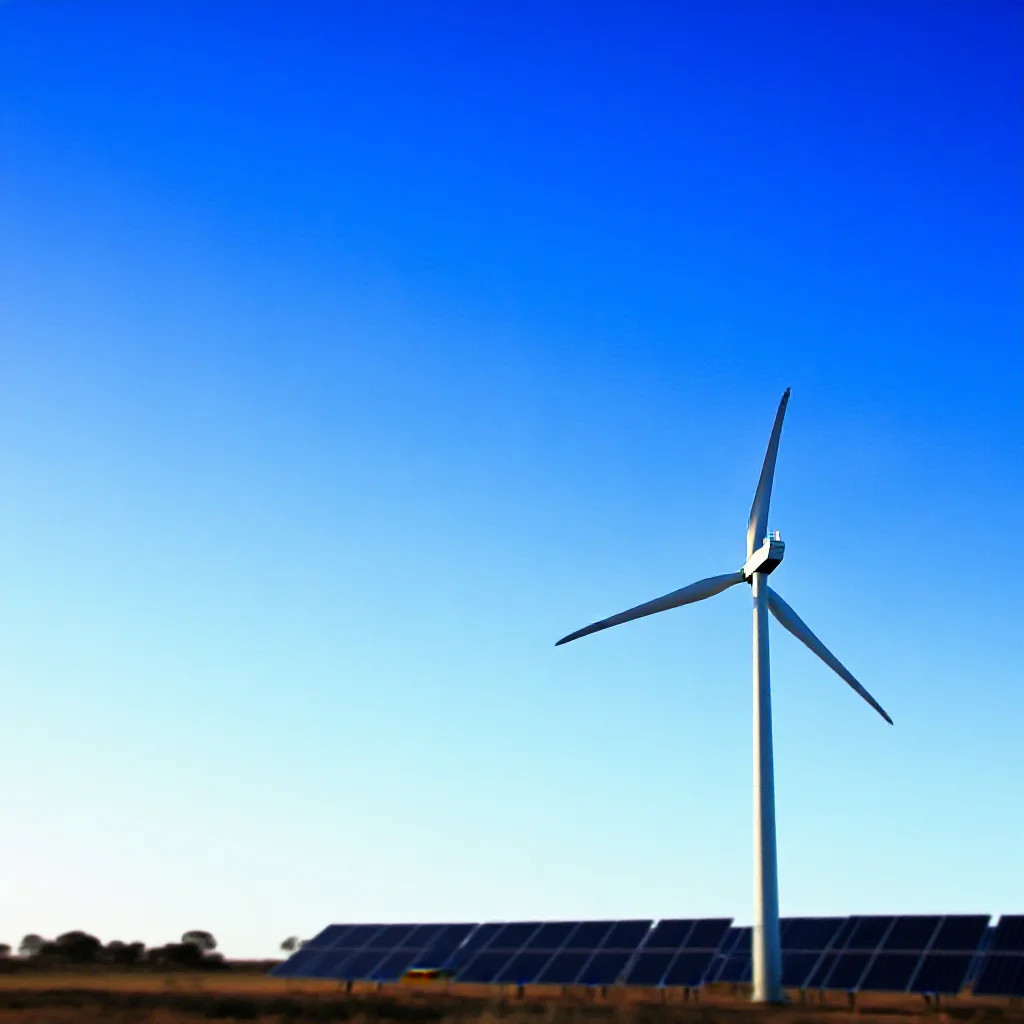
Beyond the A$1B Target: How CEFC's Seed Transfer to Australian Ethical Signals a New Phase for Australian Renewable Investment
Opening Summary
The Clean Energy Finance Corporation (CEFC) has transferred a portfolio of renewable energy assets to seed the Australian Ethical High Conviction Property Fund, managed by Australian Ethical Investment. The initial seed is A$100 million, with the CEFC committing A$50 million. The fund’s stated target is to scale to A$1 billion for investment in operational Australian wind and solar farms. (Source 1: [Primary Data])
---
The Transaction Unpacked: More Than a Fund Launch, a Strategic Handoff
The transaction represents a structural shift in the CEFC’s operational model. The transfer of assets moves the government-backed financier from a direct owner/operator role to that of a seed capital provider and anchor investor. This is not merely an asset sale but a calculated handoff designed to establish a new investment vehicle in the market.
The selection of Australian Ethical Investment as fund manager is significant. The firm’s established ethical mandate aligns with the underlying assets, but its capacity for institutional fund management provides the necessary framework for scale. The disparity between the initial A$100 million seed and the A$1 billion target outlines an explicit scaling strategy. This gap is the market signal, indicating an intention to attract substantial third-party capital, primarily from institutional investors like superannuation funds, which have historically been cautious about direct renewable infrastructure exposure.
The Hidden Economic Logic: De-risking Assets to Crowd in Private Capital
The core mechanism of this fund is de-risking. Mature, operational wind and solar farms with proven revenue streams are repackaged from individual project finance vehicles into a diversified portfolio. This transformation alters the risk profile, making the assets "bankable" for institutional investors with lower risk tolerances but large capital pools.
The CEFC’s A$50 million commitment functions as a strategic anchor. Its presence mitigates perceived pioneer risk for other investors, providing a layer of credibility and shared interest. The psychology of this anchor investment is as critical as its financial weight. The fund structure itself facilitates this crowding-in effect. A portfolio investment offers diversification across technologies and geographic regions, reducing idiosyncratic project risk and appealing to a broader, more conservative investor base than single-project investments could attract.
A Deep-Dive Entry Point: The Long-Term Impact on Australia's Green Project Pipeline
A primary, often untold, function of this fund is to create a reliable exit pathway. For early-stage developers and for the CEFC’s own balance sheet, the existence of a large-scale buyer for operational assets is crucial. It allows for the recycling of capital. Proceeds from asset sales to the fund can be redeployed into new, higher-risk greenfield projects, next-generation technologies like grid-scale storage, or pioneering areas such as green hydrogen.
This establishes a virtuous cycle of capital: development, construction, operation, transfer to institutional funds, and recycling back to new development. Furthermore, a stable, institutional owner of operational assets can lead to more predictable, long-term operations and maintenance contracts, potentially strengthening the renewable energy supply chain through increased revenue certainty for service providers.
Evidence and Verification: Placing the Fund in a Broader Context
This move aligns with the CEFC’s legislated mandate to act as a catalyst for increased investment in clean energy. Analysis of its annual investment reports shows a gradual evolution toward more co-financing and fund-based investments, complementing its direct lending activities. This transaction is a definitive step in its stated role of addressing market failures and mobilising private capital.
The model has global precedents. Similar green investment funds, often seeded with public capital, have been established in Europe and North America to bridge the gap between infrastructure projects and institutional portfolios. Australian Ethical’s historical performance in managing ethical and property funds provides a baseline for assessing execution credibility, though the scale of this specific vehicle represents a new undertaking.
Neutral Market Prediction
The establishment of the Australian Ethical High Conviction Property Fund, seeded by the CEFC, is likely to establish a replicable market pattern. If successful in reaching its A$1 billion target, it will demonstrate a viable blueprint for institutionalising mature renewable asset ownership in Australia. The anticipated outcome is the accelerated recycling of public and early-stage private capital into new projects, while simultaneously deepening the pool of institutional capital available for the energy transition. The long-term test will be the fund’s ability to deliver competitive risk-adjusted returns, thereby proving the commercial sustainability of the model beyond its catalytic public seed capital.