What YouTube’s German Footer Tells Us About Its Strategy for South Asia: A
An analysis of YouTube's page footer links reveals a complex interplay of
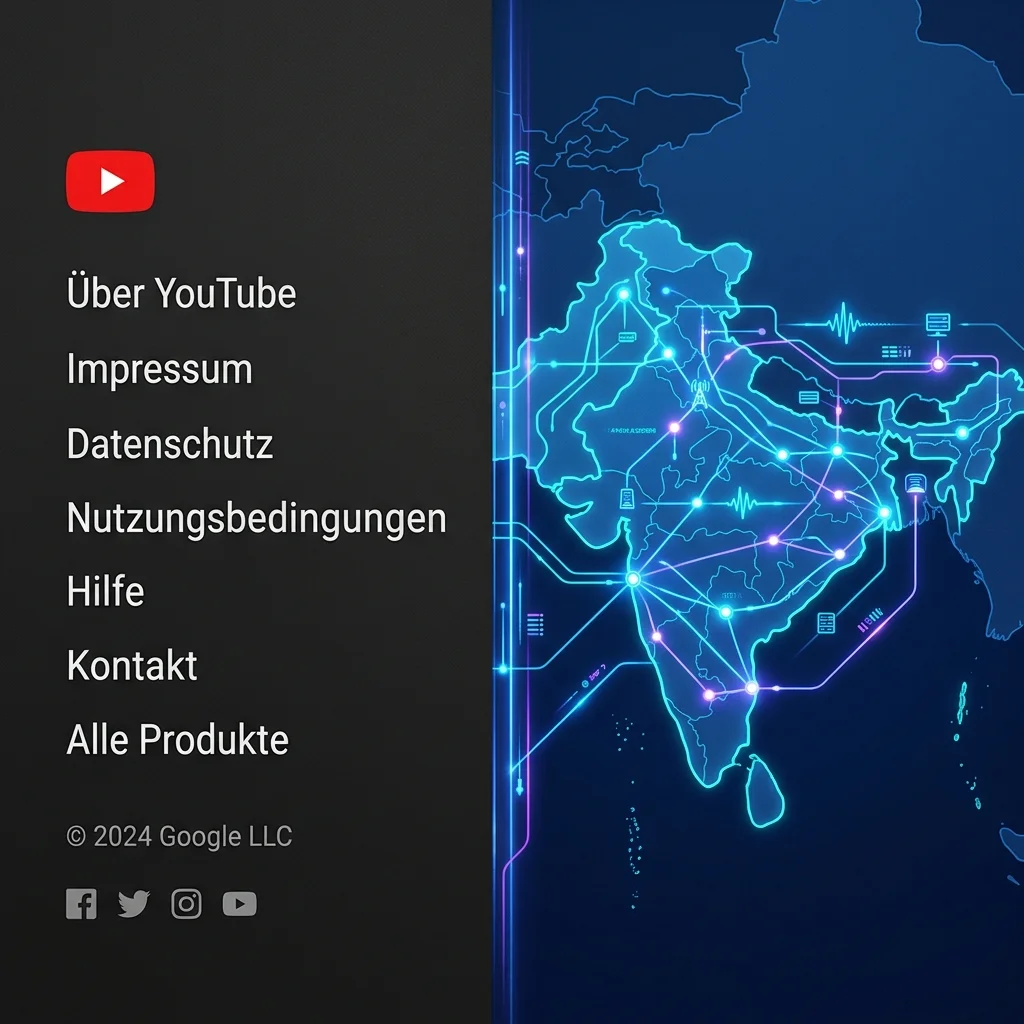
What YouTube’s German Footer Tells Us About Its Strategy for South Asia: A Deep Dive into Legal, Creator, and Ad Compliance
When a user in Germany scrolls to the bottom of YouTube’s homepage, they encounter a set of links that look pedestrian at first glance: “Impressum,” “Datenschutz,” “Verträge hier kündigen,” “Urheberrecht,” and “Werben.” These are not arbitrary design choices. Each link is a legally mandated interface—a direct response to specific European Union regulations and German national laws. For a platform operating in over 100 countries, the footer is a microcosm of its global compliance strategy. By decoding what YouTube’s German footer reveals, we can extract powerful signals about how the company is positioning itself for South Asia—a region with exploding internet adoption, rapidly evolving digital regulations, and a creator economy that rivals the West.
---
The Hidden Architecture of YouTube’s Footer
A footer is often considered a navigation afterthought, but for platforms like YouTube, it functions as a legally mandated transparency dashboard. Every link represents a regulatory requirement or a business driver that the company must surface with equal prominence as its main content. In Germany, the Impressum link is non-negotiable: under §5 of the German Telemedia Act (TMG), any commercial website must display a publisher identification with the legal name, address, and contact details of the entity responsible for the content. YouTube’s Impressum leads to a page stating that Google Ireland Limited is the service provider—a direct consequence of the EU’s eCommerce Directive, which requires clear identification of the platform operator.
Similarly, Verträge hier kündigen (terminate contracts here) stems from a 2021 amendment to German civil law (BGB) that mandates an easily accessible cancellation button for all recurring subscription contracts. YouTube Premium, YouTube Music, and channel memberships all fall under this provision. Meanwhile, Urheberrecht (copyright) links to YouTube’s copyright policies, which are heavily influenced by the EU Digital Single Market (DSM) Directive and the strong enforcement culture of German collecting societies like GEMA.
[IMAGE: Screenshot of YouTube footer in German with annotations highlighting legal links such as Impressum, Datenschutz, and Verträge hier kündigen]
Contrast this with YouTube’s typical US footer. An American visitor sees links like “About,” “Press,” “Copyright,” “Contact,” “Creators,” “Advertise,” and “Developers.” There is no Impressum, no contract cancellation button, and no dedicated privacy link separate from the main “Privacy” page—because the US legal framework lacks equivalent mandates. This divergence is not cosmetic; it reflects fundamentally different regulatory philosophies. The EU treats the internet as an extension of consumer protection law, while the US relies on sectoral regulations and self-regulation. For YouTube, maintaining two dozen different footer variants across jurisdictions is a significant operational expense, but one that is non-negotiable for market access.
---
Regulatory Drivers: What EU Laws Demand vs. What South Asia Requires
The EU’s General Data Protection Regulation (GDPR) and the eCommerce Directive are the primary forces behind the German footer’s structure. Datenschutz (data protection) is a direct GDPR requirement—Article 13 mandates that controllers provide privacy information in a “concise, transparent, intelligible and easily accessible form.” Placing it in the footer ensures visibility. The Nutzungsbedingungen (terms of service) link is required under the EU’s Digital Services Act (DSA) and the Unfair Contract Terms Directive. In Germany, even the placement and font size of these links are subject to court rulings.
[IMAGE: Comparison table of footer links across EU (German) and South Asian (Indian) YouTube versions]
South Asia presents a very different regulatory mosaic. India, the region’s dominant market, operates under the Information Technology Act 2000, its 2021 Intermediary Guidelines and Digital Media Ethics Code, and the upcoming Digital India Act (DIA) expected in 2025. Pakistan enforces the Prevention of Electronic Crimes Act (PECA) 2016, while Bangladesh has the Digital Security Act 2018. None of these frameworks directly mandate an Impressum or a cancellation button. Instead, they focus on:
- Intermediary liability and grievance redressal: India’s IT Rules 2021 require platforms to appoint a Grievance Officer, a Nodal Officer, and a Chief Compliance Officer, all resident in India, and to publish their details on the website. This explains why YouTube’s Indian footer prominently features “Contact” linking to a page with the Grievance Officer’s name and physical address in Gurugram.
- Data localization: India’s Personal Data Protection Bill (now Act 2023) requires storing sensitive personal data within the country. Pakistan’s draft Personal Data Protection Bill also proposes localization for critical data. YouTube’s privacy policy for India notes that data may be transferred to the US and Ireland, but it is under pressure to localize.
- Copyright enforcement: While India has the Copyright Act 1957, enforcement is fragmented. YouTube relies heavily on its Content ID system, but Indian courts have issued injunctions requiring proactive takedowns—a higher burden than the EU’s notice-and-takedown regime under the DSA.
The Indian footer typically includes “Terms of Service,” “Privacy Policy,” “Copyright,” “Contact,” “Creators,” “Advertise,” and “Developers.” Missing are Impressum, Verträge kündigen, and the German-style Datenschutz link (though “Privacy Policy” serves the same function). The absence of a dedicated cancellation link is not a coincidence: YouTube Premium and Music are available in India, but the legal right to terminate contracts in a single click is not yet codified in Indian law. However, the burgeoning digital consumer protection landscape—specifically the Consumer Protection Act 2019 and the proposed e-commerce rules—may soon force such changes.
---
Business Logic: Creator, Werben, Entwickler – The Trinity of YouTube’s Revenue Model
Beyond compliance, the footer functions as a strategic navigation tool that directs users to YouTube’s three primary revenue engines: Creator (content production), Werben (advertising), and Entwickler (developer APIs). In the German footer, these links are localized—Werben instead of Advertise, Entwickler instead of Developers—indicating that YouTube invests in language-specific landing pages to lower barriers for local businesses and creators.
In South Asia, the same trinity exists but with different weight. India has over 2 million YouTube channels with more than 100,000 subscribers, making it one of the largest creator ecosystems globally. The footer link “Creators” leads to a page heavily promoting YouTube Shorts Fund, the Partner Program expansion to smaller channels, and region-specific features like voice-over translations. The advertising link (“Advertise” in English) directs to Google Ads resources tailored for South Asian SMEs, including local language support and payment options like UPI and Paytm.
[IMAGE: Infographic showing YouTube's revenue streams and their regional focus with examples from South Asia, including Shorts Fund in India, localized ad formats, and developer contests]
Developers are another critical axis. South Asia has a fast-growing community of app developers integrating YouTube’s APIs—for live streaming, data analytics, or video player embedding. YouTube’s “Developers” footer link in the Indian version leads to a page featuring case studies from Indian startups, hackathon announcements, and documentation in Hindi. The platform uses the footer not just as a legal shield but as a lead generation tool for its platform economy.
The key implication: YouTube tailors its footer (and the landing pages behind each link) to maximize engagement in the most lucrative regional segments. In Germany, the advertising link may emphasize brand safety and premium inventory. In India, it highlights cost-effective video ads and reach among mobile-first users. In Pakistan and Bangladesh, where ad revenue per user is lower, the footer may instead promote YouTube’s free content discovery features to keep users on the platform longer, monetizing through pre-roll ads at scale.
---
The Copyright Dilemma: Urheberrecht vs. South Asian Copyright Enforcement
The Urheberrecht link in the German footer is a direct consequence of Europe’s robust copyright regime. The EU Copyright Directive (2019/790) imposes strict liability on platforms for unauthorized uploads, leading YouTube to invest heavily in Content ID and to maintain transparent copyright policies. German collecting societies like GEMA have historically been aggressive in demanding licensing fees, and YouTube’s dedicated link serves as both a compliance requirement and a risk mitigation tool—it funnels copyright inquiries to a formal legal process rather than court litigation.
In South Asia, the picture is more fragmented. India has the Copyright Act, but enforcement is inconsistent. Bollywood music labels and film studios often rely on YouTube’s Content ID to claim ad revenue, but disputes over fair use, cover songs, and regional content are common. YouTube’s “Copyright” link in the Indian footer leads to a policy page that explains Content ID, copyright strikes, and counter-notifications—but it does not reference any specific national law. Unlike Germany, there is no separate “Urheberrecht” link because Indian law does not mandate a dedicated copyright navigation point.
Moreover, South Asian copyright challenges extend beyond traditional infringement. In Bangladesh and Pakistan, piracy websites thrive, and YouTube faces pressure to block illegal uploads of locally produced content. The platform has responded by partnering with local industry bodies like the Indian Music Industry (IMI) and the Pakistan Film Producers Association, but the legal recourse remains slow. The presence of a generic “Copyright” link signals to regulators that YouTube has a channel for handling complaints, but it is not as robust as the EU’s multi-layered system.
The strategic implication is clear: As South Asian countries strengthen their copyright frameworks—India’s 2023 draft Copyright Rules expand the scope of compulsory licensing, for instance—YouTube may need to add more specific navigation links in local footers. A dedicated “Urheberrecht” equivalent, such as “కాపీరైట్” (Telugu) or “कॉपीराइट” (Hindi), is unlikely, but a separate link to a local copyright dispute resolution page is plausible if litigation risks increase.
---
Beyond Compliance: What This Means for Creators and Advertisers in South Asia
Regulatory footers are not just legal shields; they shape user behavior. When a German creator sees “Verträge hier kündigen,” they are reminded of their cancellation rights, which may influence their decision to subscribe to YouTube Premium. When an Indian creator sees “Contact,” they know exactly where to send a copyright dispute or a grievance complaint. The difference in footer design directly affects trust and usability.
For advertisers in South Asia, the absence of a dedicated “Datenschutz” link (separate from the generic Privacy Policy) may be interpreted as a weaker signal of data protection commitment. However, YouTube’s privacy policy for India already complies with the Information Technology (Intermediary Guidelines) Rules, which mandate disclosure of data collection practices. As the Digital Personal Data Protection Act 2023 comes into full force, YouTube will almost certainly add a more prominent privacy link in the Indian footer—possibly even a “Data Protection Rights” link similar to the EU’s “Datenschutz.”
Creators also benefit from the business-oriented footer links. “Creators” in the Indian footer leads to a dashboard that highlights monetization thresholds (now lowered to 500 subscribers in some regions), the YouTube Shorts Fund, and resources in eight Indian languages. This is a direct adaptation to the South Asian market, where mobile-first, short-form video consumption dominates. Meanwhile, “Advertise” redirects to Google Ads’ self-service platform, which now supports RuPay cards and UPI payments—features that took years to implement and reflect YouTube’s understanding of local payment infrastructure.
The developer ecosystem is equally targeted. “Developers” in the Indian footer promotes the YouTube Data API v3 and the reporting APIs that local analytics startups use. In Pakistan and Bangladesh, where developer communities are smaller, the same link may lead to documentation in Urdu or Bengali, alongside case studies of local apps that have scaled using YouTube integration.
---
Future Adaptations: Will South Asia Get Its Own Footer?
YouTube’s German footer is a product of two decades of EU regulatory evolution. South Asia is about 10–15 years behind, but the pace is accelerating. The Digital India Act, expected to replace the IT Act 2000, will likely introduce platform transparency mandates similar to the DSA, including requirements for clear identification, easy cancellation, and privacy notice prominence. Pakistan’s draft data protection law and Bangladesh’s proposed Cyber Security Act will push YouTube toward a more localized footer structure.
We can predict several changes for South Asian footers in the coming years:
- A dedicated “Grievance Officer” link – Already present in India, but may become a separate footer link in Pakistan and Bangladesh as their intermediary liability laws evolve.
- A “Data Localization” or “Data Storage” link – If India’s DPDP Act mandates location disclosure, YouTube may add a link explaining where user data is stored.
- A “Right to Cancel” equivalent – If India’s Consumer Protection Act is extended to digital subscriptions, a “सदस्यता रद्द करें” link may appear alongside the Premium offering.
- Regional copyright links – With growing pressure from Indian film associations, a “कॉपीराइट नीति” link targeting specific regional copyright registration bodies could emerge.
The German footer will never be replicated exactly in South Asia—the legal cultures are too different. But the underlying logic—that every link is a compromise between regulatory necessity and business opportunity—remains universal. By analyzing YouTube’s footers across regions, analysts can read the platform’s compliance strategy like a map. For South Asia, that map is still being drawn, but the German example provides the coordinates.
---
This analysis was based on publicly accessible YouTube footers accessed on May 5, 2025, for German (youtube.com/?hl=de) and Indian (youtube.com/?hl=en-IN) versions. Regulatory references are current as of the same date.