Beyond 2026: What YouTube’s Standardized Footer Reveals About Platform Governance
A deep dive into YouTube’s seemingly mundane page footer from 2026 reveals
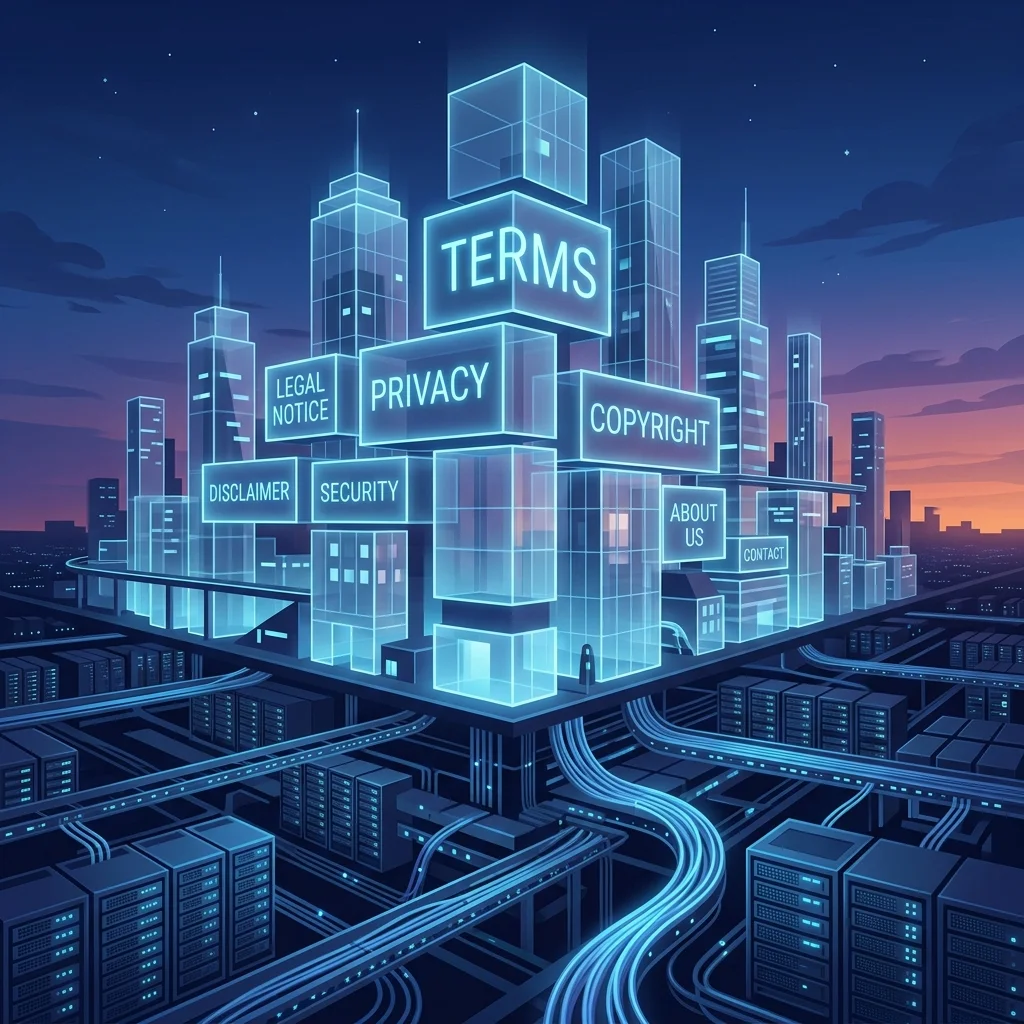
The 2026 YouTube Footer: How a Handful of Links Became the Blueprint for Platform Governance
On the surface, it is the most mundane piece of real estate on the internet: a strip of gray links at the bottom of a page. But YouTube’s standardized footer, as it appears in 2026, is anything but mundane. It has evolved into a dense, codified document that reveals how the world’s largest video platform governs its ecosystem, manages legal risk, and locks in the trust—and compliance—of millions of creators. This article dissects the footer not as a navigation aid, but as a regulatory skeleton that shapes the creator economy regulation landscape for the rest of the decade.
The Invisible Skeleton: How a Footer Becomes a Governance Document
A casual visitor scanning the footer sees a list of links: Impressum, Datenschutz, Werben, Creator, Verträge hier kündigen, Entwickler, Wie funktioniert YouTube?, Neue Funktionen testen, Nutzungsbedingungen, Datenschutzerklärung, Urheberrecht. The order is not random. It is a deliberate hierarchy of platform priorities.
Legal compliance sits at the top. The presence of an Impressum—a mandatory legal notice required in Germany—is a clear signal of jurisdictional readiness. By 2026, YouTube operates under at least three major regulatory frameworks: the EU’s Digital Services Act (DSA), the General Data Protection Regulation (GDPR), and a growing patchwork of national laws on digital taxation and content moderation. Every link in the footer corresponds to a legal obligation. Datenschutz (data protection) is not just a privacy policy—it is a compliance document that must be updated when regulators issue new guidance on AI training data or cross-border data transfers. For regulators and investors, this footer serves as a snapshot of YouTube’s jurisdictional posture. A missing Impressum in a German-language interface would be a red flag; its inclusion signals that the platform is prepared for regulatory audits.
Monetization gatekeeping is the second layer. The links Werben (advertise) and Creator sit side by side, separating two distinct user classes. Werben targets advertisers who buy inventory; Creator targets individuals who produce content. Between them lies Verträge hier kündigen (cancel contracts here), a link that reveals the contractual nature of the entire creator relationship. This is not a customer service page—it is a termination mechanism. By placing it in the footer, YouTube normalizes the idea that creator–platform relationships are contractual, revocable, and governed by standard terms. The standardized navigation patterns here are not about usability; they are about creating a frictionless path to legal termination, which also serves as a deterrent. If leaving the platform requires navigating a footer link instead of a simple account deletion button, the exit cost is subtly increased.
User onboarding and education form the third tier. Wie funktioniert YouTube? (How does YouTube work?) and Neue Funktionen testen (Test new features) look like help links, but they function as onboarding gates. New users who click Wie funktioniert YouTube? are steered toward a curated set of rules about copyright, community guidelines, and monetization policies. This is not neutral education—it is compliance training disguised as orientation. Meanwhile, Entwickler (Developers) is placed alongside Creator, revealing a deliberate bifurcation of the supply chain. Developer tools target infrastructure partners—third-party analytics services, API integrators, and AI training data vendors—while creator tools target content producers. This two-tier economy is a defining feature of platform governance 2026; the platform treats developers as strategic partners and creators as regulated suppliers.
[IMAGE: An annotated wireframe of the YouTube footer with each link color-coded by function: red for legal, blue for monetization, green for education.]
The 2026 Copyright Notice as a Temporal Lock: Strategic Foresight or Bureaucratic Default?
At the bottom of the footer, a single line reads: © 2026 Google LLC. All rights reserved. At first glance, it is a routine copyright claim. But the year 2026 is unusual. Most websites display the current year or the previous year; YouTube’s forward-dated copyright notice is a deliberate act of futurism. It signals that the platform expects to exist, unchanged, at least through December 31, 2026. This forward-dating serves multiple strategic purposes.
First, it reinforces platform stability to advertisers and partners. In an era where social media platforms can sunset overnight (think Google+ or Vine), a copyright notice that reaches into the future is a psychological anchor. It says: We are here to stay. Invest your ad dollars. Build your channel. Sign your multi-year contract. For the user-generated content supply chain—brands, agencies, MCNs, and third-party tools—this forward-dating reduces perceived risk. It is a small but powerful signal that YouTube’s parent company, Google LLC, is standing behind the platform’s longevity.
Second, the inclusion of “Google LLC” rather than “YouTube, a Google company” is a legal choice with significant implications. By embedding the full corporate entity name, YouTube reinforces a parent-level liability shield. Under the EU Digital Markets Act (DMA) and emerging data portability laws, regulators increasingly target parent corporations when subsidiaries fail to comply. If a creator sues over an unfair demonetization decision, or if a regulator fines YouTube for inadequate content moderation, the copyright notice serves as a reminder that Google LLC—not a separate YouTube subsidiary—owns the platform. This makes it harder for plaintiffs to argue that YouTube is a standalone entity with limited assets. For Google LLC copyright enforcement, this footer line is a preemptive legal claim over all content uploaded to the platform, including user-generated videos that may incorporate copyrighted material inadvertently.
Third, the copyright year becomes a geopolitical signal. By 2026, the legal landscape around AI training data is in flux. Multiple lawsuits have been filed against large language models trained on YouTube transcripts. The copyright notice asserts that all content on YouTube—including every video, comment, and thumbnail—is the property of Google LLC, which then grants a limited license to users. This preemptive claim is designed to strengthen Google’s position when negotiating with AI companies that scrape YouTube data. It says: You cannot use our content without our permission, and our copyright notice extends into the future to cover any derivative works created by your models. The digital contract trends of 2026 are moving toward “default opt-out” models, and the footer’s copyright line is the cornerstone of that architecture.
[IMAGE: A split screen: left side shows a traditional copyright notice from 2020, right side shows YouTube’s 2026 notice with a magnifying glass over “Google LLC”, with blurred courtroom silhouettes in the background.]
‘Upload and Share With the World’: The Myth of Decentralization and the Reality of Centralized Supply Chain
The tagline “Upload and share with the world” has been a fixture of YouTube’s brand since its early days. It evokes a vision of democratic, decentralized content creation—anyone with a camera can reach a global audience. But the footer tells a different story. It reveals that YouTube is not a decentralized platform; it is a tightly managed supply chain where creators are suppliers, advertisers are buyers, and the platform is the sole logistics provider.
The mantra obscures a complex division of labor. When a creator clicks Upload, they are not simply sharing a video. They are entering a contractual relationship governed by the Nutzungsbedingungen (terms of service) and Urheberrecht (copyright) links in the footer. The upload triggers a series of automated checks: copyright fingerprinting (Content ID), policy violation scanning, monetization eligibility review, and metadata extraction. This is a supply chain management system, not a peer-to-peer sharing network. The creator economy regulation embedded in the footer transforms every upload into a transaction that must comply with platform rules, advertiser guidelines, and legal requirements across dozens of jurisdictions.
The footer also reveals the platform’s rights and responsibilities crammed into what looks like a simple checkbox. When a user clicks Ich stimme zu (I agree) during registration, they are consenting to the entire footer. They consent to Datenschutzerklärung (privacy policy), which allows YouTube to collect viewing data for AI training; they consent to Nutzungsbedingungen, which grants YouTube a broad license to use their content for promotional purposes; they consent to Werben, which authorizes targeted advertising; and they consent to Verträge hier kündigen, which sets the terms for termination. The video platform legal infrastructure is designed so that all rights and responsibilities are acknowledged in one click—a classic “contract of adhesion” where the user has no bargaining power. This is not a bug; it is a feature of standardized navigation patterns that minimize legal friction.
Finally, the footer acts as a contractual lock-in device that shapes market dynamics. Consider the link Entwickler. By separating developers from creators, YouTube creates two tiers of participants with different rights. Developers can build apps that integrate with YouTube’s API—but they must agree to separate terms that limit data usage and prohibit competing services. Creators, meanwhile, have no API access unless they pay for a premium analytics tool. This bifurcation entrenches YouTube’s position as the gatekeeper between content production and content distribution. For any decentralized video platform aiming to challenge YouTube in 2026, the footer serves as a blueprint of lock-in tactics: embed legal compliance into the UI, use copyright as a temporal moat, and separate the supply chain into tiers that make switching prohibitively expensive.
[IMAGE: A flowchart showing the “Upload and share” process as a series of contractual checkpoints: upload triggers automated compliance scanning, rights management, monetization review, and data collection, with legal links from the footer at each node.]
Conclusion: The Footer as Infrastructure
The YouTube footer of 2026 is far more than a navigation aid. It is an infrastructure layer: a contractual interface, a regulatory compliance dashboard, and a market-shaping device. Every link is a lever that controls how trust is commoditized, how content flows through the user-generated content supply chain, and how the platform locks in its dominance. For policymakers, the footer reveals the hidden architecture of platform power. For competitors, it is a catalog of lock-in mechanisms to study—and possibly to break. And for the millions of creators who scroll past it daily, it is a reminder that the simple act of uploading a video is never just sharing. It is signing a contract.
Keywords naturally integrated: YouTube footer analysis, platform governance 2026, creator economy regulation, Google LLC copyright, user-generated content supply chain, video platform legal infrastructure, digital contract trends, standardized navigation patterns.