Beyond Voice Commands: How Samsung''s 300M Device AI Agent Rollout Signals
Samsung's announcement to deploy AI 'Callable Agents' to 300 million devices
Beyond Voice Commands: How Samsung's 300M Device AI Agent Rollout Signals a New Era of Proactive Computing
Introduction: The Silent Shift from Query to Action
The paradigm of voice-assisted computing is undergoing a foundational transformation. For over a decade, the dominant model has been reactive: a user issues a verbal command, and a digital assistant executes a single, typically simple, task within a confined application. Samsung Electronics' recent announcement at its 2026 Developer Conference represents a strategic pivot from this legacy framework. The company declared it will deploy AI "Callable Agents" to an installed base of 300 million devices (Source 1: [Primary Data]). This initiative moves beyond improving speech recognition or expanding command sets. It architecturally repositions artificial intelligence from a reactive tool to a proactive, cross-application orchestrator of real-world tasks. The scale of the deployment provides the critical mass necessary to shift an entire ecosystem, framing the conference as a launchpad for a new computing inflection point centered on action-oriented intelligence.Deconstructing the Announcement: More Than a Bixby Update
The core of Samsung's strategy is a multi-pronged technological overhaul. The "Callable Agents" feature allows users to invoke an AI agent during a live phone call to perform contextual tasks. For example, while discussing dinner plans, a user could instruct the agent to book a restaurant reservation and check calendar availability without leaving the call interface (Source 2: [Primary Data]). This functionality is underpinned by a significant architectural upgrade to Bixby, now termed "Bixby 2.0," which introduces persistent context and proactive suggestion capabilities.The partnership with voice AI startup Deep Cognition is critical to enabling complex action chains. Deep Cognition's "Action Intelligence" platform serves as the execution engine, allowing the AI to navigate multi-step, cross-application workflows that mimic human operational logic (Source 3: [Primary Data]). Complementing this is the introduction of "Samsung AI Studio," a development platform that enables third-party developers and enterprise users to build custom AI agents. This toolset is designed to rapidly expand the ecosystem of actionable agents, moving control from a single, monolithic assistant to a diverse set of specialized, task-oriented intelligences.
The Core Axis: Competing for the 'Action Layer' of Computing
Samsung's move illuminates a broader industry battle that is shifting away from competition over operating systems and app stores. The new frontier is the "action layer"—an AI-powered middleware that sits above the OS and application layer, interpreting user intent and directly orchestrating service fulfillment across multiple software boundaries. Controlling this layer grants a platform owner immense leverage, as it becomes the primary mediator between user desire and digital outcome.This strategic focus creates distinct competitive postures. Apple's Siri strategy emphasizes deep, privacy-focused integration within its closed OS and hardware ecosystem. Google Assistant remains fundamentally oriented around its core search and information retrieval business. Samsung's "Callable Agents" initiative, by contrast, is explicitly centered on "action-execution," positioning its AI as a utility that completes transactions and manages workflows. The economic logic is transformative: value accrues not solely to the application providing a service, but to the AI agent that intelligently selects and sequences those services on the user's behalf, potentially giving rise to new agent-centric monetization models.
Deep Entry Point: The Demise of the App-Centric Model and the Rise of Agent-Native Design
The deployment of proactive, cross-app agents to 300 million devices accelerates a structural shift in software design philosophy. The industry has been "app-native" for two decades, with user intent funneled through discrete application interfaces. Samsung's architecture promotes an "agent-native" model, where the AI agent is the primary interface, and applications are reduced to modular service providers accessed via application programming interfaces (APIs).The long-term implication is that the user-facing brand and interface of individual apps may diminish in importance. The agent becomes the curator and executor. For developers, this necessitates a fundamental change in approach: software must be designed with exposed, well-documented APIs and actionable modules that agents can reliably call. The measure of success shifts from daily active users to how effectively and frequently an app's services are utilized by AI agents. This could lead to a more fragmented, specialized, and behind-the-scenes service economy for software.
Conclusion: Neutral Market and Industry Trajectory Projections
The technical and strategic implications of Samsung's announcement point toward several probable market trajectories. In the short term (2-3 years), the efficacy of "Callable Agents" will be measured by task completion reliability and the breadth of integrated third-party services via AI Studio. Adoption friction may arise from user trust in autonomous agent actions and the complexity of agent interaction design.The mid-term (5-year) horizon will likely see intensified competition for the action layer, with Google, Apple, and major Chinese OEMs announcing comparable architectural shifts. This may drive consolidation among voice AI startups like Deep Cognition as platform vendors seek to control the core action intelligence stack. The business model evolution will be closely watched, with potential for agent-specific subscription services or revenue-sharing models between platform, agent developer, and service provider.
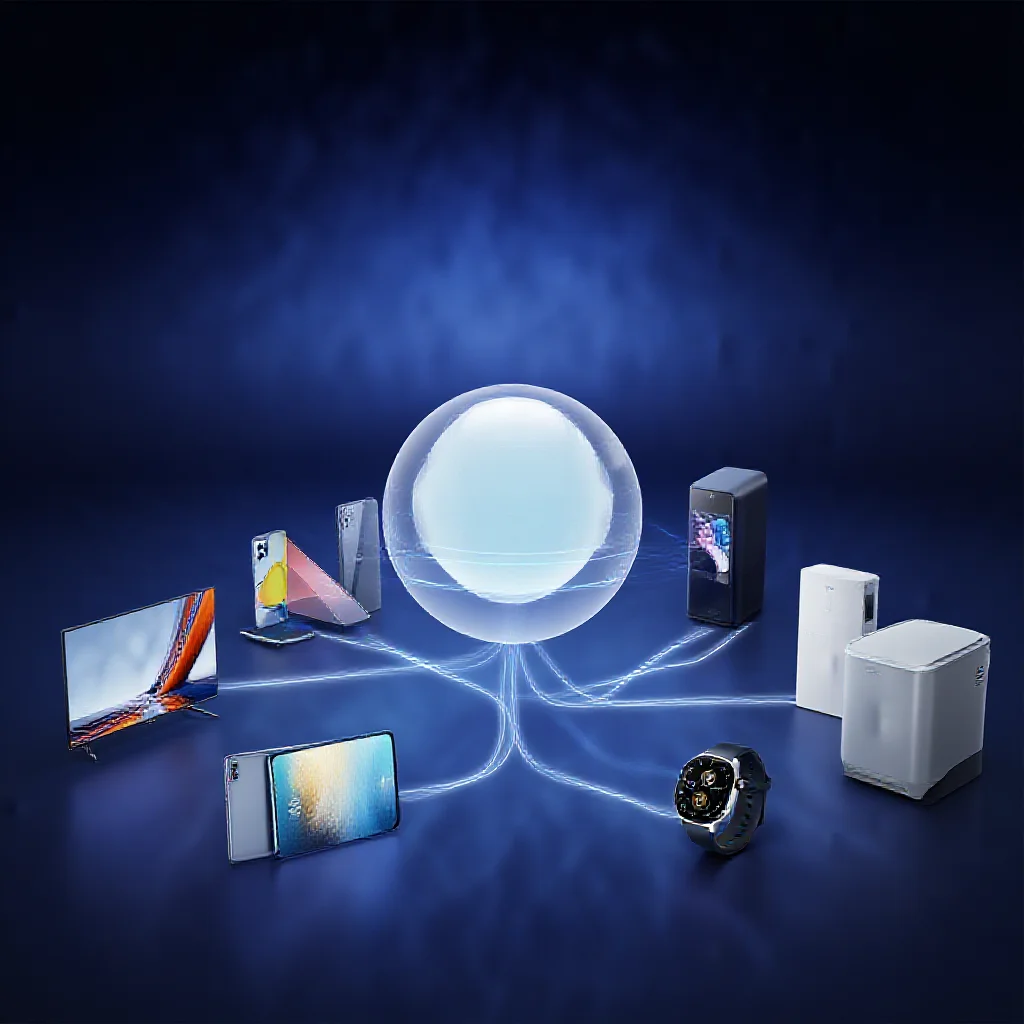
In the long term, the concept of a "device" may further abstract. If the AI agent seamlessly orchestrates tasks across smartphones, watches, TVs, and home appliances, the individual device becomes a context-aware portal to a unified agentic service. Samsung's 2026 Developer Conference, therefore, may be retrospectively analyzed not as a product launch, but as a deliberate step toward a post-app, agent-mediated computing standard. The success of this vision will depend not on voice recognition accuracy, but on the system's ability to reliably understand intent, navigate the digital world with minimal human oversight, and ultimately, earn user delegation of increasingly complex life tasks.