Beyond the Plasma Bottle: Why Fusion Energy''s Pivot to Radiation Conversion
A fundamental paradigm shift is underway in fusion energy research. The
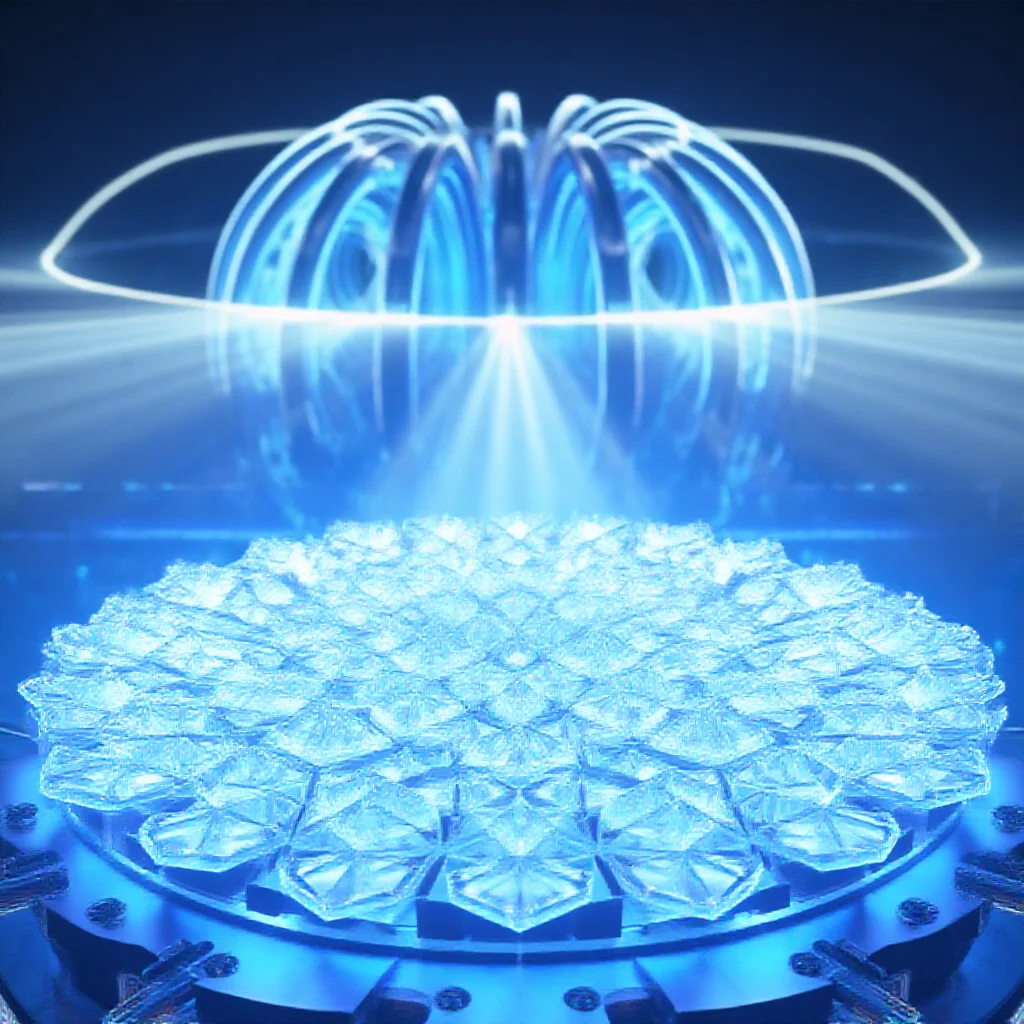
Beyond the Plasma Bottle: Why Fusion Energy's Pivot to Radiation Conversion is a Game-Changer
Date: April 8, 2026
Introduction: The Quiet Revolution in Fusion's Grand Challenge
For over seven decades, the narrative of practical fusion energy has been dominated by a single, monumental physics challenge: achieving and sustaining the confinement of a star-hot plasma. The primary metrics of progress—Lawson criterion, energy gain factor Q—have been intrinsically linked to this containment paradigm. However, a strategic pivot is now being observed within advanced research circles. The focus is expanding beyond merely "lighting the star" to a more holistic engineering question: how to most effectively capture and convert its output. This shift, reported in 2026 (Source 1: [Primary Data]), represents a fundamental re-prioritization from a pure physics endeavor to a system-level optimization for economic viability.Deconstructing the Shift: From Physics Problem to Engineering Asset
The hidden logic of this pivot is one of risk mitigation and pathway diversification. While the problem of stable plasma confinement remains unsolved, research into advanced energy conversion technologies can proceed in parallel. This decouples a critical path, allowing material science and electrical engineering to advance independently of breakthroughs in plasma physics.Central to this shift is the conceptual re-framing of radiation. In traditional magnetic confinement fusion (MCF), high-energy neutrons and photons are primarily seen as a damaging byproduct, a source of material degradation and radioactive waste. The new strategic approach analyzes these particles as the primary energy carrier. The objective becomes their direct and efficient capture, rather than their mitigation. This is particularly critical for alternative fusion concepts, including aneutronic approaches or compact designs, where the traditional steam-turbine cycle represents a thermodynamic and economic dead-end due to scale or neutron flux limitations.
The Deep Audit: Implications Beyond the Lab
The implications of this pivot extend far beyond reactor core design. It initiates the creation of an entirely new supply chain focused on advanced functional materials. Research is intensifying into specialized wide-bandgap semiconductors, radiation-hardened multi-junction photovoltaics, and novel scintillator-photovoltaic hybrid systems capable of converting high-energy photons directly into electrical current.This approach attacks a fundamental inefficiency of the traditional model: the thermal "middleman." By bypassing the step of converting radiation to heat, then heat to mechanical work in a turbine, and finally mechanical work to electricity, the direct conversion pathway circumvents the Carnot efficiency limit inherent in all heat engines. While practical device efficiencies are currently low, the theoretical ceiling for direct conversion is significantly higher. This re-frames the economic equation. A device with a lower plasma gain (Q) but a radically simpler, more efficient direct conversion system could achieve commercial viability sooner than a complex device requiring a massive, efficient steam cycle.