Digital Ghost Ships and Supply Chain Vulnerability: Lessons for South Asia from Volkswagen's Decline
An analysis of how digital ghost ships are undermining supply chain visibility in the Strait of Hormuz and what South Asian manufacturers can learn from Volkswagen's strategic missteps to strengthen regional competitiveness.
Executive Summary
Supply chain disruptions are becoming more opaque as 'digital ghost ships'—vessels with manipulated or missing data—proliferate, especially in strategic maritime chokepoints such as the Strait of Hormuz. For South Asia, a region heavily reliant on imported energy and raw materials, this phenomenon threatens manufacturing stability and inflates operational risks. Meanwhile, the fall of Volkswagen from its pedestal as an automotive powerhouse provides a cautionary tale for industrial strategy. As South Asia's manufacturing sector scales, the convergence of supply chain opacity and strategic complacency could undermine regional competitiveness. This article examines the dual challenge and outlines strategic imperatives for businesses, policymakers, and investors.
Introduction
South Asia's economic transformation hinges on industrial modernization and deeper integration into global value chains. Yet two parallel developments from global manufacturing—the rise of digital ghost ships and Volkswagen's strategic decline—carry significant lessons for the region. The first exacerbates supply chain risk in a corridor critical to South Asia's energy and trade lifeline; the second highlights the perils of underestimating the need for continuous improvement and digital adoption.
Main Analysis
The Ghost Ship Menace in the Strait of Hormuz
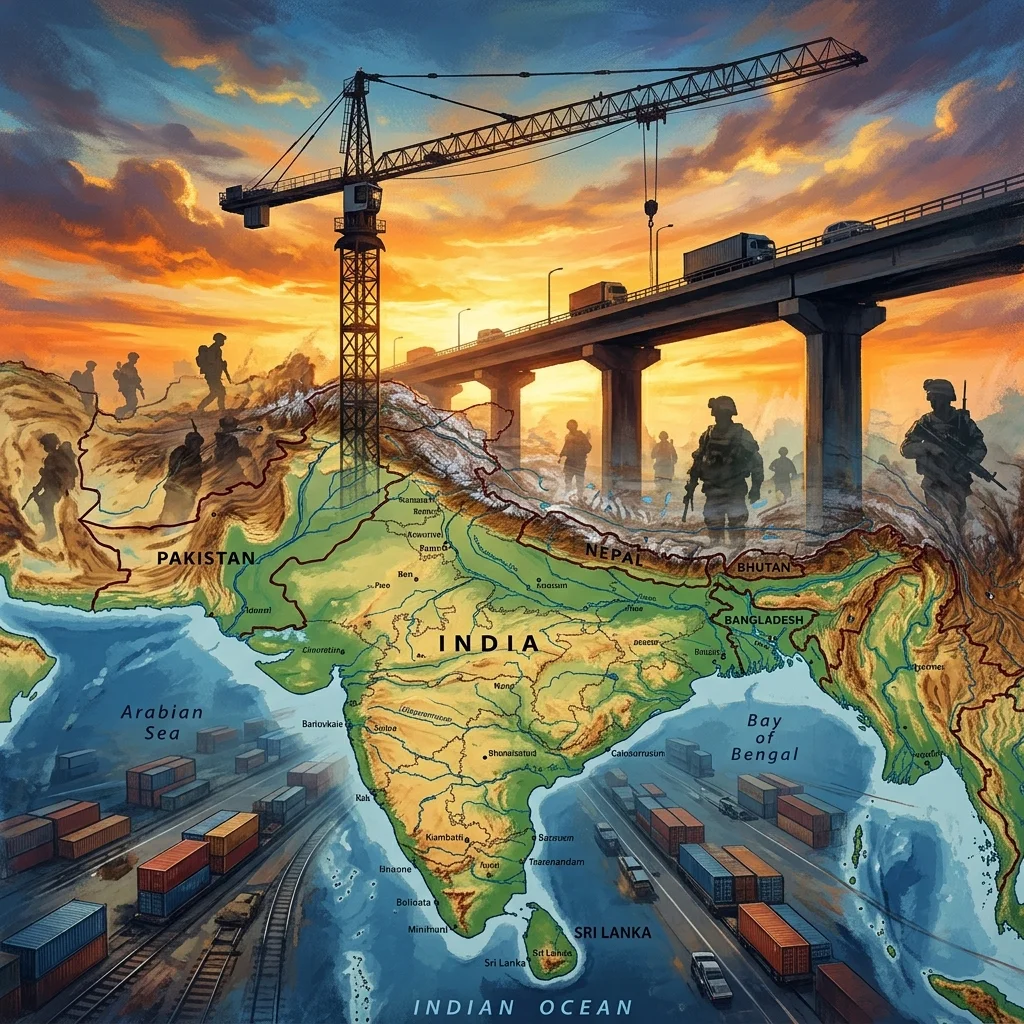
The Strait of Hormuz, through which about 20% of the world's oil passes, has seen a surge in vessels that manipulate their Automatic Identification System (AIS) signals. These 'digital ghost ships' can hide cargo origins, destinations, and identities, often to evade sanctions or tariffs. For South Asian economies—India, Pakistan, Bangladesh, and Sri Lanka—which import substantial crude oil and liquefied natural gas via this route, the lack of visibility creates sudden price spikes, shipment delays, and insurance cost escalations. Manufacturers relying on just-in-time inventory face heightened vulnerability.
Volkswagen's Fall: A Lesson in Strategic Myopia
Volkswagen, once the world's largest automaker, has ceded ground to Chinese and American electric vehicle competitors. Its decline stems from a failure to embrace lean digital transformation, a culture of avoiding bad news, and a slow response to electrification. For South Asia's emerging automotive hubs—like India's Tamil Nadu and Bangladesh's nascent EV assembly—the lesson is clear: protecting legacy processes without fostering innovation leads to obsolescence. The automaker's struggles underscore the need for a continuous improvement culture that values transparency and rapid adaptation.
Interconnected Risks for South Asia
South Asia's manufacturing ecosystem, from textile mills in Dhaka to electronics factories in Penang (though Penang is in Southeast Asia, similar clusters exist in Sri Lanka and India), is increasingly exposed to both supply chain opacity and industrial inertia. The region's trade corridors, especially the proposed India-Middle East-Europe Economic Corridor, could become less reliable if ghost ships undermine trust. Simultaneously, local manufacturers that resist AI-enabled kaizens and lean practices risk falling behind global competitors.
Regional Impact
The convergence of these risks could:
- Increase production costs: Erratic raw material supplies due to ghost ships will raise input costs for South Asian factories, eroding price competitiveness.
- Hinder foreign investment: Multinational corporations seeking stable supply chains may bypass South Asia if visibility remains poor.
- Stall industrial upgrading: Without urgent digital adoption, South Asian manufacturers may lose out to factories in Southeast Asia and China that are already implementing AI-driven continuous improvement.
- Weaken regional trade integration: BIMSTEC and SAARC trade facilitation efforts could be undermined if cargo tracking becomes unreliable.
Strategic Insights
- Invest in maritime intelligence: South Asian governments and ports should collaborate with international partners to deploy AI-based AIS anomaly detection and share alerts about ghost ships.
- Adopt lean digital transformation: Manufacturers should emulate companies like TE Connectivity, which integrates AI into kaizen processes, to build resilience and efficiency.
- Diversify supply routes: Long-term investments in alternative energy import routes (e.g., pipelines from Central Asia) and renewable energy can reduce dependence on the Strait of Hormuz.
- Foster a culture of transparency: As Volkswagen's case shows, corporate cultures that suppress bad news are fragile. South Asian firms must encourage open reporting of supply chain and quality issues.
Future Outlook
Over the next three to five years, South Asia's industrial competitiveness will depend on its ability to address these twin challenges. Expect:
- Increased cross-border data-sharing pacts for maritime security, possibly under the Indian Ocean Rim Association.
- Growth of private analytics firms offering ghost ship detection services to insurers and logistics providers.
- A push by South Asian automotive and electronics manufacturers to adopt Industry 4.0 tools, including digital twins and blockchain for supply chain provenance.
- Policy reforms linking industrial subsidies to demonstrated digital maturity and supply chain transparency.
If South Asia successfully navigates these issues, it could emerge as a more reliable manufacturing hub. Failure to act may relegate the region to the periphery of global value chains.
Conclusion
Digital ghost ships and Volkswagen's decline are not isolated phenomena—they are early warnings for South Asia's industrial ambitions. The region must treat supply chain visibility and continuous improvement as strategic imperatives, not optional upgrades. For investors and policymakers, the message is clear: resilience in the next decade will be built on transparency and agility, not scale alone.