YouTube''s 2026 Footer: Decoding Legal Signals for South Asia''s Digital Economy
An in-depth analysis of a YouTube watch page footer reveals more than standard
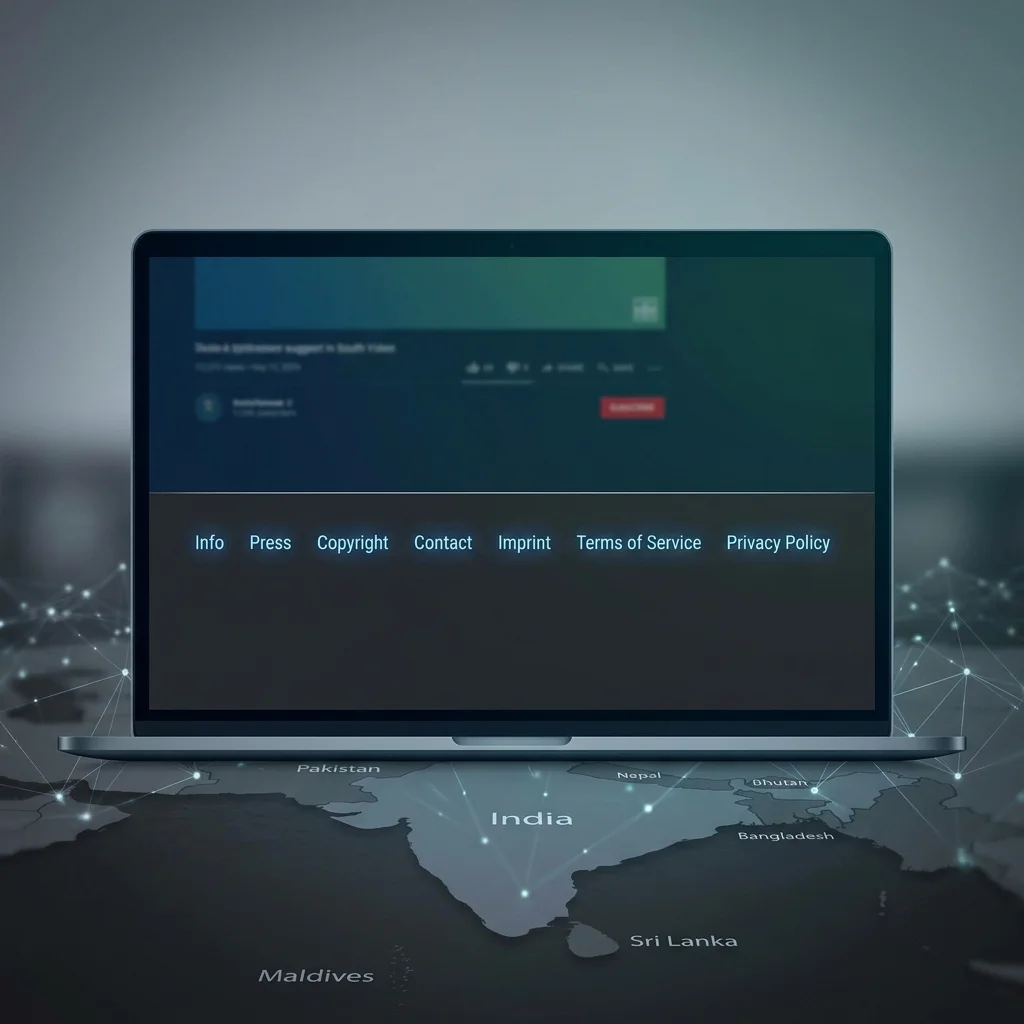
YouTube's 2026 Footer: Decoding Legal Signals for South Asia's Digital Economy
Introduction: The Unseen Power of a Footer
A YouTube watch page footer is rarely the object of scrutiny. Most users scroll past the dense cluster of links at the bottom—Info, Press, Copyright, Contact, Creator, Advertise, Developers, Imprint, Cancel contracts, Terms of Service, Privacy, Policy & Safety, How YouTube works, Test new features—without a second glance. Yet for analysts, regulators, and business strategists tracking South Asia business news, this footer is a microcosm of the platform’s legal architecture and commercial priorities.
Consider the specific URL https://www.youtube.com/watch?v=-0Hw72cxtu8. The footer displayed there carries a copyright notice that reads “© 2026 Google LLC.” A copyright year set two years into the future is far from routine. It may be a placeholder, a technical glitch, or—more intriguingly—a deliberate forward-looking signal. In the context of South Asia’s fast-digitizing economies, where digital regulations are being rewritten in real time, such a detail demands careful decoding. This article unpacks each footer link, examines the implications of the 2026 date, and reveals how these seemingly mundane elements reflect the hidden economic logic of YouTube’s operations—and what they mean for content creators, advertisers, and developers across the region.
[IMAGE: Screenshot of the YouTube footer with key links highlighted and a magnifying glass icon over the copyright year.]
1. The Hidden Economics of Footer Links
The footer is not merely a navigation aid; it is a compliance checklist. Each link corresponds to a specific legal or business obligation that Google LLC (the entity behind YouTube) must meet in the jurisdictions where it operates. For example:
- Advertise and Developers point directly to monetization and API access policies. Advertisers rely on these pages to understand targeting limits, brand safety rules, and billing terms. Developers, especially those building third-party integrations for South Asia business news aggregators or local streaming apps, must navigate API rate limits and content ID requirements.
- Imprint and Cancel contracts are not typical features of U.S.-based platforms. “Imprint” (from the German Impressum) is a legal disclosure mandate in several European Union countries, requiring platforms to display their registered address, contact details, and regulatory authority. Its presence on a YouTube page accessed from South Asia suggests that Google applies a global template to its footer, but the link is especially relevant for creators in jurisdictions like India and Sri Lanka that are considering similar transparency laws.
- Cancel contracts indicates a subscription-based relationship—likely tied to YouTube Premium, Music, or channel membership programs. In South Asian markets where disposable income is rising and subscription models are still nascent, the visibility of this link signals that Google expects a growing number of users to enter into formal contractual agreements. It also hints at an ongoing effort to streamline cancellation processes to comply with consumer protection regulations, such as India’s proposed e-commerce rules that mandate easy withdrawal from recurring payments.
[IMAGE: An infographic mapping each footer link to its primary stakeholder (creator, advertiser, developer, user) with arrows showing economic flows.]
The Policy & Safety and How YouTube works pages are perhaps the most consequential for South Asian content creator compliance. These pages define what kinds of content are eligible for monetization, how copyright claims are handled, and what constitutes a violation of community guidelines. With India—YouTube’s largest market by users—witnessing recurrent tensions between creators and the platform over demonetization and copyright strikes, these footer links serve as the entry points to the rulebook that governs millions of livelihoods.
For advertisers, the Advertise link leads to policies around sensitive content, political ads transparency, and measurement standards. In a region where digital ad spend is projected to exceed $15 billion by 2027 (per eMarketer), understanding these rules is crucial for brands looking to avoid brand-safety disasters or regulatory fines.
2. The 2026 Copyright Notice: A Long-Term Bet on South Asia
The copyright notice “© 2026 Google LLC” is the most unusual element in the footer. Standard practice is to display the current year or the year of the last major update. A 2026 date—whether intentional or accidental—forces us to ask: what is Google’s planning horizon for YouTube in South Asia?
One plausible explanation is that the footer is generated dynamically, and a bug is showing a future year. But large technology companies rarely let such anomalies persist without cause. Alternatively, the 2026 notice could be a deliberate signal that Google has committed to operating YouTube under a specific legal framework through that year. This is especially relevant because digital regulations in South Asia are in flux.
Consider India’s Digital Personal Data Protection Act (DPDPA), which came into force in 2023 but with phased implementation. By 2026, the full compliance regime—including cross-border data transfer restrictions, consent management, and data localization—will be enforced. YouTube’s copyright notice could be a placeholder for the documentation that governs how user-generated content is stored, processed, and monetized under these new rules. Similarly, Pakistan’s proposed Prevention of Electronic Crimes Act amendments and Bangladesh’s Digital Security Act revisions are expected to tighten platform liability by 2025–2026.
[IMAGE: A timeline graphic showing 2024-2027 with key regulatory milestones in South Asia (e.g., India's IT Rules amendments) and YouTube's copyright notice highlighted in 2026.]
For content creators and businesses, the takeaway is clear: prepare for tighter enforcement. The 2026 copyright notice aligns with the timeline of major regulatory milestones. If YouTube’s backend systems are already configured to reflect a 2026 baseline, creators in South Asia should anticipate stricter copyright claim processes, more automated takedowns, and possibly new data-sharing obligations. Advertisers, in turn, may see changes in how audience targeting works, especially if cookie-less tracking or consent-based advertising becomes mandatory by then.
Moreover, the forward-looking copyright notice reinforces the narrative that Google views South Asia as a long-term growth market. Despite regulatory friction—such as the antitrust cases against Google in India—the company is signaling that it will not retreat. Instead, it is investing in compliance infrastructure that will allow YouTube to operate profitably through 2026 and beyond.
3. Regional Variation: How South Asian Nations Decode the Same Footer Differently
Not all South Asian economies interact with YouTube’s footer in the same way. The links may appear identical across geographies, but the legal weight they carry varies sharply from country to country. Understanding this variation is essential for anyone tracking South Asia business news or advising Google LLC on regional strategies.
India, home to over 460 million YouTube users, has the most developed regulatory framework. The country’s Information Technology (Intermediary Guidelines and Digital Media Ethics Code) Rules, 2021, require platforms to appoint a grievance officer, publish monthly compliance reports, and cooperate with government takedown requests. For Indian users, the Contact link often redirects to a local office address, and the Policy & Safety page must include a mechanism for users to challenge content decisions. The Imprint link—while originally European—has inspired India’s licensing requirements for digital media entities, and many creators now treat it as a template for their own disclosures.
Pakistan operates under the Prevention of Electronic Crimes Act (PECA) and the Pakistan Telecommunication Authority’s (PTA) evolving content-blocking orders. The Cancel contracts link becomes crucial here because streaming services like YouTube Premium are subject to local payment gateway regulations and consumer protection laws that mandate refund procedures. Furthermore, the Developers link matters for Pakistan’s burgeoning freelance developer community, which uses YouTube’s API to build everything from video analytics tools to local language caption services.
Bangladesh and Sri Lanka present a different picture. Both nations have less mature digital regulatory systems, but they borrow heavily from India’s IT Rules. For example, Bangladesh’s Digital Security Act (now being replaced by the Cyber Security Act) imposes criminal liability for “harmful” content. In such environments, the Policy & Safety link is not just a set of guidelines—it is a shield that YouTube uses to argue that it has provided adequate notice to users before taking down content. Creators in these markets are often less aware of their rights, making the Contact and Creators links vital for education and support.
Nepal, Bhutan, and Maldives are smaller markets but are rapidly catching up. YouTube’s How YouTube works page serves as a primary source of information for local creators who may have limited access to official training. The Advertise link here points to different payment thresholds and currency conversion terms, often with higher minimum payouts due to banking infrastructure limitations.
[IMAGE: A map of South Asia with each country labeled and icons representing the most relevant footer links for that jurisdiction (e.g., India = Policy & Safety, Pakistan = Cancel contracts, Bangladesh = Contact).]
Conclusion: What the Footer Signals for the Next Phase
A YouTube watch page footer is far more than a static list of links. It is a living document of the platform’s regulatory obligations, commercial relationships, and strategic commitments. The 2026 copyright notice, whether a bug or a feature, compels us to think ahead: South Asia’s digital economy will be shaped by the rules embedded in these links.
For content creators, the takeaway is to study the Policy & Safety and Copyright pages proactively—not after a strike occurs. For advertisers, the Advertise and Terms of Service links contain the fine print that will determine how effectively they can reach audiences under new privacy laws. For developers, the Developers and Cancel contracts sections will define the boundaries of innovation within YouTube’s ecosystem.
As online advertising policy evolves and digital regulations tighten across South Asia, every link in YouTube's footer becomes a point of leverage—or a potential trap. The smartest players will stop ignoring the small print and start reading the signals. The 2026 footer is not a glitch; it is a map of the future.