Tesla''s Delayed India Entry: A Strategic Pause or a Missed Opportunity in
While Tesla's entry into the Indian EV market remains pending, other global
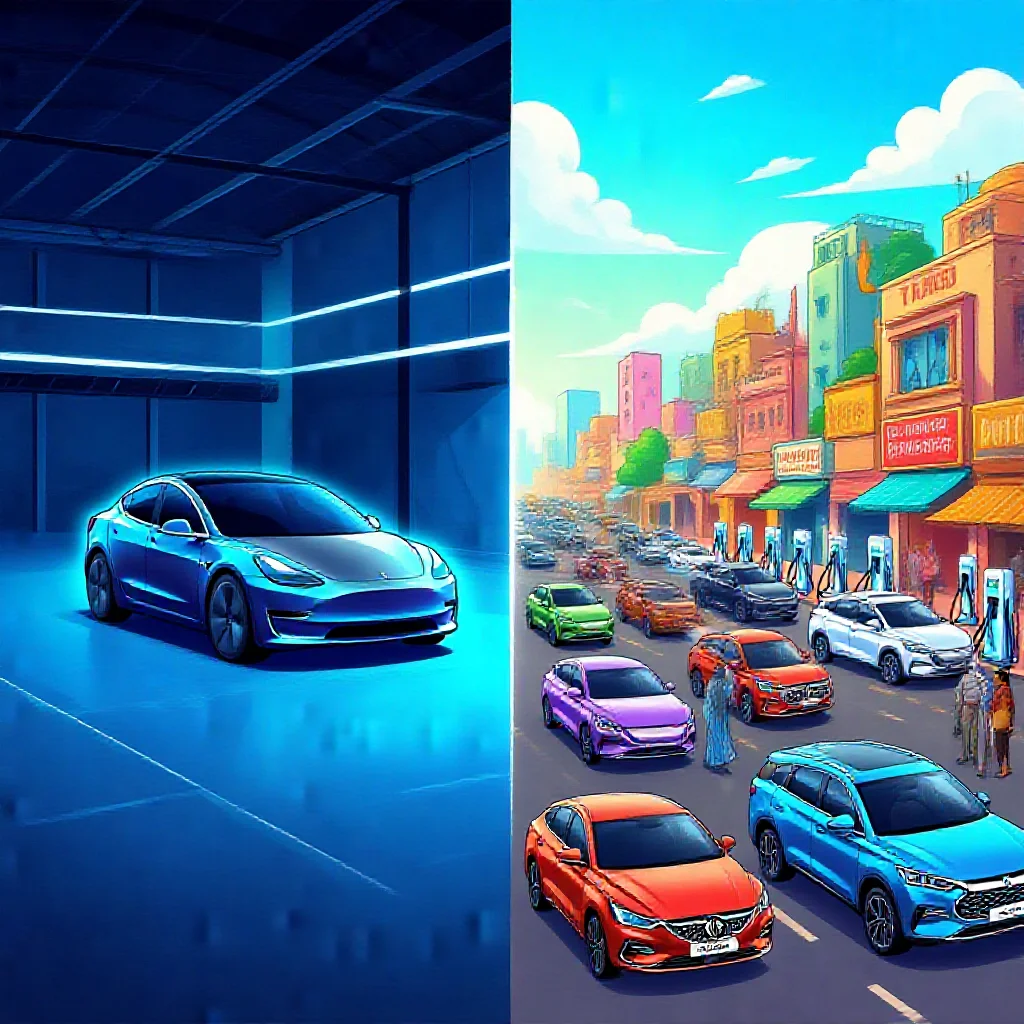
Tesla's Delayed India Entry: A Strategic Pause or a Missed Opportunity in the EV Gold Rush?
Introduction: The Starting Line Without Tesla
India's automotive sector is undergoing a pivotal transformation, with electric vehicles (EVs) emerging as a critical new global battleground. Government initiatives targeting 30% EV penetration by 2030 have catalyzed significant investment and consumer interest. Within this accelerating market, a central paradox exists: Tesla Inc., the undisputed global leader in battery-electric vehicle sales and valuation, remains a notable absentee. Concurrently, a cohort of global and Chinese manufacturers has already established commercial operations and brand presence. This scenario presents a fundamental strategic question: Is Tesla's delayed entry a tactical error resulting in ceded first-mover advantage, or is it a calculated component of a deliberate, high-stakes global playbook?
The Early Movers: How the Competitive Landscape Solidified
The initial phase of India's premium EV market has been defined by a "first wave" of foreign manufacturers. Chinese automakers like SAIC's MG Motor and BYD, alongside legacy global giants Hyundai and Kia, have executed targeted entry strategies. Their approach has been characterized by leveraging existing local assembly partnerships, introducing vehicles tailored to Indian price sensitivity and driving conditions, and initiating early brand-building exercises.
MG Motor launched the ZS EV, followed by the Comet EV, utilizing its Halol, Gujarat plant for assembly. Hyundai introduced the Kona Electric and more recently the IONIQ 5, manufactured at its Chennai facility. BYD, in partnership with Megha Engineering, began selling the e6 MPV. These companies have focused on the SUV and premium segments, establishing initial dealer networks, cultivating consumer trust, and forging early supply chain relationships. Their presence has provided them with critical market data, brand recognition, and a foundational customer base—advantages accrued in Tesla's absence. (Source 1: Industry sales data and corporate announcements)
Decoding Tesla's 'Global Strategy' Playbook for India
Tesla's approach to India appears to be an application of its established global market-entry template. Historical entries into markets like China and Germany reveal a consistent pattern: protracted negotiations for favorable policy terms, a firm commitment to establishing local Gigafactories for full-scale manufacturing rather than assembly from kits, and an insistence on its direct-to-consumer sales model.
This "Tesla Formula" creates inherent friction with India's existing automotive policy framework. The company has historically avoided Completely Knocked Down (CKD) kit assembly, which is the common entry point for other foreign automakers in India. Instead, Tesla seeks concessions on import tariffs to test the market with its vehicles before committing billions to a local factory, alongside policy support for its proprietary sales and service architecture. The strategic calculus involves a trade-off: forfeit short-term market share to avoid subscale, unprofitable operations, and instead wait for conditions that align with its high-volume, vertically integrated business model. The ongoing negotiations suggest Tesla is betting that the long-term value of entering with a locally manufactured, competitively priced vehicle (potentially a $25,000 model) outweighs the risk of competitors entrenching their positions.
The Hidden Ripple Effect: Supply Chain and Ecosystem Implications
The delay has consequences beyond direct sales competition. Early movers are actively shaping India's nascent EV supply chain. By establishing local assembly and procurement, companies like MG, Hyundai, and Tata Motors (domestic leader) are locking in partnerships with local battery pack assemblers, component manufacturers, and software vendors. This ecosystem is developing specifications, quality standards, and cost structures optimized for the vehicles currently in production.
For Tesla, entering later presents a supply chain dilemma. It may need to adapt to an ecosystem already tailored to competitors' requirements, potentially facing higher costs or limited supplier availability for its unique specifications (e.g., large single-piece castings, specific battery cell formats). Conversely, Tesla's eventual entry at scale could still act as a "tidal wave," resetting industry standards and attracting a new tier of global and domestic suppliers to establish operations in India. Its potential demand for advanced, high-volume components could accelerate the sophistication of the local supply base, but only if it can secure the policy and economic conditions to justify such large-scale investment.
Conclusion: The Race is On, But Which Lap is Tesla Running?
The Indian EV market is undeniably in motion, with a competitive order forming in the premium segment. Tesla's continued absence concedes tangible first-mover advantages in brand building, distribution, and supply chain influence to its rivals. However, characterizing this solely as a "missed opportunity" overlooks the strategic discipline inherent in Tesla's global operational model. The company appears to be prioritizing the conditions for profitable, transformative scale over early, but potentially limited, market presence.
The long-term implication hinges on a critical variable: timing. If Tesla's negotiations prolong and competitors achieve deep market penetration and loyalty, it may face a hardened competitive landscape. If, however, it enters coincident with the mass-market inflection point for EVs in India, backed by local manufacturing and a compelling product, its global brand equity and technological prowess could rapidly alter the market's trajectory. The race is not a single sprint but a staged marathon. Other manufacturers are running the initial laps. Tesla's strategy suggests it is preparing to join at a later stage, betting its superior pace on a different part of the course. The final verdict will be delivered by the Indian consumer's response whenever Tesla's starting gun finally fires.