Beyond the Headline: The Strategic Logic Behind India''s Targeted LPG Allocation
The government's decision to increase LPG allocation to 70% for pharmaceuticals,
Beyond the Headline: The Strategic Logic Behind India's Targeted LPG Allocation Hike
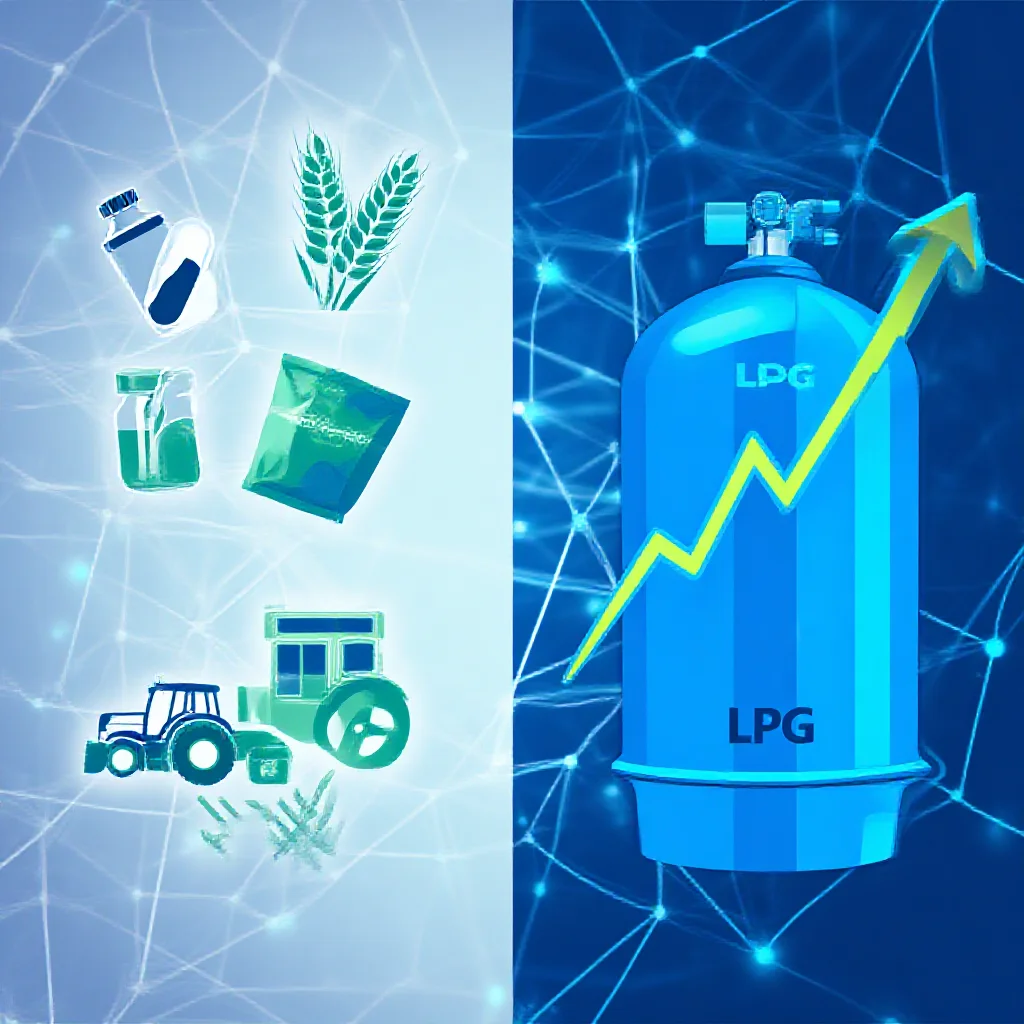
The Government of India has implemented a targeted increase in liquefied petroleum gas (LPG) allocation for three specific industrial sectors. The policy raises the allocation to 70% of the requirement for the pharmaceutical, food processing, and agriculture sectors (Source 1: [Primary Data]). This directive moves beyond generalized energy subsidy frameworks, representing a calculated intervention in foundational supply chains.
Decoding the Directive: Not a Subsidy, but a Strategic Buffer
This allocation distinguishes itself from broader industrial energy policies through its sectoral specificity and guaranteed supply level. The 70% figure establishes a prioritized access tier, creating a substantial buffer against market volatility for the designated industries. The policy’s architecture indicates it is not a consumption subsidy aimed at reducing costs, but an input security strategy. Its primary objective is risk mitigation for supply chains deemed critical to national stability. By ensuring a high baseline of LPG availability, the policy aims to insulate production continuity in these sectors from external supply shocks.
The Triad of National Priority: Why Pharma, Food, and Agri?
The selection of pharmaceuticals, food processing, and agriculture is a function of their role in public health, economic stability, and primary production.
* Pharmaceuticals: LPG is integral for process heating, sterilization, and powering boilers in drug manufacturing. An interruption directly threatens the production of essential medicines, vaccines, and medical equipment. Securing this energy source is a direct component of public health infrastructure, ensuring resilience in the medicine supply chain.
* Food Processing: This sector is a critical lever for controlling food inflation and reducing post-harvest waste. Guaranteed LPG supply supports continuous operation of cold storage chains, packaging units, and cooking processes. Stability here prevents spoilage, maintains consistent market supply, and dampens price volatility in essential food items.
* Agriculture: The focus extends beyond field farming to agro-processing. LPG is used in crop drying, milling, greenhouse heating, and post-harvest management. Prioritized allocation supports value addition at the farmgate, can reduce crop losses, and contributes to stabilizing farmer income by enabling reliable processing capacity.
The Unspoken Economic Calculus: Cost of Disruption vs. Cost of Support
The policy is underpinned by an implicit cost-benefit analysis weighing fiscal expenditure against systemic economic risk.
- Cost of Disruption: A severe LPG shortage in the pharmaceutical sector could disrupt domestic and export drug supplies, with significant public health and economic consequences. In food processing, disruption leads to rapid spoilage, supply shortfalls, and accelerated food inflation. The economic and social cost of such scenarios is disproportionately high.
- Multiplier Effect of Stability: Ensuring operational continuity in these core sectors has stabilizing multiplier effects downstream. Stable pharmaceutical production supports healthcare systems. Uninterrupted food processing stabilizes retail prices and export schedules. Reliable agro-processing boosts rural economic activity. The policy treats these sectors as systemic nodes where investment in input security yields broad-based stability.
- Strategic Prioritization: The allocation effectively categorizes these industries as "too critical to fail" under current conditions of global energy market uncertainty and geopolitical friction. The fiscal cost of the allocated LPG is positioned as a premium for insulating the broader economy from cascading failures.
Evidence & Verification: Contextualizing the Policy Shift
This policy shift is a responsive measure informed by recent historical stress tests. The COVID-19 pandemic highlighted the non-negotiable status of pharmaceutical supply chains and the importance of food security. Concurrently, the volatility in global energy markets following geopolitical conflicts has demonstrated the vulnerability of import-dependent economies to feedstock shortages. The 70% allocation can be viewed as a strategic stockpiling mechanism for operational capacity, learned from these disruptions. It aligns with a global trend where nations are selectively bolstering resilience in supply chains for essential goods, moving from efficiency-centric models to robustness-centric models.
Future Trajectory: Sectoral Energy Security as a Policy Template
The long-term implications of this move extend beyond LPG. It signals a potential paradigm shift towards sector-specific energy and input security policies. Future interventions may see similar targeted support for other critical inputs—such as specific chemicals, minerals, or power guarantees—for industries deemed strategically vital.
Market predictions indicate that this policy will likely enhance the medium-term investment attractiveness of the three beneficiary sectors by de-risking a key operational variable. It may also incentivize further integration and efficiency within these supply chains, as guaranteed feedstock enables longer-term planning. The policy does not eliminate global price risk but transfers the burden of supply security from individual firms to a coordinated national mechanism, potentially improving the aggregate competitiveness of these industries in a volatile global landscape.