Beyond the Launch: How Mahindra Vista''s ₹3,000 Crore Target Reflects Mumbai''s
Mahindra Lifespace's launch of 'Mahindra Vista,' a 550-unit project on 4.5
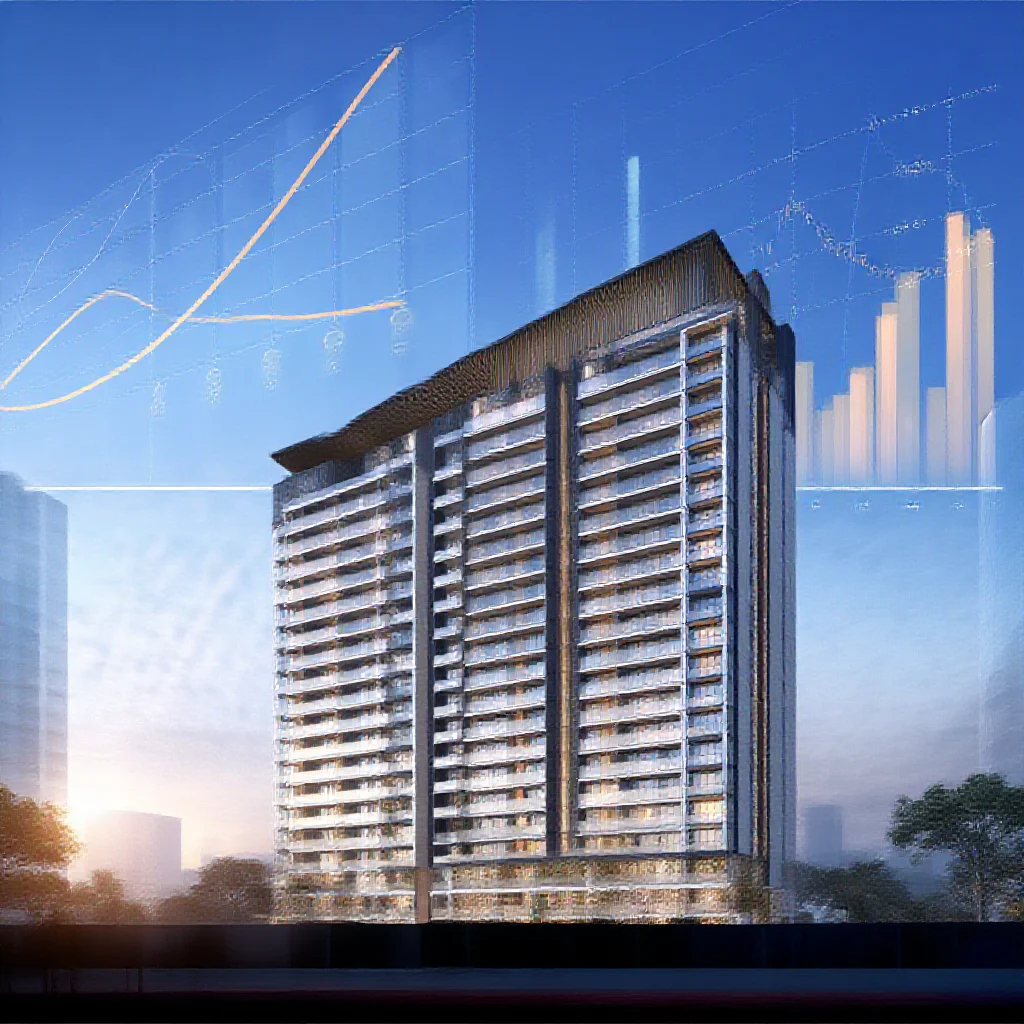
Beyond the Launch: How Mahindra Vista's ₹3,000 Crore Target Reflects Mumbai's Shifting Real Estate Calculus
The Announcement: Decoding the Mahindra Vista Blueprint
On March 19, 2026, Mahindra Lifespace Developers Ltd., the real estate and infrastructure development arm of the Mahindra Group, launched its new residential project, 'Mahindra Vista', in Mumbai. (Source 1: [Primary Data]) The announced specifications present a significant undertaking: a 4.5-acre site will accommodate 550 apartments, with an expected completion date set for 2028. (Source 1: [Primary Data]) The defining metric of the launch is the company's stated revenue target of ₹3,000 crore from this single project. (Source 1: [Primary Data]) This target, announced under the leadership of MD & CEO Arvind Subramanian, positions the launch not as a routine market entry but as a calculated strategic move timed for the late-2020s demand cycle. The scale of the ambition necessitates a move beyond promotional statements to an analysis of underlying market logic and feasibility.
The ₹3,000 Crore Puzzle: Ambitious Target or New Market Benchmark?
The core analytical exercise begins with the revenue math. A ₹3,000 crore target across 550 units implies an average apartment price of approximately ₹5.45 crore. (Source 1: [Primary Data]) The critical variable is the saleable area, which was not disclosed. Assuming a range of unit sizes typical for the luxury segment, the implied revenue per square foot would sit between ₹75,000 and ₹95,000. This range places Mahindra Vista at the apex of Mumbai's current ultra-luxury market, requiring it to either match or exceed benchmarks set by established waterfront and South Mumbai properties.
This target is predicated on two non-mutually exclusive hypotheses. First, it assumes sustained price inflation in Mumbai's premium residential segment through the project's sales cycle. Second, it signals a belief in a fundamental shift in the buyer profile for its location in South Central Mumbai, potentially driven by new infrastructure. The target acts as a bellwether for developer confidence in the long-term resilience of the top-tier market, suggesting a belief that demand will absorb such pricing well into 2027 and 2028.
Strategic Timing & The 2028 Completion Horizon
The 2028 completion date is a strategic variable, not merely a construction timeline. (Source 1: [Primary Data]) It aligns the project's market debut with the anticipated full operationalization of major infrastructure projects in Mumbai, such as the coastal road network and specific metro line expansions. These projects are expected to enhance connectivity and perceived value in various micro-markets.
For Mahindra Lifespace, this timeline is also a portfolio management tool. It ensures a revenue pipeline that extends beyond the company's currently active projects, providing a forecastable income stream for the latter half of the decade. The four-year construction period is consistent with industry averages for projects of this scale and premium specifications, but it also introduces a significant window of execution risk.
The Unspoken Challenges: Land, Execution, and Market Headwinds
The project's viability is silently anchored to its land economics. The cost of acquiring and holding 4.5 acres in Mumbai represents the single largest determinant of net profitability. The company's land banking strategy and the entry price for this parcel are undisclosed but are critical to whether the ₹3,000 crore revenue target translates into expected margins.
Execution over a multi-year horizon introduces compounded risks. Supply chains for premium imported materials remain volatile. Skilled labor availability and cost escalation present persistent challenges. Furthermore, the project's financial model must withstand potential shifts in monetary policy, regulatory environment, and taxation over the construction period. The statement by Arvind Subramanian that the project will "set a new benchmark in luxury living" (Source 1: [Primary Data]) reflects market positioning, but the internal confidence level will be tested by these unspoken variables.
Conclusion: A Litmus Test for Post-2025 Luxury Demand
The Mahindra Vista project, with its explicit ₹3,000 crore ambition, serves as a high-profile litmus test for Mumbai's luxury real estate segment in the post-2025 period. Its success or shortfall will provide empirical data on the depth of demand for ultra-premium pricing in emerging luxury corridors versus traditional strongholds. The project's progression will be closely monitored as an indicator of developer ability to navigate land cost pressures, execution complexities, and interest rate environments to achieve pre-set financial goals. The outcome will influence pricing strategies across the industry and offer a clear signal regarding the sustainability of current market valuations in India's premier real estate market.