Beyond the ₹497 Crore Relief: India''s Strategic Response to West Asia Supply
The Indian government's unveiling of the ₹497 crore RELIEF scheme for exporters
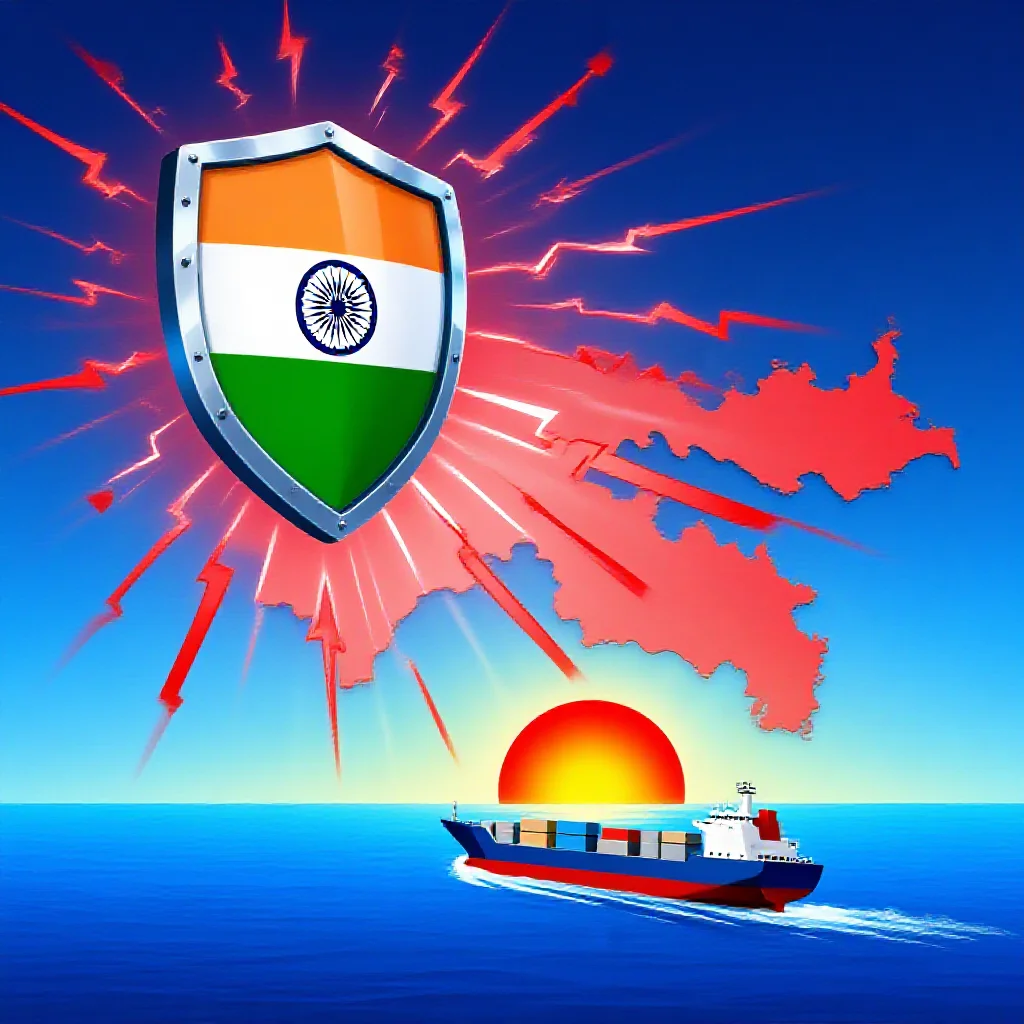
Beyond the ₹497 Crore Relief: India's Strategic Response to West Asia Supply Chain Disruption
Article Summary: The Indian government's unveiling of the ₹497 crore RELIEF scheme for exporters affected by the West Asia crisis is more than a financial stopgap. This analysis positions it as a proactive measure to shield a critical economic segment from geopolitical volatility, examining its role as a signal of state-backed risk mitigation, its potential to prevent a cascading liquidity crisis, and its implications for India's evolving trade doctrine.
---
The RELIEF Scheme: A Financial Band-Aid or a Strategic Signal?
The Government of India announced the RELIEF scheme, a financial intervention with a total outlay of ₹497 crore, targeted at exporters facing disruptions due to the West Asia crisis (Source 1: [Government Announcement]). The immediate context involves heightened regional instability, impacting key maritime and logistical corridors critical for Indian exports to the region, which include petroleum products, cereals, machinery, and chemicals.
The ₹497 crore figure requires contextual scale analysis. While not exhaustive against total export volumes, its strategic weight lies in its targeted application. The scheme functions primarily as a confidence-building mechanism. Its announcement aims to signal state support, thereby preventing a potential downward spiral of order cancellations and loss of market confidence that could extend beyond direct, calculable losses. It is a calibrated move to stabilize expectations within the export community.
The Hidden Economic Logic: Containing the Liquidity Contagion
The strategic rationale extends beyond direct compensation. The core economic logic is the containment of liquidity contagion. Export-oriented businesses, particularly Micro, Small, and Medium Enterprises (MSMEs), operate on thin margins and tight cash flows. Disruptions causing delayed shipments, demurrage costs, or payment delays can swiftly trigger a working capital crisis.
Such a crisis does not remain isolated. It risks cascading into the broader financial system as exporters delay payments to their own suppliers and service providers, and potentially default on bank credit lines. The timeliness of the RELIEF intervention is designed to act as a circuit breaker. Historical precedent from previous trade disruptions, such as the Red Sea crisis, demonstrates how logistical shocks can translate into solvency issues for small exporters and job losses in industrial clusters. The scheme’s "fast analysis" and deployment aim to preempt this domino effect.
Deep Audit: What RELIEF Reveals About India's Evolving Trade Doctrine
The RELIEF scheme offers a point of analysis for India's evolving approach to trade security. It represents a potential shift from purely reactive, ad-hoc responses toward more structured, albeit nascent, institutional mechanisms for geopolitical risk mitigation.
A critical question is whether this scheme serves as an unspoken pilot for a more permanent "Geopolitical Trade Risk Mitigation Fund." Such an institution would move beyond crisis management to a standing policy of insulating strategic trade flows. The long-term supply chain impact hinges on design: does the scheme merely subsidize existing vulnerable trade routes, or does its framework encourage and enable exporters to diversify markets and develop more resilient logistics pathways? The answer will determine if this is a tactical subsidy or a step in doctrinal evolution.
Verification and Context: Scrutinizing the Scheme's Design and Potential
Verification of the scheme's intent is anchored in official statements from the Ministries of Commerce and Finance, which frame it as necessary support for affected exporters (Source 1: [Government Announcement]). However, the operational efficacy depends on unresolved design parameters.
Key gaps for scrutiny include the precise criteria defining an "affected" exporter, the clarity and speed of the disbursement mechanism, and the assessment of whether the ₹497 crore outlay aligns with credible estimates of the disruption's financial impact. A comparative analysis with mechanisms in other major exporting nations—such as export credit agencies with explicit political risk insurance products—provides a benchmark. These systems often involve co-payment or premium-based models, contrasting with the grant-like nature of the announced RELIEF scheme.
Conclusion: Beyond Immediate Relief, Towards Resilient Corridors
The RELIEF scheme is a multi-layered instrument. Its primary function is the immediate stabilization of exporter finances. Its secondary, more strategic function is to signal the state's role as a risk absorber during exogenous trade shocks.
The market and industry prediction is that such interventions will necessitate more formalized structures over time. The recurring nature of geopolitical supply chain disruptions suggests that ad-hoc allocations may evolve into defined contingency frameworks. The ultimate measure of success will be whether temporary relief translates into sustained incentives for building more diversified, agile, and resilient trade corridors, reducing the systemic vulnerability that made the scheme necessary. The RELIEF scheme, therefore, is as much a test case for institutional innovation as it is a fiscal response.