Beyond Green Steel: How India''s Energy Transition is Forcing a Complete Industrial
India''s steel industry, led by players like Tata Steel, faces a dual disruption:
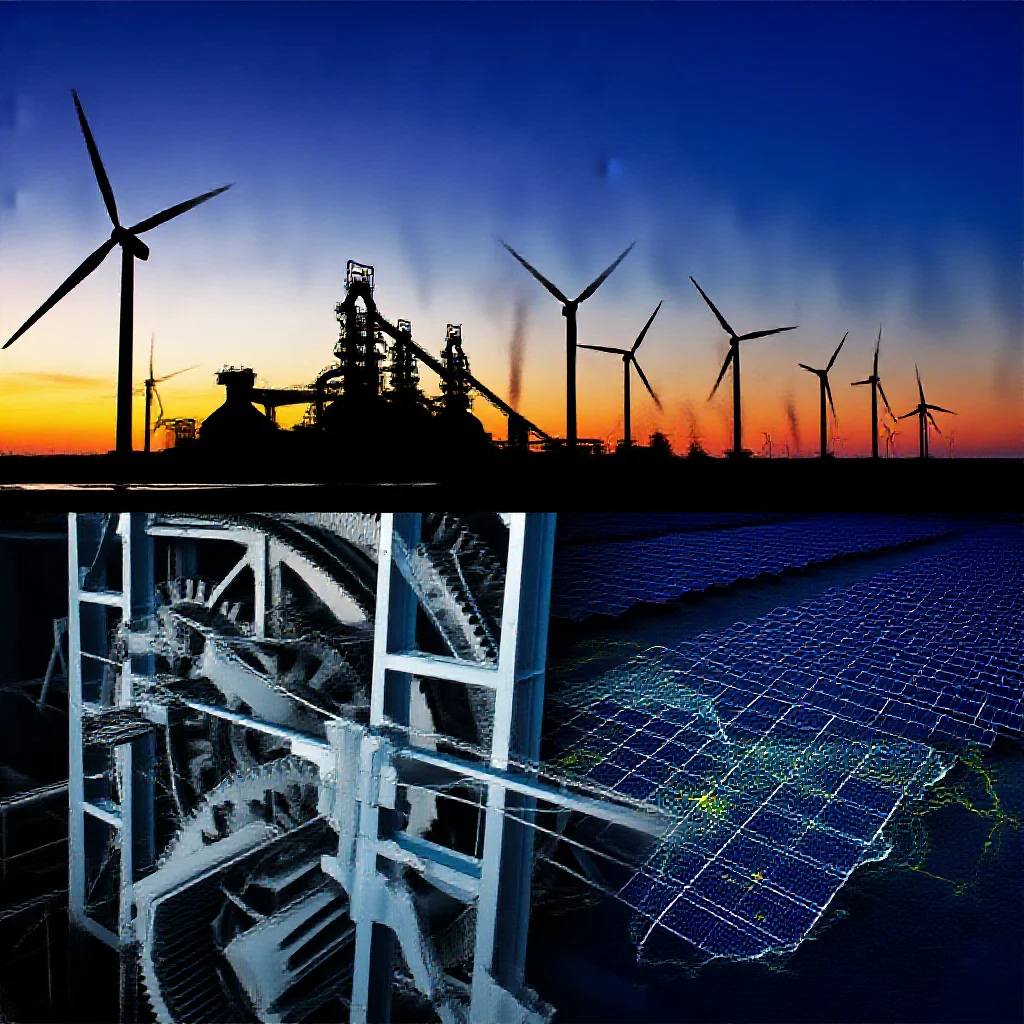
Beyond Green Steel: How India's Energy Transition is Forcing a Complete Industrial Rebuild
The Dual Disruption: Energy Transition Meets Mineral Dependency
The Indian steel industry, a cornerstone of the nation's manufacturing and infrastructure development, is confronting a structural recalibration. The concurrent pressures of decarbonization and critical mineral dependency represent not merely an environmental compliance exercise but a fundamental strategic reset. The challenge is dual-faceted: first, the decarbonization of an inherently energy- and carbon-intensive production process; second, the securing of non-traditional raw materials essential for both new steelmaking methods and the alloys required by the renewable energy sector.
This convergence moves beyond operational adjustment to touch on core vulnerabilities. As Tata Steel CEO T.V. Narendran has stated, "The energy transition and the critical minerals shift are two of the biggest challenges facing the steel industry today." (Source 1: [Primary Data]) This framing underscores that the transition is existential, impacting cost bases, supply chain security, and long-term competitiveness. The mandate is no longer solely about producing "green steel" but about surviving within a radically altered industrial and geopolitical landscape where traditional inputs like coking coal are supplanted by hydrogen, electricity, and a new suite of minerals.

Tata Steel's Playbook: A Case Study in Strategic Adaptation
Tata Steel's public strategy provides a tangible case study in navigating this dual disruption. The company's response appears two-pronged, targeting both product innovation and process transformation. On the product front, there is a clear pivot towards serving the renewable energy ecosystem. The company is working on developing new steel products for sectors such as wind turbines and solar panels. (Source 1: [Primary Data]) This represents a strategic move from being a bulk commodity supplier to becoming a specialized solutions provider for the new energy economy, potentially capturing higher value in nascent markets.
Concurrently, the company is addressing the core production challenge through collaboration. Tata Steel is engaging with research institutions and other companies to develop new technologies for the production of green steel. (Source 1: [Primary Data]) This collaborative approach acknowledges the prohibitive cost and risk of solo R&D in pioneering areas like hydrogen-based direct reduced iron (H-DRI) or carbon capture, utilization, and storage (CCUS). The hidden logic is a transition from an operational model centered on scale and efficiency of traditional methods to one reliant on innovation, partnerships, and intellectual property in emerging technologies.
!Collage of specialized steel applications for renewable energy infrastructure

The Hidden Supply Chain War: Redrawing the Mineral Map
The most profound and long-term impact of this transition lies upstream, in the complete reconfiguration of raw material supply chains. India's historical steel strength was built on domestic iron ore and imported coking coal. The future points towards a dependency on a different set of materials: nickel for alloying in certain green steel routes, lithium and cobalt for associated battery storage systems, and rare earth elements for permanent magnets in wind turbines—many of which India lacks in substantial, easily exploitable reserves.
This shift redraws the mineral map for Indian industry, introducing new geopolitical dependencies and procurement complexities. Supply chains will lengthen and become more dispersed, increasing exposure to potential chokepoints and price volatility. Consequently, strategic responses are extending beyond primary mining. The economics of recycling and the circular economy are being re-evaluated as a critical mineral security strategy. Securing and processing scrap steel, which carries the alloying elements within it, transforms from a cost-saving measure to a strategic imperative for reducing virgin mineral import reliance.
!World map showing traditional vs. new critical mineral supply chains for steel

From Blast Furnace to Lab: The New R&D Alliances
The technological scale of the challenge renders a go-it-alone approach obsolete. The development of commercially viable, scalable green steel production pathways—such as hydrogen-based DRI integrated with electric arc furnaces, or molten oxide electrolysis—requires expertise beyond traditional metallurgy, spanning electrochemistry, renewable energy integration, and process engineering. This necessity is catalyzing the formation of new R&D consortiums, linking steelmakers with national research institutes, universities, and cross-industry partners from the automotive and renewable energy sectors.
The timeline for these technologies is a critical variable. While pilot projects are announced, their scalability and economic viability under Indian conditions of grid carbon intensity and hydrogen cost remain unproven at an industrial scale. Tata Steel's collaborations must be contextualized within this global race. (Source 1: [Primary Data]) Their success will depend not only on technical feasibility but on the parallel development of affordable green hydrogen and a significantly decarbonized power grid, highlighting the deeply interconnected nature of this industrial transition.
Conclusion: An Industrial Rebuild in Progress
The narrative for India's steel industry is evolving from one of incremental greening to one of foundational redesign. The energy transition and critical minerals shift are acting as forcing functions, compelling a reassessment of everything from product portfolios and client relationships to raw material sourcing and core production technology. The strategic pivot required is comprehensive, encompassing supply chain geopolitics, collaborative innovation models, and a redefinition of market value.
Market and industry predictions based on this analysis suggest a period of heightened capital allocation towards R&D and pilot facilities, increased merger and acquisition or joint venture activity focused on technology and mineral security, and a growing bifurcation in the market between producers of conventional steel and those developing differentiated, low-carbon products. The ultimate outcome will be determined by the speed of technological advancement, the cost trajectories of green hydrogen and renewable power, and the effectiveness of India's broader mineral strategy. The industrial backbone of the nation is not just being retrofitted; it is being rebuilt for a new economic and environmental logic.