Hilton''s 125-Hotel India Gamble: Decoding the Mid-Market Strategy Behind
Hilton's master license agreement with Royal Orchid Hotels to launch 125
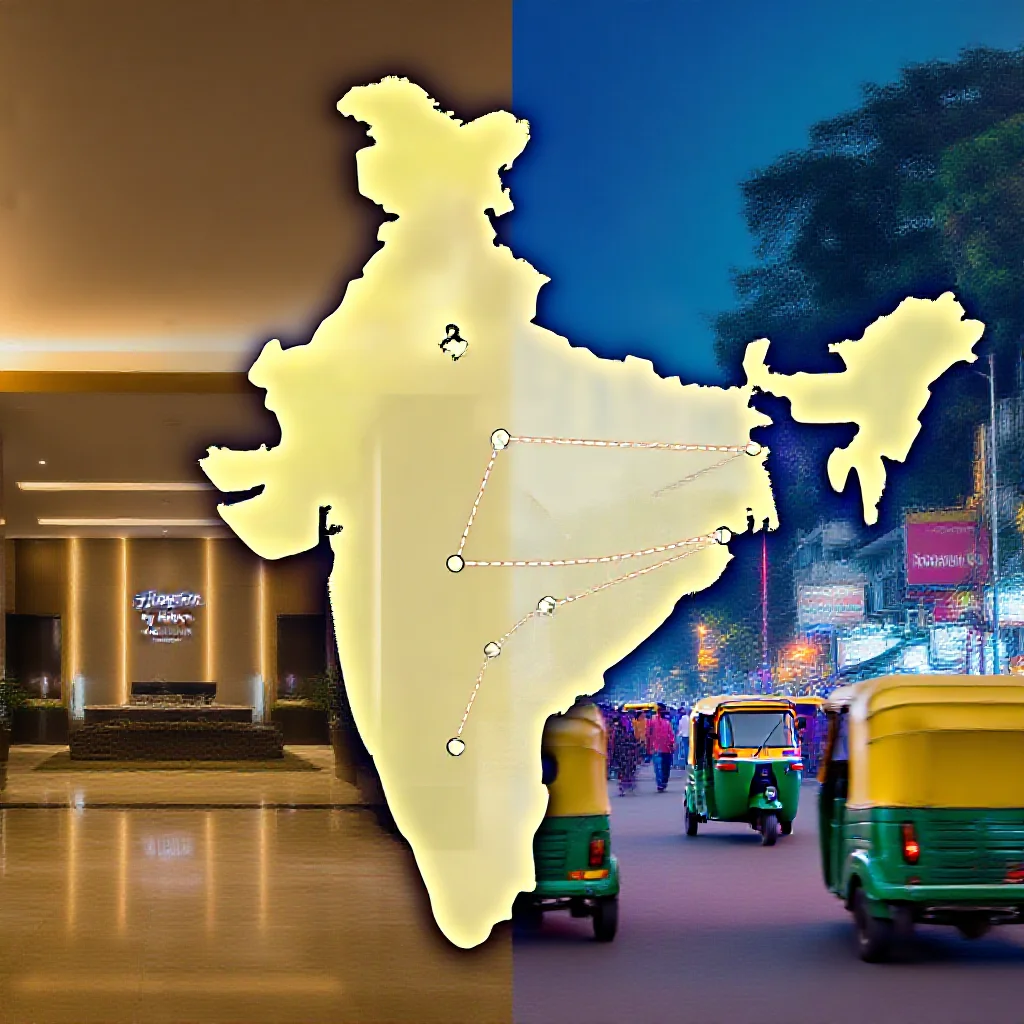
Hilton's 125-Hotel India Gamble: Decoding the Mid-Market Strategy Behind the Royal Orchid Partnership
Opening Summary
On April 8, 2026, Hilton and Royal Orchid Hotels executed a master license agreement to develop 125 new Hampton by Hilton hotels across India, with a target completion date of 2035 (Source 1: [Primary Data]). The partnership designates Royal Orchid Hotels as the owner, developer, and operator of the properties, aiming to expand Hilton's footprint in India's mid-market hospitality segment. This agreement represents a significant scaling of branded inventory and a specific strategic model for market penetration.
Beyond the Headline: The Asset-Light Calculus of a 125-Hotel Deal
The core of this expansion is an asset-light franchising model. Hilton licenses its Hampton by Hilton brand and operating standards to Royal Orchid Hotels, which assumes the capital expenditure and operational execution. This calculus allows Hilton to scale rapidly without direct balance sheet exposure to real estate, aligning with a prevailing strategy for emerging markets. The risk-reward structure is bifurcated: Hilton secures fee-based income (royalties, marketing, reservation system fees) and brand presence, while Royal Orchid Hotels bears the financial risk of development and day-to-day operations but captures the potential upside of asset ownership and operational profit.The 2035 timeline is not arbitrary. It is a direct bet on India's sustained macroeconomic and infrastructural trajectory. The period allows for phased development contingent on the maturation of target markets, the rollout of supporting transportation networks, and the growth of disposable income in secondary cities. The master license agreement itself is a tool to accelerate growth by delegating market-specific development expertise to a local partner.
The Real Battlefield: India's Mid-Market Hospitality War
The strategic pivot targets India's most contested hospitality segment: the organized, branded mid-market. Demand is projected to be driven by the expansion of India's domestic traveler cohort, characterized by a growing middle class with increasing frequency of travel for both business and leisure. This segment prioritizes consistent quality, hygiene standards, and brand trust over unbranded alternatives.Hilton's move directly pressures competitors. International chains like Marriott (with Fairfield) and IHG (with Holiday Inn Express) have similar ambitions. Indian chains like Lemon Tree Hotels and Treebo, along with scaled aggregators like OYO, represent entrenched competition with deep local market knowledge. The Hampton by Hilton proposition relies on global brand recognition and a standardized, value-driven service model. Its success hinges on translating that consistency effectively within the Indian context and achieving sufficient distribution density to capture market share.
The Ripple Effect: Supply Chains, Jobs, and Regional Development
The development of 125 properties will generate secondary economic effects. The construction phase will impose demands on local building materials, FF&E (Furniture, Fixtures & Equipment) sourcing, and require adherence to evolving sustainable building codes. A shift toward prefabricated or standardized construction modules could emerge to maintain brand consistency and control costs.A more critical challenge is the human capital requirement. Operating 125 hotels, each requiring trained management and staff, will necessitate the recruitment and training of thousands of hospitality professionals by 2035. This anticipates strain on the existing talent pipeline and may drive investment in hospitality education and training institutions.
Geographic focus will dictate regional impact. If development emphasizes Tier-2 and Tier-3 cities—such as Indore, Coimbatore, or Visakhapatnam—it could alter commercial real estate patterns and stimulate localized service economies, acting as a catalyst for further development in these regions.
Verification & Context: Scrutinizing the Ambition
The 125-hotel target requires cross-verification against market fundamentals. India's total hotel room supply growth forecasts, airport expansion timelines, and highway development projects provide a reality check for absorption capacity. Historical precedent offers caution; mass expansion plans by international groups in other emerging markets have seen variable success rates, often hampered by bureaucratic delays, land acquisition challenges, or economic cyclicality.Execution risk resides primarily with Royal Orchid Hotels, which must secure financing, land, and permits for over a hundred projects within a decade. Macroeconomic risks, including currency volatility, inflationary pressures on construction costs, and shifts in domestic travel demand, could alter the pace or feasibility of the plan. The master license model insulates Hilton from direct financial fallout from delays but exposes it to brand reputation risk if standards are inconsistently applied.
Conclusion: A Strategic Bet with Multilayered Stakes
The Hilton-Royal Orchid partnership is a bellwether for global hospitality's India strategy, emphasizing asset-light growth, reliance on strong local partners, and a focused assault on the mid-market. It is a strategic bet on India's long-term economic convergence and the formalization of its hospitality sector.The long-term implications extend beyond brand competition. Success would validate the master license model for rapid scaling in South Asia, likely prompting similar structured agreements from competitors. It would also demonstrate the viability of standardized global brands in India's diverse regional markets. Conversely, significant shortfalls against the 125-hotel target would signal over-optimism in forecasting India's infrastructure and demand growth, potentially cooling near-term investment fervor.
The final analysis views this not as a simple expansion, but as a complex, decade-long market capture operation with multilayered stakes involving real estate development, labor market evolution, and regional economic planning. Its progress will be a key metric for assessing the maturation of India's commercial infrastructure and the globalization of its domestic travel habits.