How Geopolitical Forces Are Reshaping Business and Investment in South Asia
An analysis of how geopolitical shifts are influencing South Asia's economic transformation, trade, investment, and long-term competitiveness.
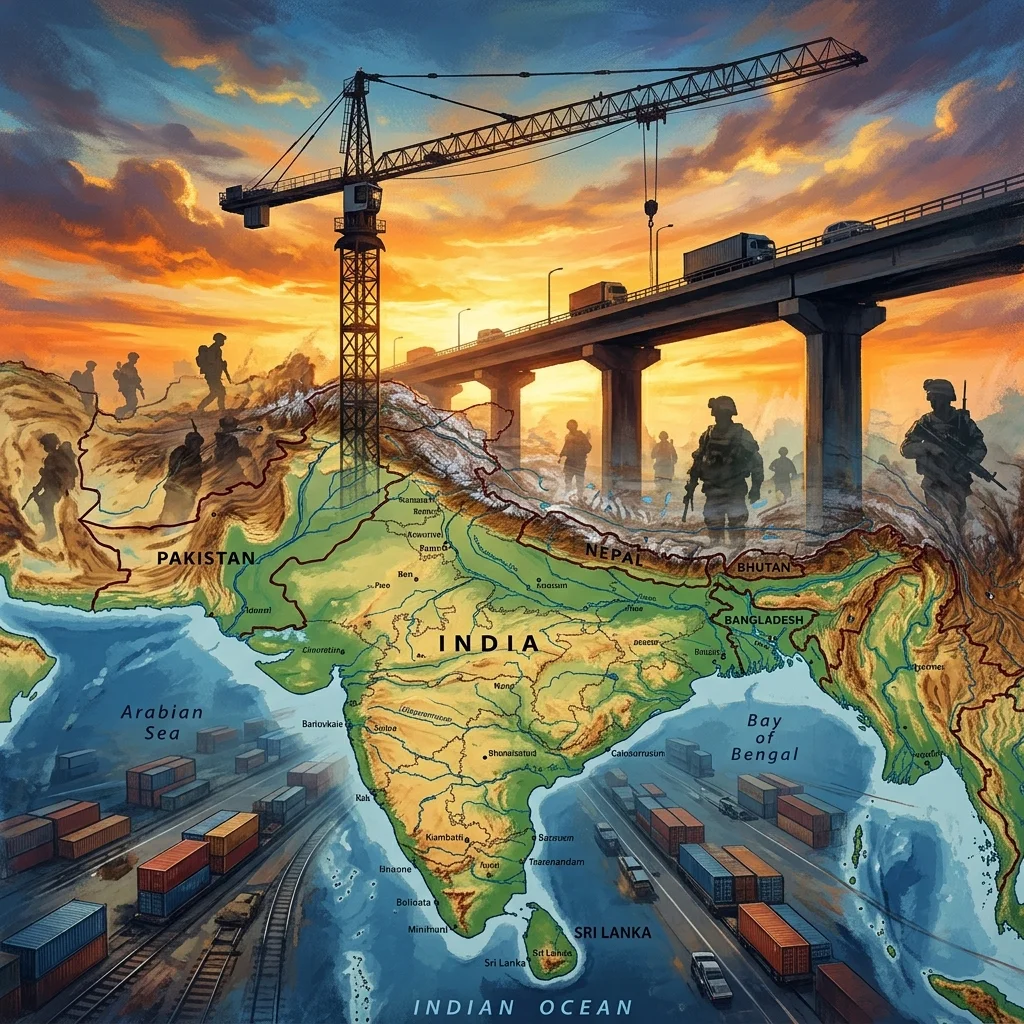
Executive Summary
South Asia is emerging as a critical arena where global geopolitical forces are intersecting with regional economic ambitions. The shifting balance of power, trade fragmentation, technological competition, and renewed focus on supply chain resilience are creating both challenges and opportunities for the region's economies. This analysis explores how these forces are shaping South Asia's business environment, investment landscape, and long-term development trajectory.
Introduction
The global business environment in 2026 is being defined by geopolitical tensions, economic nationalism, and the realignment of trade and technology alliances. For South Asia, a region spanning India, Pakistan, Bangladesh, Sri Lanka, Nepal, Bhutan, and the Maldives, these forces are not distant phenomena. They are directly influencing trade flows, foreign direct investment (FDI), industrial policy, and regional cooperation.
Main Analysis
Trade Fragmentation and Regional Realignment
The fragmentation of global trade into blocs is compelling South Asian economies to reconsider their export strategies. While India leverages its market size and digital infrastructure, smaller economies like Bangladesh and Sri Lanka are seeking preferential access to emerging markets. The stalled progress of SAARC has been partially offset by BIMSTEC and bilateral agreements, yet the region remains under-integrated compared to Southeast Asia.
Supply Chain Reconfiguration
As multinational corporations diversify away from over-reliance on any single production hub, South Asia is positioned as an alternative manufacturing destination. The "China+1" strategy is driving investments into India, Bangladesh, and Vietnam. However, infrastructure deficits, regulatory complexity, and energy costs remain significant barriers. Countries that streamline business regulations and invest in logistics will attract a larger share of relocated supply chains.
Technology Competition and Digital Economy
Geopolitical rivalry in technology, particularly around semiconductors, artificial intelligence, and digital infrastructure, has profound implications for South Asia. The region's large pool of tech talent, especially in India, is both an asset and a vulnerability. Data localization policies, export controls, and cybersecurity concerns are shaping the digital agenda. South Asian governments must balance digital sovereignty with the benefits of cross-border data flows.
Energy Security and the Transition
Energy security has become a geopolitical weapon, prompting South Asian nations to accelerate their energy transition. India's ambitious renewable targets, Bhutan's hydropower exports, and Bangladesh's LNG imports all reflect the region's diverse energy equation. Investments in cross-border energy grids, such as the proposed India-ASEAN grid, could enhance resilience and reduce dependence on volatile global markets.
Regional Impact
The geopolitical landscape is generating differentiated impacts across South Asia:
- India is leveraging its strategic autonomy to attract both Western and Eastern investments, particularly in technology and defense.
- Bangladesh faces pressure from global labor standards in its ready-made garment sector while exploring diversification into electronic assembly.
- Pakistan is navigating economic fragility amid geopolitical pressures, with opportunities in agriculture and energy trade.
- Sri Lanka is rebuilding investor confidence after its debt crisis, positioning itself as a logistics hub in the Indian Ocean.
- Nepal and Bhutan are capitalizing on clean energy exports, but remain dependent on India's cooperation.
Overall, the region is experiencing a shift toward more assertive industrial policies, with governments using investment screening, export incentives, and trade agreements to shape their economies' global integration.
Strategic Insights
For Businesses
Companies operating in South Asia need to adopt a geopolitical risk management approach. This includes diversifying supply chains, investing in local compliance capabilities, and developing adaptive strategies for shifting trade rules. The rise of regional value chains offers opportunities to serve both local and global markets.
For Investors
Geopolitical instability creates both risk and reward. Investors should identify sectors aligned with policy priorities, such as renewable energy, digital infrastructure, and advanced manufacturing. The integration of South Asian capital markets could reduce volatility and unlock cross-border investment opportunities.
For Policymakers
South Asian governments must prioritize regional connectivity, regulatory harmonization, and skill development to capitalize on global shifts. Strengthening institutions and improving governance will reduce the "sovereign risk" premium that discourages long-term investment.
Future Outlook
Over the next 3–5 years, South Asia's role in the global economy will be increasingly defined by its ability to navigate geopolitical currents. Key trends to watch include:
- Supply Chain Diversification: The region could become a significant node in global supply chains if infrastructure and policy improvements are sustained.
- Digital Integration: The growth of digital payments, fintech, and AI adoption will continue, but will be shaped by data governance frameworks.
- Energy Transition: Renewable energy investments will accelerate, with India and Bhutan leading the way in cross-border clean energy trade.
- Regional Cooperation: While SAARC remains dormant, BIMSTEC and other subregional groupings may gain momentum as drivers of economic integration.
- Investment Landscape: FDI flows will be influenced by geopolitical alignments, with Western and Chinese capital competing for influence in infrastructure and technology.
Conclusion
South Asia's economic transformation is inextricably linked to the global geopolitical environment. By understanding these forces, business leaders, investors, and policymakers can anticipate changes, mitigate risks, and seize strategic opportunities. The region's collective destiny depends on its capacity to forge a stable, cooperative, and forward-looking economic architecture that transcends geopolitical turbulence.
Key Takeaways
- Geopolitical forces are reshaping South Asia's trade, investment, and industrial landscape.
- Supply chain diversification offers significant opportunities for the region if infrastructure and regulatory barriers are addressed.
- Technology competition will drive both innovation and new regulatory challenges.
- Energy transition is a strategic priority that can enhance regional resilience.
- Regional cooperation remains weak but is essential for long-term competitiveness.