Beyond Fuel Prices: The Triad of Forces Reshaping India''s EV Adoption Timeline
A 2026 statement from the BMW Group India chief highlights a nuanced convergence
Beyond Fuel Prices: The Triad of Forces Reshaping India's EV Adoption Timeline
Introduction: Decoding a Strategic Forecast from Industry Leadership
On April 8, 2026, a statement from the BMW Group India chief presented a forecast that diverges from linear adoption models. The executive identified rising fuel prices, higher ethanol blending, and improving EV ranges as convergent factors for accelerated electric vehicle adoption in India. (Source 1: [Primary Data]). As a leader in the premium automotive segment, which often serves as an early indicator for broader technological diffusion, this assessment functions as a bellwether for strategic market sentiment. The significance lies not in the isolation of any single factor, but in the proposition of a synergistic, three-pronged mechanism exerting simultaneous push and pull forces on the market. This analysis examines the underlying economic and infrastructural logic of this triad, suggesting a potential compression of India's EV transition timeline.
The Visible Catalyst: Rising Fuel Prices and Consumer Economics
The direct economic pressure of volatile fossil fuel prices provides a continuous stimulus for consumer reevaluation of total cost of ownership (TCO). Historical data demonstrates significant fluctuations in petrol and diesel prices, influenced by global crude oil markets and taxation structures. This volatility injects long-term financial uncertainty for internal combustion engine (ICE) vehicle owners. Concurrently, the cost of electricity for EV charging presents a more stable and potentially declining trajectory, particularly with the expansion of domestic solar power generation and time-of-day tariff structures. Comparative TCO studies from Indian automotive research bodies indicate that for high-usage segments, the crossover point where EV savings offset the higher initial purchase price is being reached in progressively shorter timeframes. This fundamental economic recalculation forms the most immediate layer of adoption pressure.
The Policy Wildcard: How Ethanol Blending Indirectly Electrifies the Market
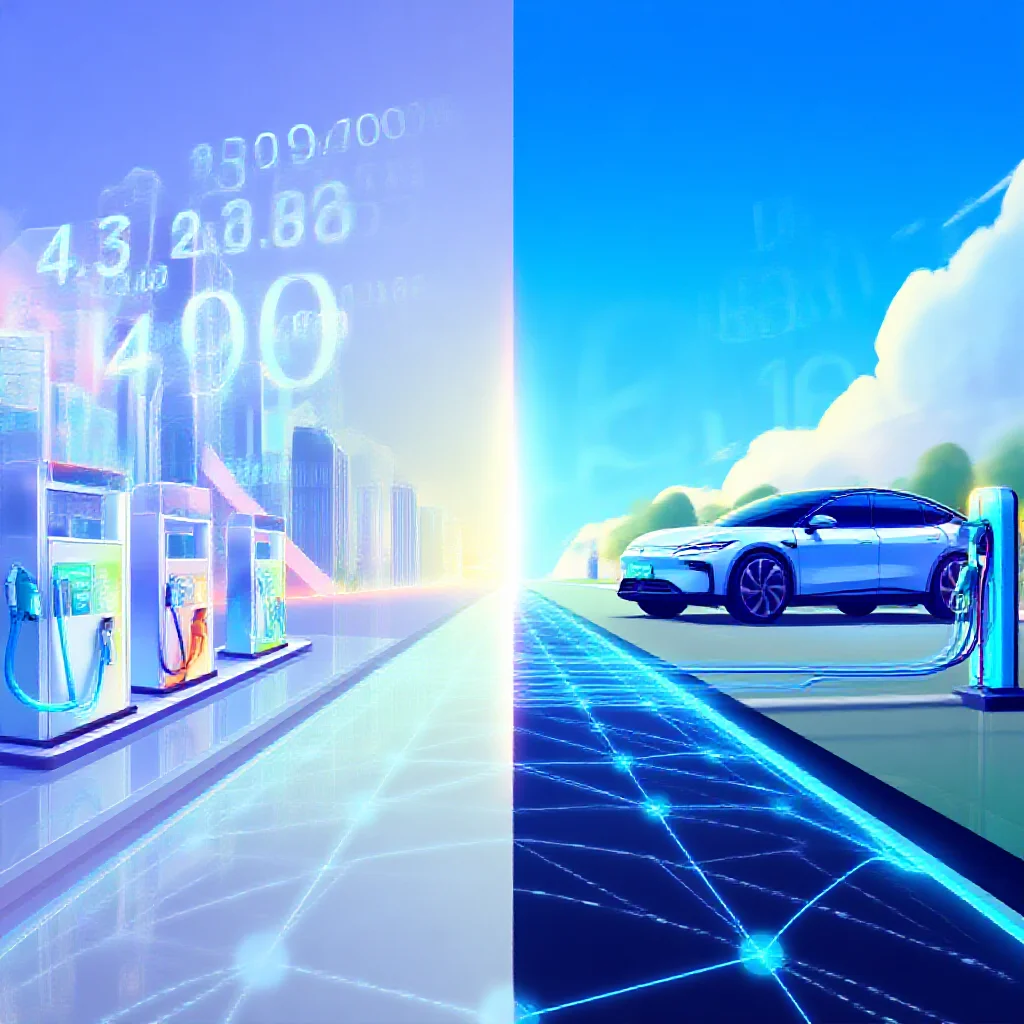
The mandate for higher ethanol blending (E20, E25) operates as a less obvious but structurally significant accelerator. The policy compels a foundational overhaul of the liquid fuel ecosystem, requiring investments in new storage, distribution, and engine technologies compatible with higher ethanol mixes. This transition necessitates capital expenditure and operational changes across the automotive and fuel retail sectors. The analysis posits that this very overhaul lowers the relative marginal cost and complexity of deploying EV charging infrastructure in parallel. As fuel stations retrofit for new blends, the incremental step to install charging points is reduced. The policy may thus function as a "bridge investment," forcing the energy distribution network to become more agile and technologically adaptable, thereby creating a more receptive environment for the co-existence and eventual dominance of electric charging infrastructure.
!A photo of a modern fuel station with both traditional pumps and EV charging stations side-by-side.
The Technology Threshold: Crossing the 'Range Anxiety' Chasm
Consumer apprehension regarding driving range remains a primary psychological barrier to EV adoption. The cited improvement in EV ranges—from averages of 250-300 km to consistent 400+ km on a single charge—addresses the practical realities of Indian driving patterns, inter-city travel, and climate-dependent battery performance. Advancements in battery chemistry, including the increased adoption of Lithium Iron Phosphate (LFP) cells for cost and safety, and the prospective introduction of higher-energy-density technologies like solid-state batteries, are central to this shift. These improvements translate into tangible consumer confidence, reducing the perceived risk of purchase. When combined with a slowly expanding public charging network, extended range effectively shrinks the "range anxiety" chasm, making EVs a viable primary vehicle for a larger segment of buyers.
Synthesis and Market Trajectory Implications
The convergence of these three forces suggests a non-linear adoption pathway. The economic push of fuel prices lowers consumer resistance. The policy-driven evolution of fuel infrastructure lowers systemic barriers for charging network rollout. Technological advancements in range directly mitigate the core consumer objection. Their simultaneous progression creates a compounded effect greater than the sum of individual parts. For automakers, this compressed timeline intensifies competitive dynamics, necessitating accelerated portfolio electrification and supply chain localization. The market forecast that follows from this triad is one of heightened competitive intensity and potentially steeper adoption curves post-2026, challenging previous incremental forecasts. The ultimate trajectory will depend on the sustained momentum of each force and their continued interplay within India's unique economic and infrastructural landscape.