Beyond the Crisis: How Coal India''s West Asia Response Reveals India''s Energy
Coal India Limited''s (CIL) recent measures to ramp up coal supply, framed
Beyond the Crisis: How Coal India's West Asia Response Reveals India's Energy Security Strategy
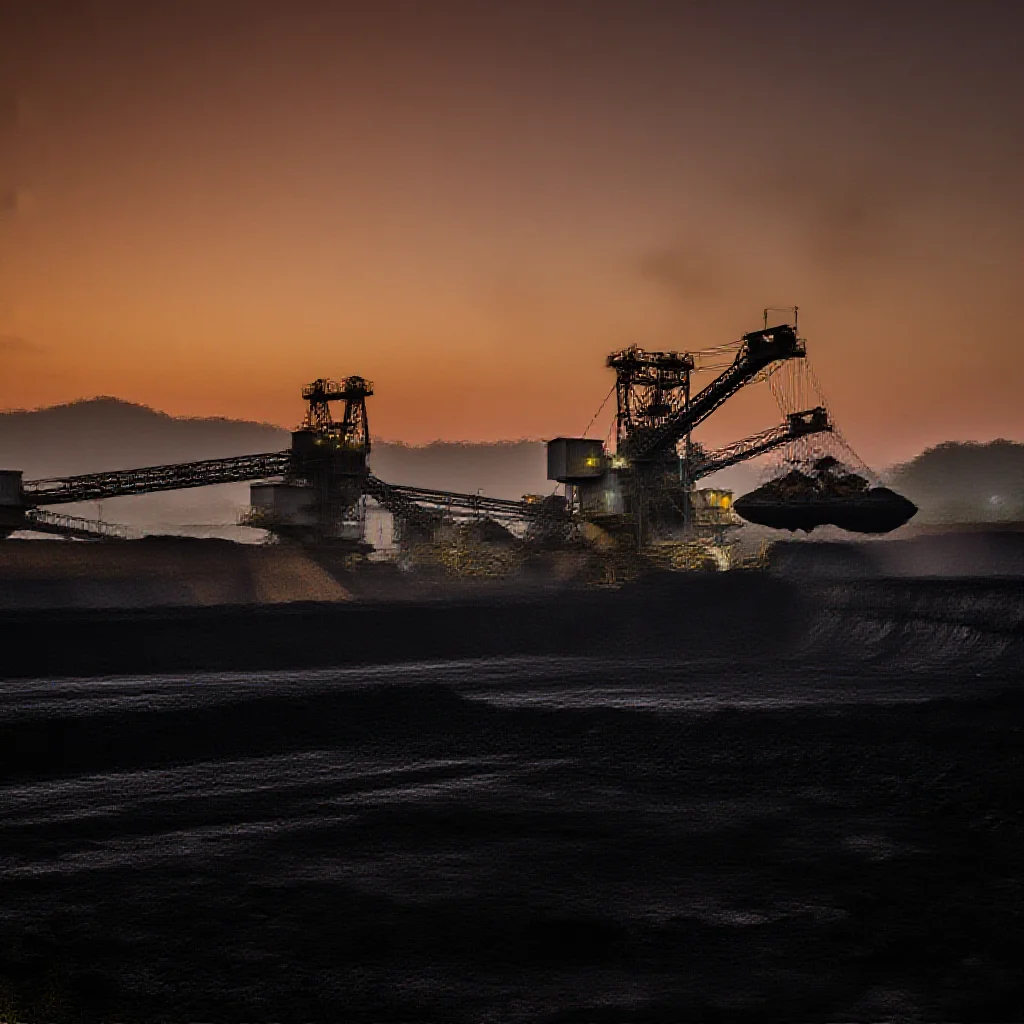
!A dramatic, wide-angle shot of a massive, modern coal mining operation in India at dusk

Summary: Coal India Limited's (CIL) recent measures to ramp up coal supply, framed as a response to the West Asia crisis, serve as a strategic stress test for India's broader energy security architecture. This analysis moves beyond the immediate news to examine the hidden economic logic and long-term implications for supply chain resilience and strategic autonomy.
---
The Surface Narrative: A Reactive Measure to Geopolitical Turmoil
The geopolitical instability in West Asia presents a persistent risk to global energy flows. Potential disruptions to shipping lanes, including the critical Strait of Hormuz, threaten the cost and reliability of seaborne energy imports. In this context, Coal India Limited (CIL) has publicly initiated measures to ensure domestic coal supply. The state-owned miner's stated actions focus on operational intensification: increasing production from existing mines, optimizing logistics networks, and actively managing buffer stocks at power plants.
This constitutes the standard "supply assurance" narrative, a typical response from a national resource champion during periods of external uncertainty. Corporate communications and initial media reports frame these actions as a direct, reactive buffer against potential global market volatility stemming from the regional conflict.
!A map highlighting key shipping chokepoints connecting West Asia to India

The Hidden Economic Logic: Stress-Testing the Domestic Energy Buffer
A deeper analysis reveals a calculated strategy beyond mere reaction. The choice to mobilize coal, rather than natural gas or renewable energy, as the first line of defense is rooted in structural economic logic. Coal remains the bedrock of India's power generation, accounting for approximately 73% of total electricity production (Source 1: Ministry of Power, Government of India). Its advantages in this context are threefold: established and cost-competitive domestic supply chains, entrenched infrastructure lock-in, and critical dispatchability for grid stability.
The geopolitical shock of the West Asia crisis provides a real-world scenario to validate and strengthen the domestic coal supply chain's capacity and responsiveness. This is a strategic stress test. The signal to domestic industry—particularly the power and heavy manufacturing sectors—is clear: the state possesses both the intent and the capacity to ensure resource security. This reassurance is designed to maintain economic stability and production continuity by insulating key sectors from global price and supply shocks.
!An infographic comparing the share of coal in India's electricity generation

Deep Audit: Long-Term Implications for Supply Chain and Policy
A longitudinal audit of CIL's behavior establishes a pattern. The current mobilization follows a similar playbook executed after the invasion of Ukraine in 2022, when CIL accelerated production to a record 703 million tonnes in FY 2023 (Source 2: CIL Annual Report 2022-23). This repetition indicates a refined, institutionalized crisis response protocol.
The critical verification point lies in capital allocation. The question is whether this crisis will trigger permanent capacity expansion or remain a temporary operational surge. Analysis of CIL's capital expenditure trends and project sanctioning rates in the coming quarters will provide the answer. Furthermore, prioritizing coal supply has ripple effects on national logistics. It necessitates and justifies continued investment in dedicated rail corridors (Rail-Vikas) and port infrastructure for coastal shipping, potentially creating opportunity costs for capital that could be deployed for green energy infrastructure.
This action fits precisely within the framework of "Aatmanirbhar Bharat" (Self-Reliant India). CIL's mobilization is a microcosm of the broader policy to achieve strategic autonomy in critical sectors, reducing vulnerability to external supply chain disruptions.
!A timeline showing CIL's production and key geopolitical events

The Unspoken Geopolitical Calculus
The strategic rationale extends beyond insulating the energy sector. The West Asia crisis threatens multifaceted Indian interests, including the security of a large diaspora and the flow of vital remittances. In this environment, ensuring domestic economic stability becomes a paramount geopolitical objective. Guaranteeing access to cheap, reliable base-load power via domestic coal is a direct contributor to that stability.
A robust domestic coal base serves as a strategic insulator. It reduces the implicit leverage held by volatile global fossil fuel markets and external suppliers. While comparisons are often drawn with China's coal-centric energy strategy, a key contrast emerges. India's approach, as demonstrated by CIL's calibrated response, appears focused on creating a resilient buffer for managed growth, rather than a tool for unchecked industrial expansion. This buffer provides the government with greater diplomatic and economic maneuvering room during international crises.
Conclusion: The Path to Managed Self-Sufficiency
Coal India Limited's response to the West Asia crisis is a revealing case study in India's energy security doctrine. It demonstrates a pragmatic hierarchy of priorities where domestic coal is the foundational buffer against global instability. The immediate measures are less about a permanent return to coal and more about validating and hardening a reliable fallback system.
The long-term trajectory will be determined by the balance of investments observed in the aftermath of this mobilization. A sustained surge in coal-related CAPEX may indicate a prolonged reliance on this buffer strategy. Conversely, if the crisis accelerates parallel investments in grid modernization, storage, and renewable integration to complement the coal base, it would signal a more nuanced path to resilience. The ultimate strategy is not energy independence in absolute terms, but the managed self-sufficiency to decouple critical economic functions from external shocks, with domestic coal remaining the cornerstone of that architecture for the foreseeable future.