Beyond the Forecast: Decoding ADB''s India GDP Revision and the Geopolitical
The Asian Development Bank's (ADB) upward revision of India's FY27 GDP forecast
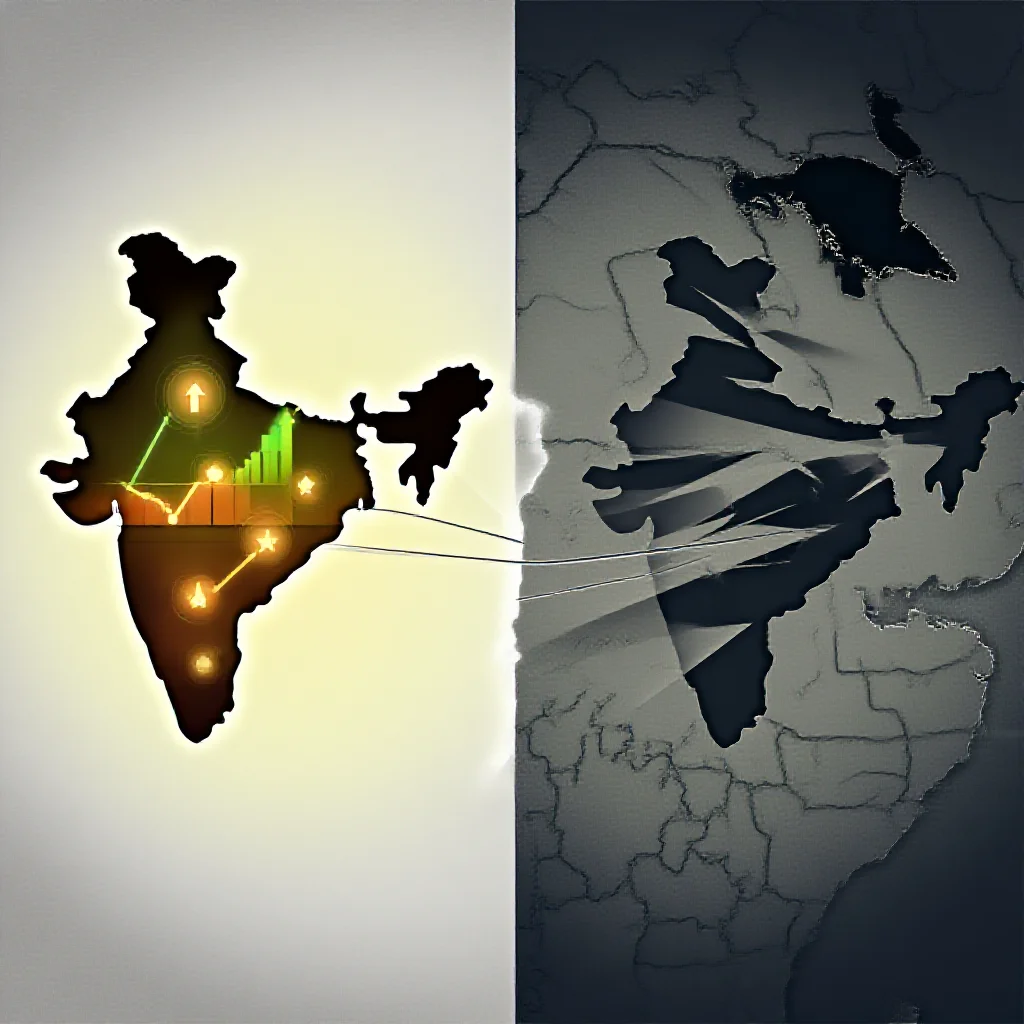
Beyond the Forecast: Decoding ADB's India GDP Revision and the Geopolitical Risks to Asia's Growth Engine
Opening Summary
The Asian Development Bank (ADB) has revised its economic forecast for India, projecting a Gross Domestic Product (GDP) growth rate of 6.9% for fiscal year 2027, an increase from a prior estimate of 6.7%. (Source 1: [Primary Data]) This revision is situated within a medium-term outlook of sustained expansion, with forecasts of 7.0% for FY25 and 7.2% for FY26. (Source 2: [Primary Data]) Concurrently, the ADB’s Asian Development Outlook report identifies an escalation of the conflict in West Asia as a key risk to this economic trajectory and provides an inflation forecast of 4.6% for India in FY25. (Source 3, 4: [Primary Data])
---
The Revision in Context: Not an Isolated Data Point
The upward adjustment for FY27 is analytically significant not for its magnitude but for its positioning. It extends a narrative of a "high plateau" of growth, following projected peaks in the immediate preceding years. An upgrade for an outer-year forecast typically signals institutional confidence in structural economic drivers rather than transient cyclical factors. This contrasts with the growth trajectories of many regional peers, reinforcing India’s role as a consistent anchor for Asian economic expansion. The revision suggests an expectation that growth momentum, while moderating from FY26, will stabilize at a robust level well above global and developing Asia averages.
Image Suggestion: An infographic comparing ADB's growth forecast timeline for India from FY25 to FY27 against a regional average.
The Unspoken Engine: Decoding the Sources of Medium-Term Optimism
The numerical forecasts imply a hypothesis on the underpinnings of India’s economic resilience. The sustained 7%+ growth corridor for FY25-26 aligns with the maturation of multi-year public capital expenditure cycles and strategic industrial policies, such as the Production-Linked Incentive (PLI) schemes aimed at boosting manufacturing. The critical enabler for this is the contained inflation forecast of 4.6% for FY25. (Source 4: [Primary Data]) This projected price stability is foundational, as it supports real income growth for sustained domestic consumption and provides the Reserve Bank of India with policy flexibility to nurture investment without aggressive monetary tightening. The ADB’s outlook appears to bank on the continued effective management of this balance.
The Geopolitical Fault Line: Why West Asia is a 'Key Risk' to the Indian Outlook
The ADB’s explicit warning introduces a stark counterpoint to its growth projections. The risk from West Asia conflict operates through specific, high-probability transmission channels. Primary among these is oil price volatility; India imports over 80% of its crude oil needs, and a significant portion transits through the Strait of Hormuz. A sustained price shock would directly impact the current account deficit, input costs, and the inflation management central to the optimistic forecast. Secondary channels include potential disruptions to export markets and volatility in remittance flows from a large Indian diaspora in the Gulf region. This creates a paradox of regional decoupling: while India’s growth is increasingly domestically driven, its external vulnerability remains acutely tied to energy geopolitics.
Image Suggestion: A map highlighting key trade and energy corridors between India and West Asia, with risk hotspots marked.
The 'Slow Analysis' Perspective: Long-Term Implications for Supply Chains and Investment
A forecast of sustained high growth alters strategic calculus. For global corporations, a three-year horizon of 7%+ expansion in a large economy solidifies India’s position within "China+1" supply chain diversification strategies, potentially accelerating foreign direct investment (FDI) in manufacturing and infrastructure. However, the persistent geopolitical risk warning injects a note of caution. It may compel investors to attach a higher risk premium to long-term commitments, despite attractive growth numbers. Scenario analysis becomes critical: the ADB’s baseline forecast is contingent on contained conflict. A "risk materialized" scenario of prolonged regional escalation would disrupt the glide path through inflationary pressures, fiscal strain from subsidies, and global risk-off sentiment, likely shaving significant basis points off the projected growth rates.
Verification and Credibility: Reading the ADB Report Between the Lines
The weight of this analysis derives from the source. The Asian Development Bank, as a major multilateral development institution, employs a rigorous methodology combining country data, global economic modeling, and sectoral analysis. Its role as a financier and policy advisor across Asia lends its assessments a grounded, operational perspective. The report’s structure—pairing a specific upward revision with a specific, geographically defined risk—indicates a model of conditional forecasting. The credibility of the outlook hinges on the separate probabilities of India’s domestic reform momentum continuing and of geopolitical tensions remaining contained. The report does not predict the latter but formally acknowledges its potential to invalidate the former.
Neutral Market and Industry Predictions
Based on the cross-validated data and risk framework, several predictive observations can be made. In the baseline scenario (conflict contained), capital goods, infrastructure, and consumer discretionary sectors in India are positioned for re-rating, supported by the capex cycle and stable inflation. Sovereign and corporate bond yields will be sensitive to any deviation from the 4.6% inflation path. The currency (INR) will face bipolar pressures from strong growth-driven inflows versus potential oil-driven outflows. In the alternative risk scenario (West Asia escalation), energy, logistics, and defense sectors may see volatility, while rate-sensitive sectors would face headwinds from potential monetary policy responses. The ultimate economic trajectory for FY27 will be determined by the intersection of domestic policy execution and external stability, with the latter presenting a clear and present variable outside New Delhi’s direct control.